2026 Festival Archive: Nasty, Brutish & Short
Nasty, Brutish & Short
January 23-24 and 30-31, 2026
Constellation
Presented by Chicago International Puppet Theater Festival
Scholarship and Resources
The “Real Cost” of Art and the Artist’s Dilemma at Nasty, Brutish & Short
An Essay by Skye Strauss
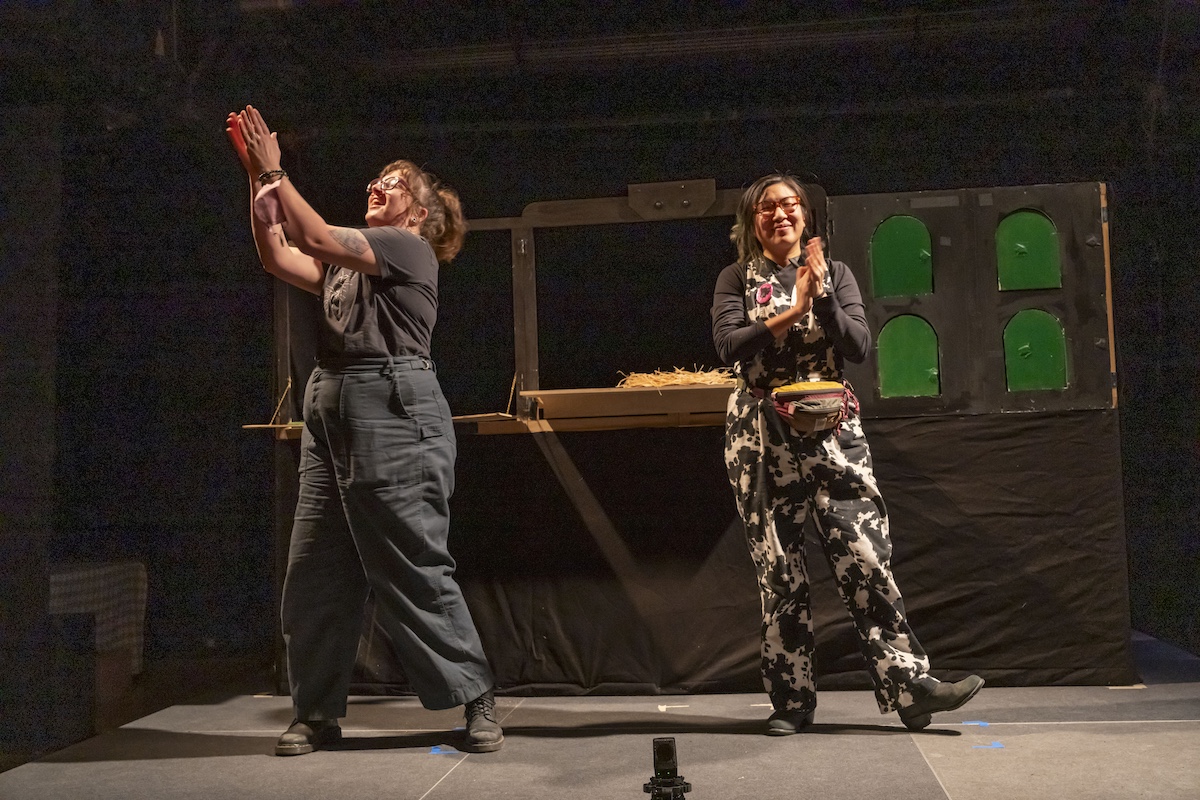
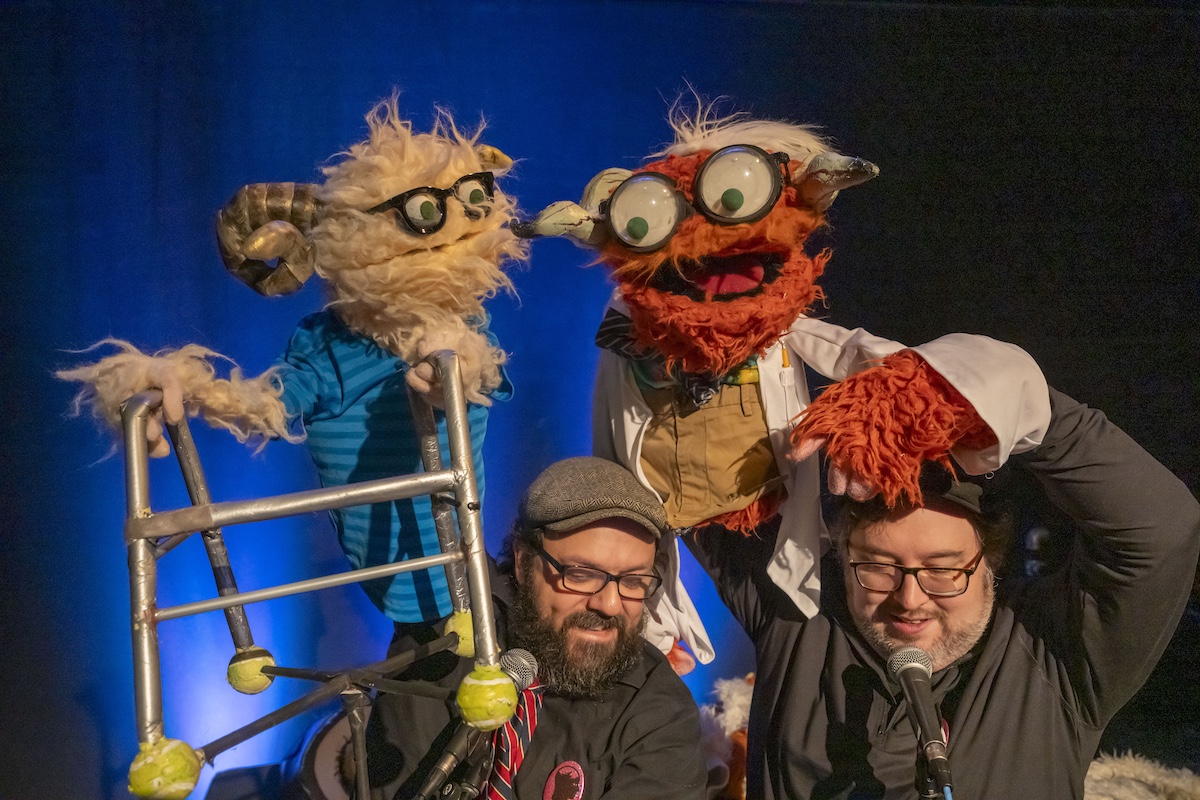
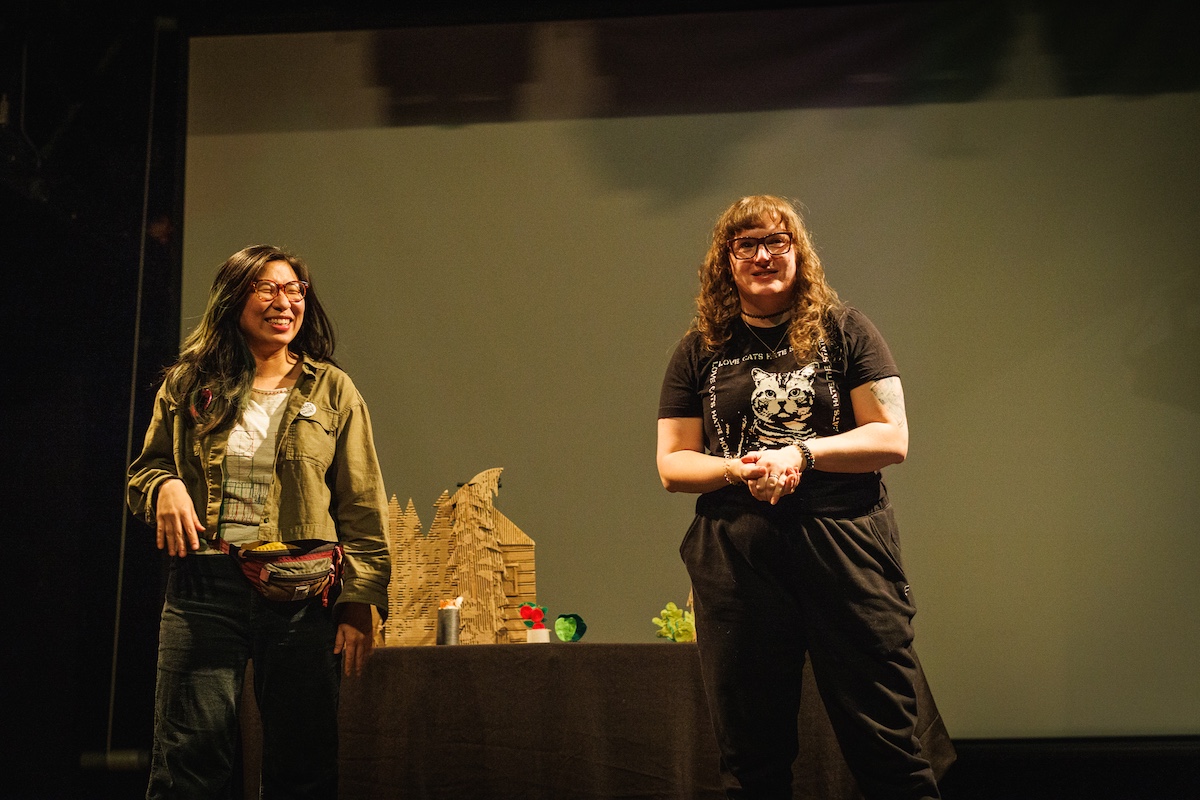
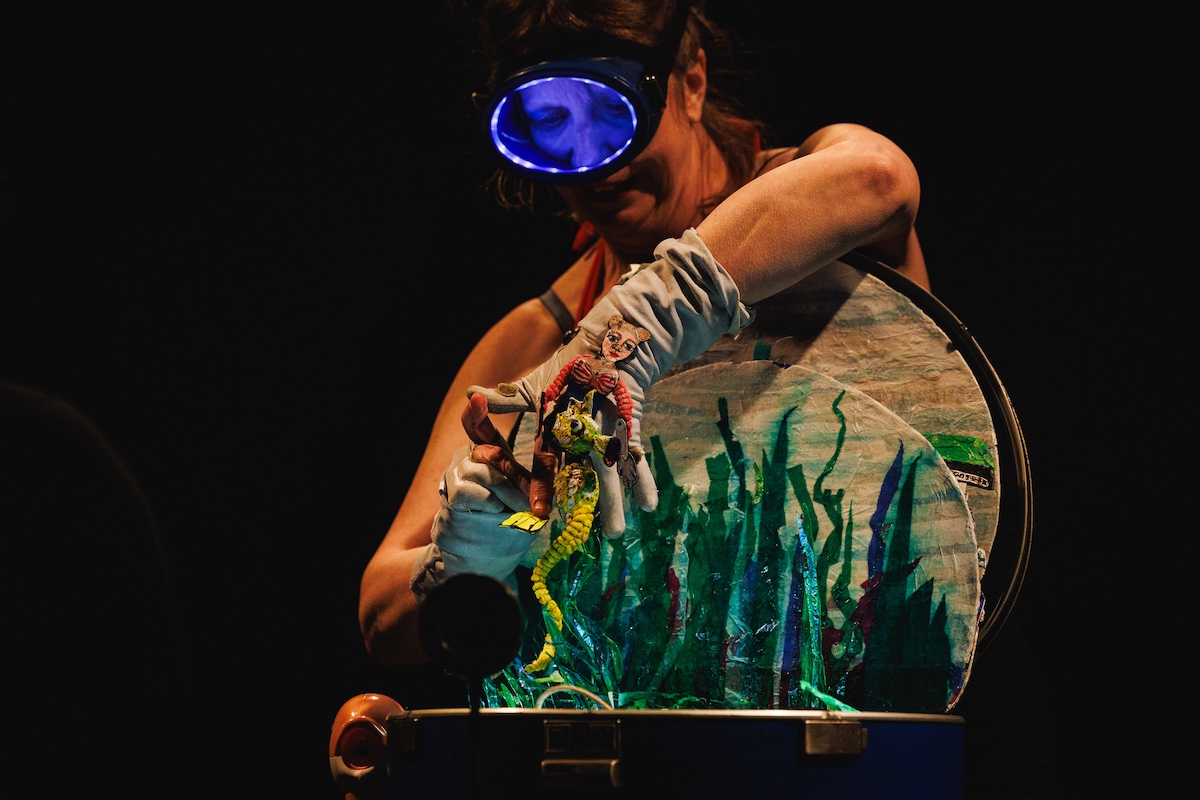
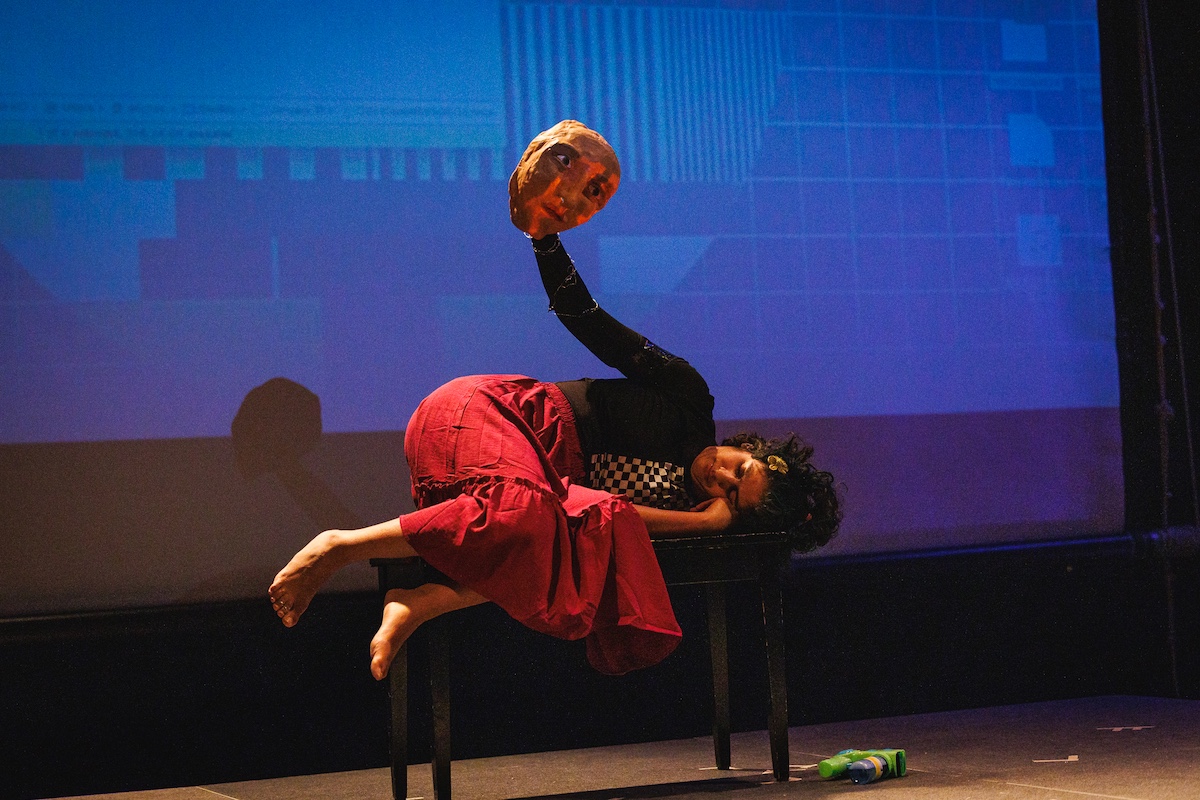
Regular festival goers already know the setup: Nasty, Brutish & Short is a late-night cabaret-style performance curated by Caitlin McLeod and Myra Su and funded by the Puppet Slam Network. The short-form format invites a variety of puppetry onto the same stage in rapid succession. The evenings of January 23 and 24 of the 2026 festival featured Muppet-style hand-and-rod puppets, marionettes, hand puppets, shadow puppets, body puppets worn like costumes, and the hands-on manipulation techniques of Bunraku alongside an impressive array of performing objects. There was even one performance art piece by Felix that (by the performer’s own admission, as part of their practice of “radical honesty”) might be disappointing for the audience because it did not feature any physical puppets at all––instead, the audience puppeteered the performer, trying (and failing) to chaotically shout them through the process of making and eating a peanut butter and jelly sandwich. The puppeteers participating in a slam end up showcasing a range of ways to express ideas, suiting form to function, product to circumstance.
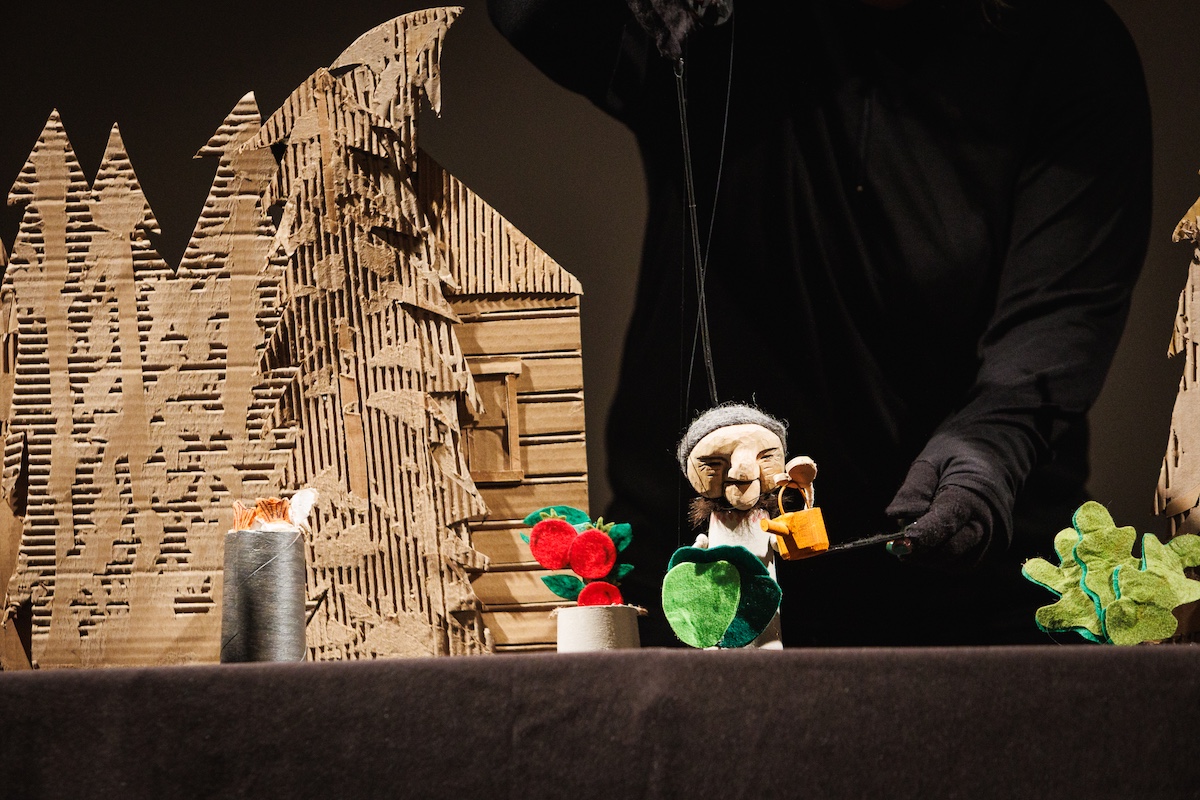
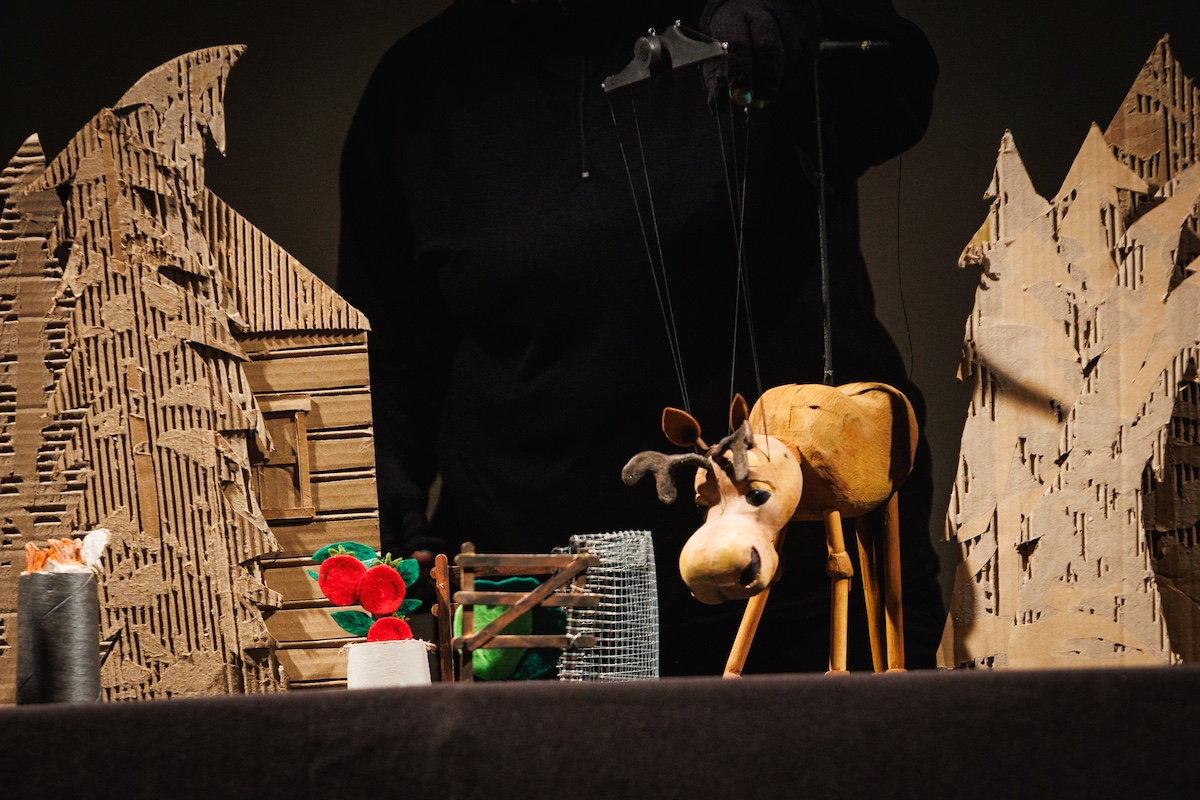
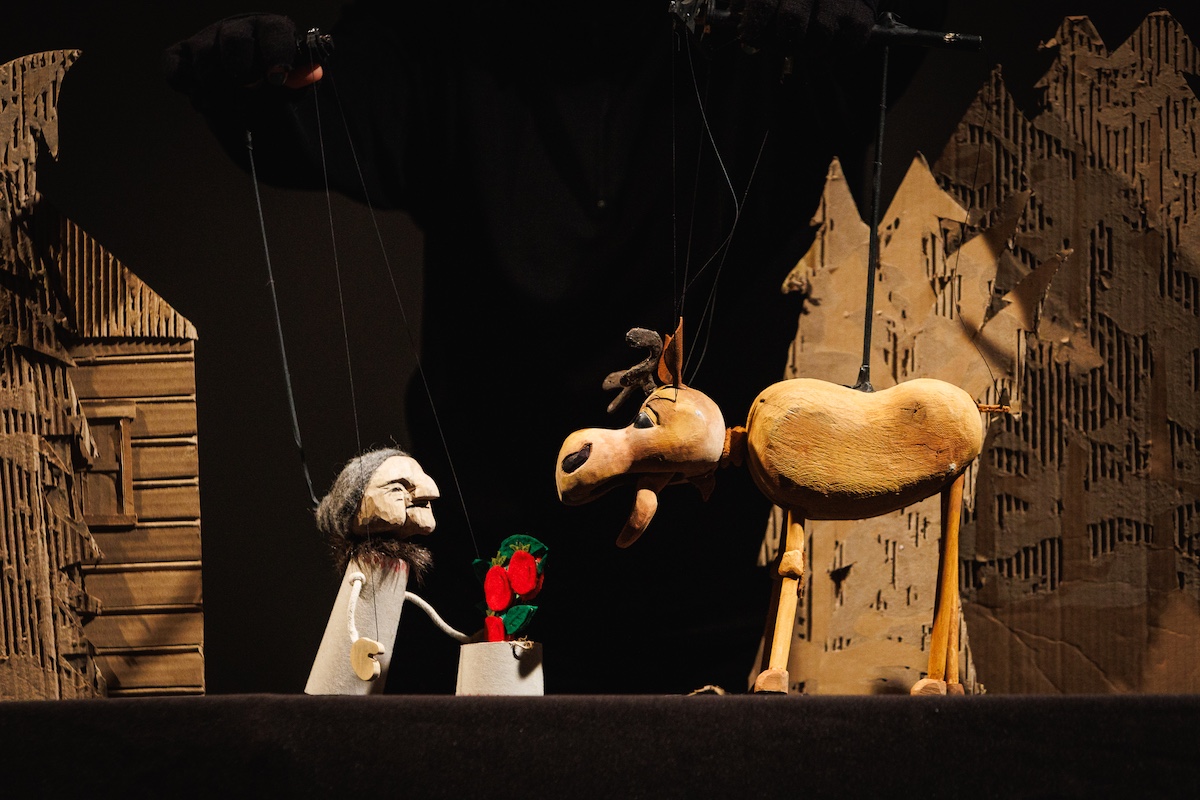
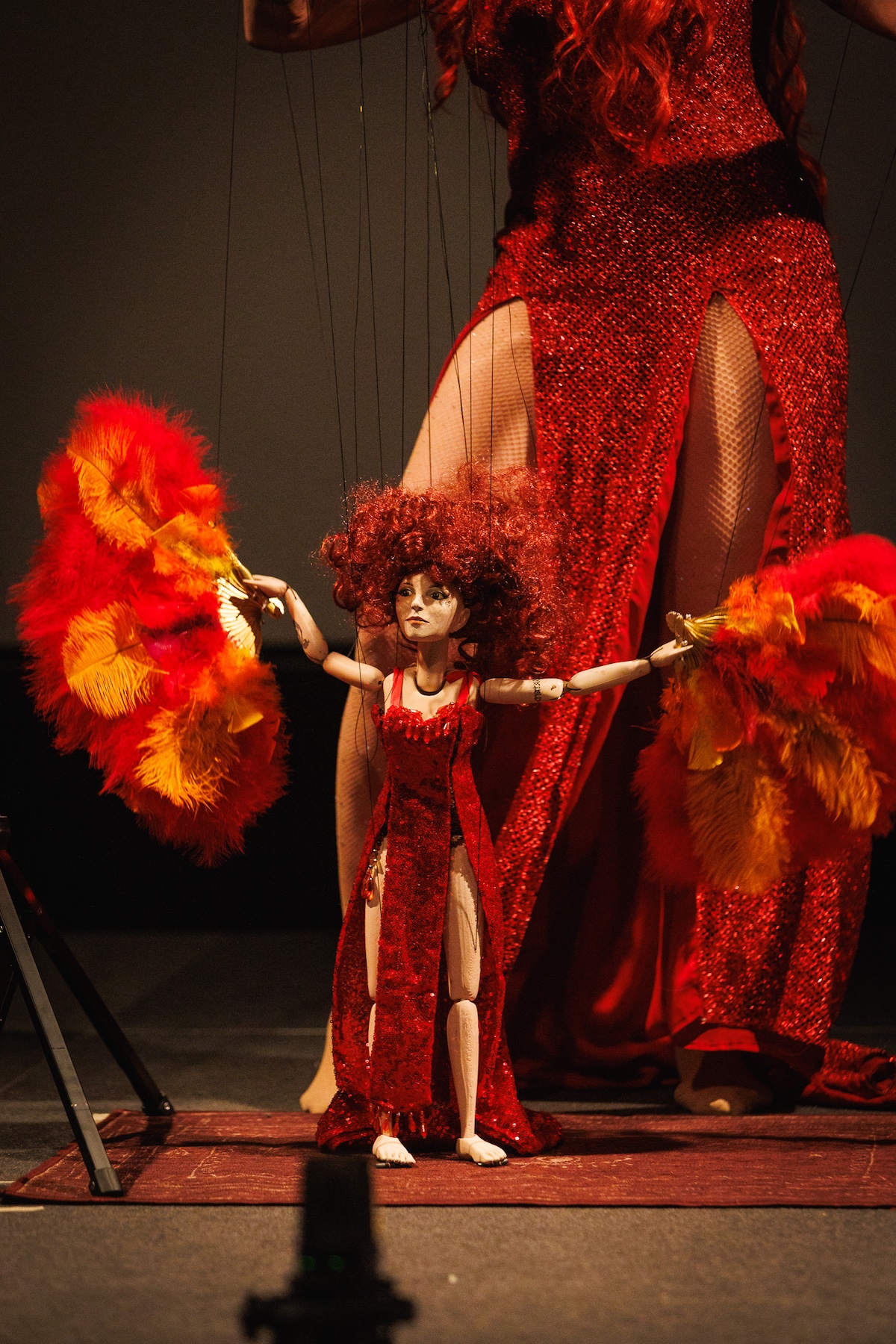
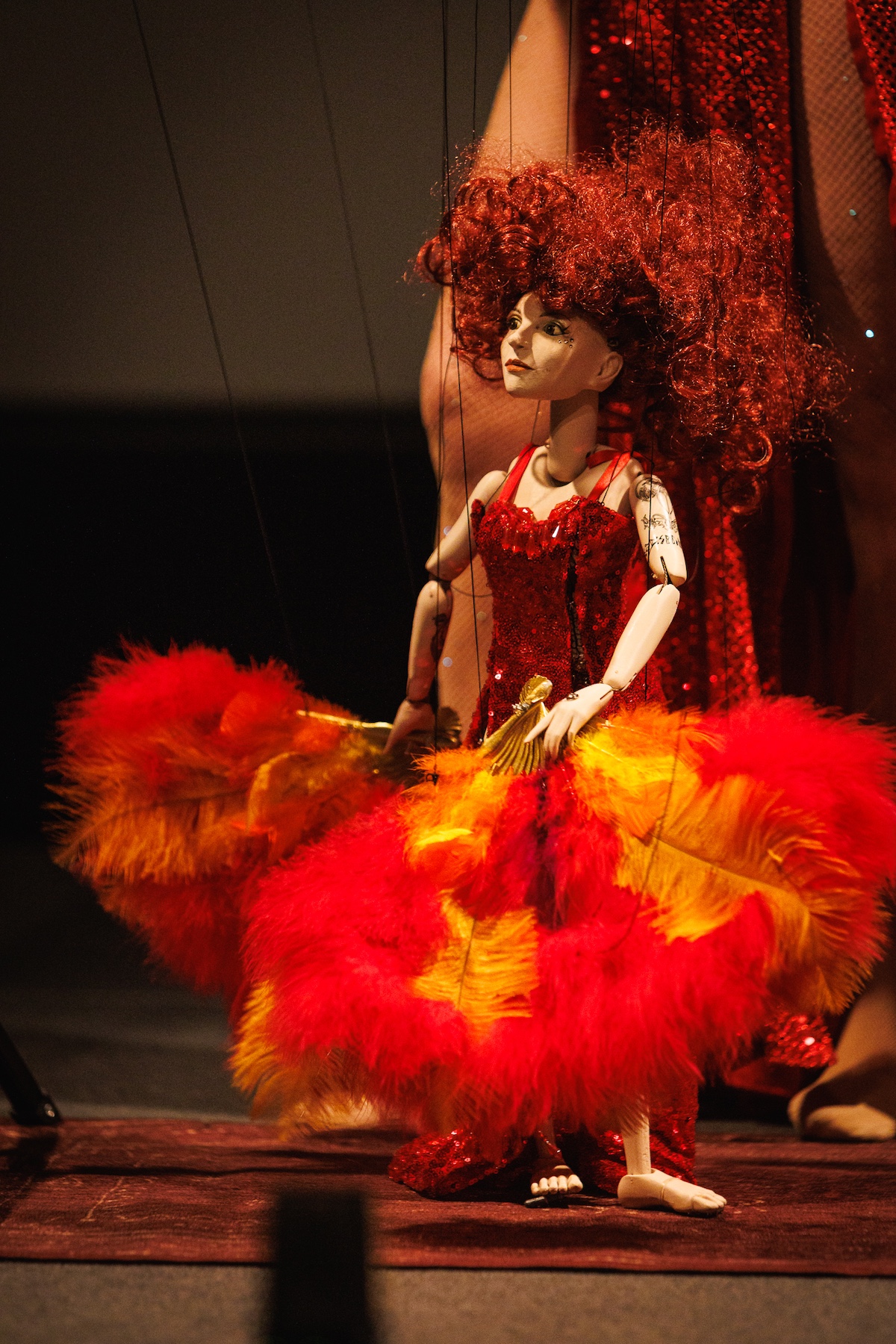
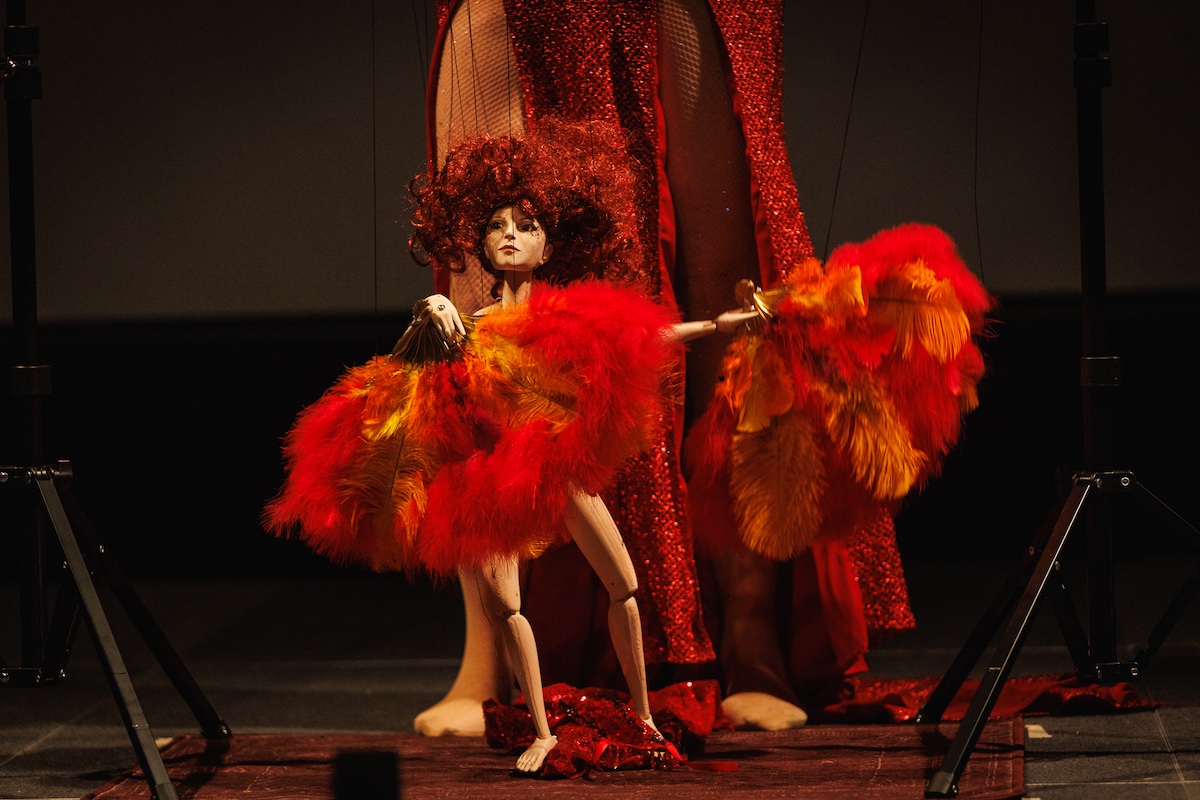
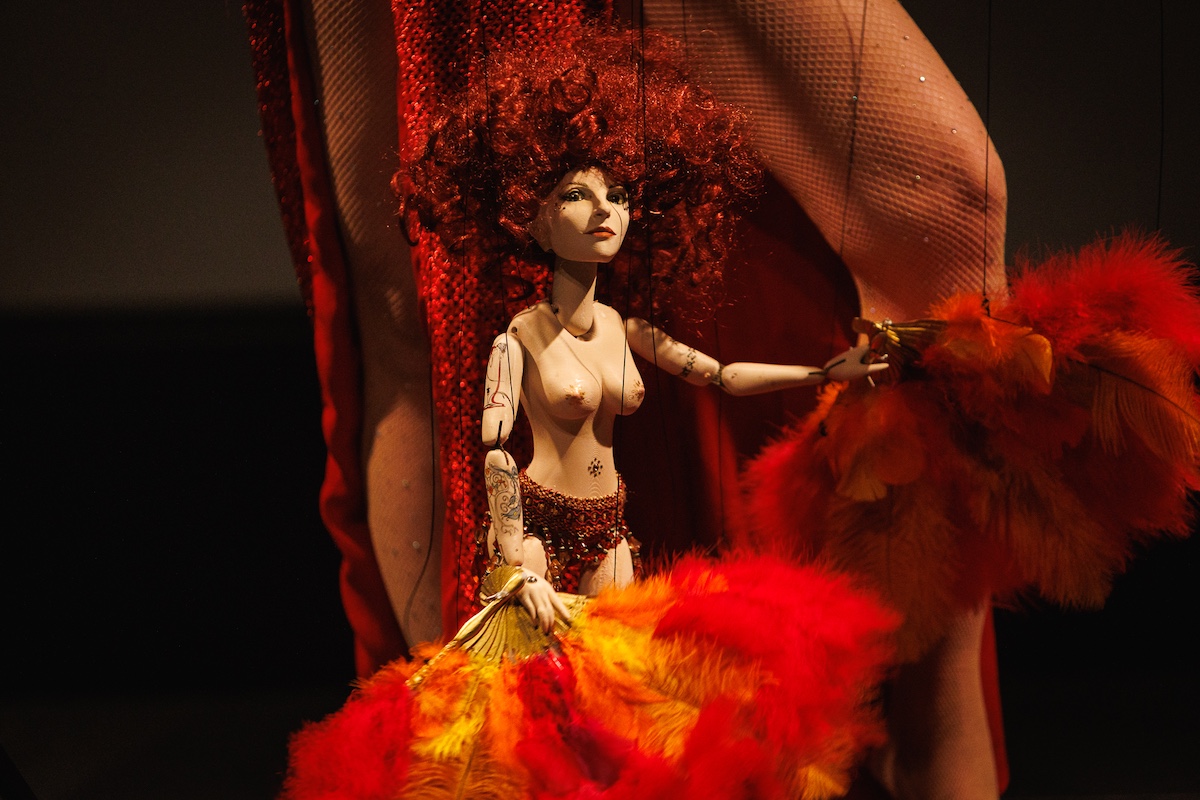
Some pieces are a bit “nasty” in more than one way. The first piece on January 24, set in a charming cardboard forest, showed the audience a game of hide-and-seek between an old woman tending to her garden and a thieving, farting moose who was stealing her plants. Both marionettes by Maïté Agopian were so cute that the audience let out an audible “Aww” when they made friends in the end. If you reach for an alternative meaning and swap “sexy” for “nasty,” different performances come to mind. That alternative meaning is clearly something the crowd recognizes, since the hosts asked everyone to point out the “puppet slam virgins,” as if we were watching The Rocky Horror Picture Show. On the 24th, two performances played into that expectation. Deviant Cabaret’s fan-dancing marionette presented graceful leg work while wearing an elaborate costume and plastic mask that blurred the line between person and puppet. Heidi Tungseth’s aptly named short “Hellooo, Susan!” also invoked the vocabulary of striptease with a flower suggestively pulling off their petals one by one, making a bee intent on pollination and a simple squirt of water strangely, hilariously obscene. Part of the fun of the festival, especially in the late-night slot, is seeing “adult” puppetry.
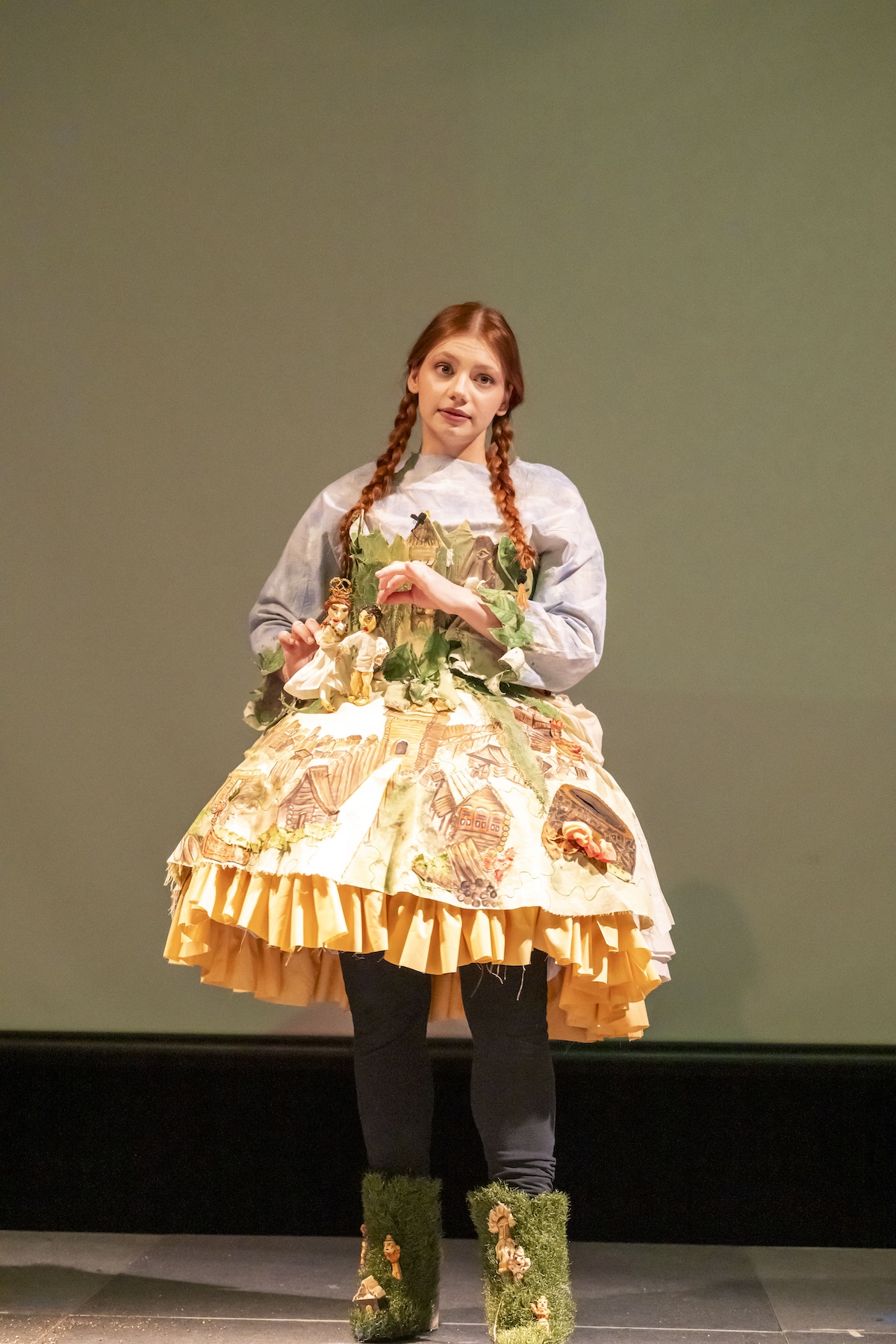
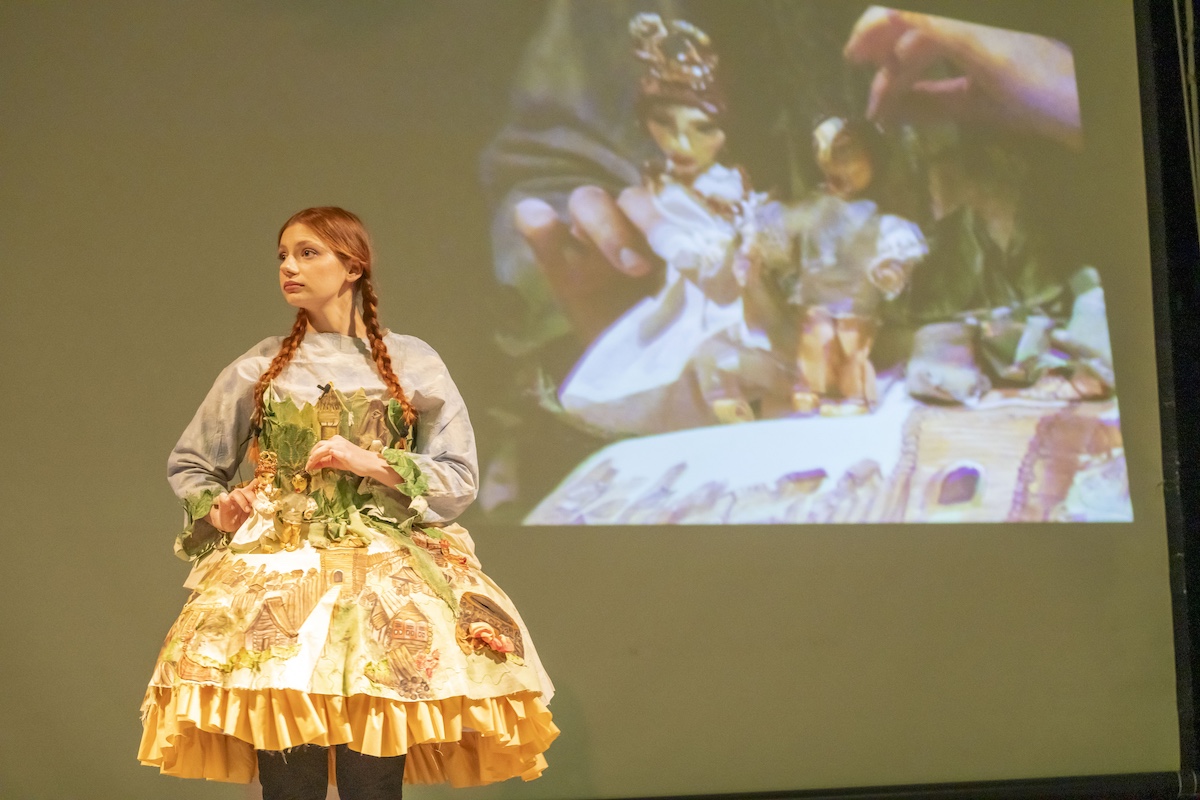
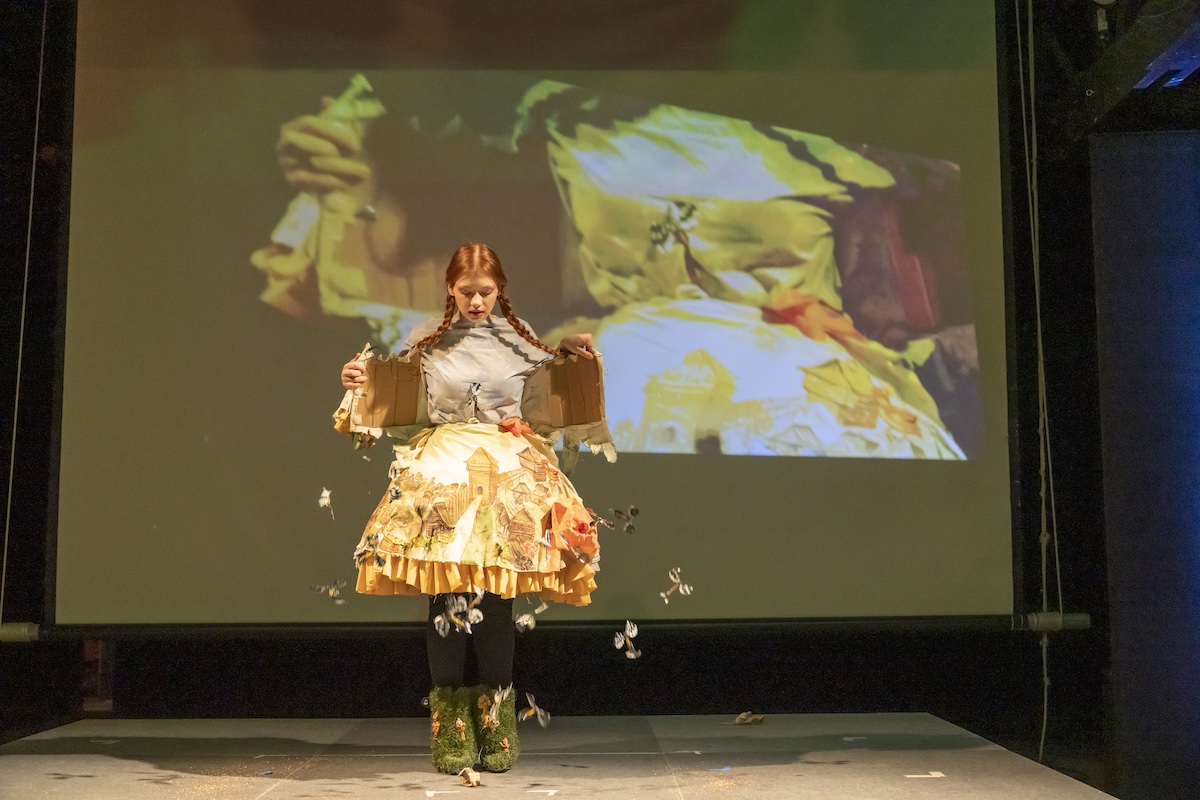
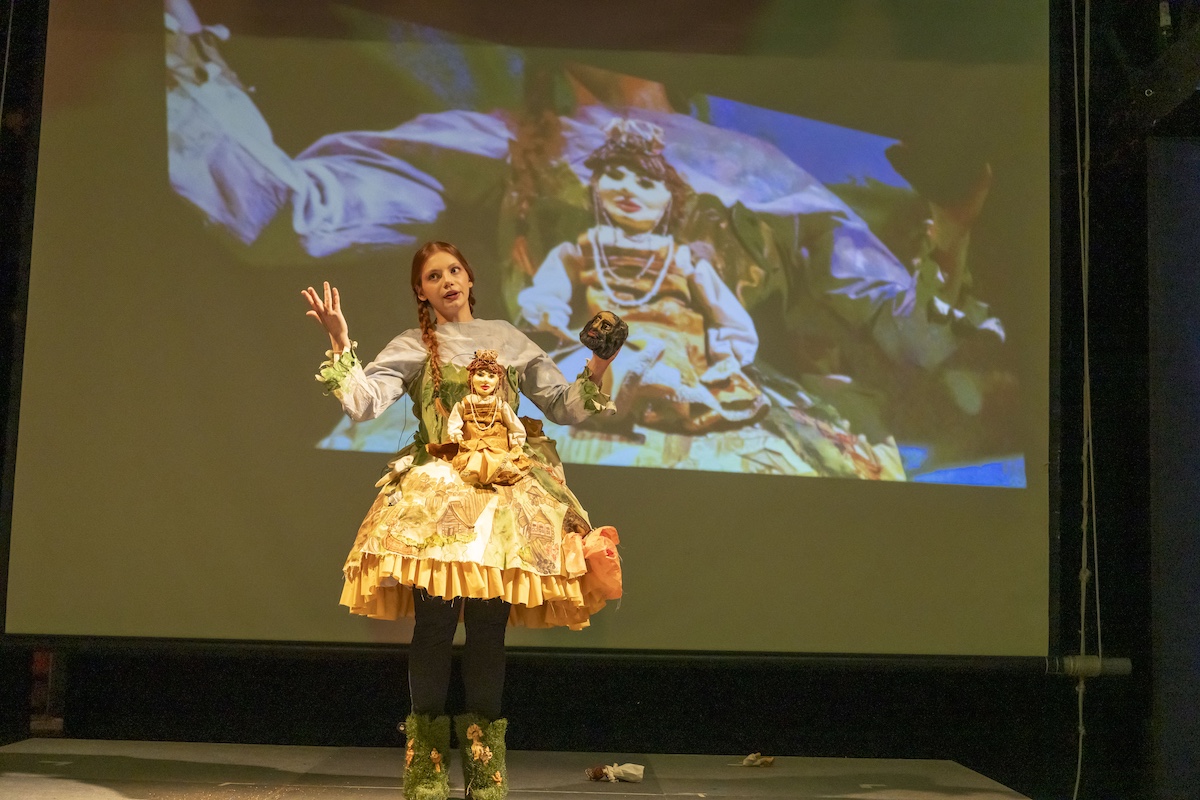
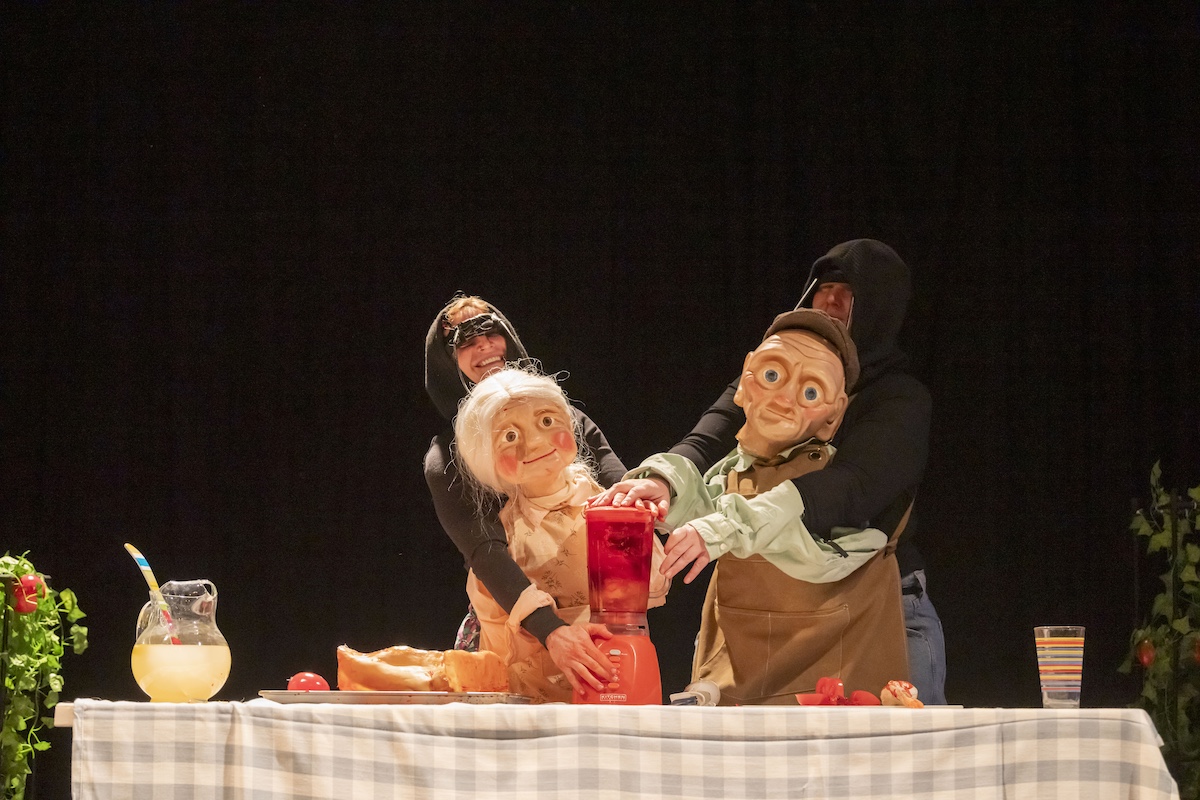
Other performances were certainly “brutish.” Zlata Godunova used the puppets and performing objects hidden in her pastel princess minidress to tell us the story of the ruthless queen Olga of Kyiv as she taxed the people into submission, buried and boiled her suitors, and even rained down burning pigeons on her foes. The connection to Ukraine’s continued resistance against Russia was unstated yet clear, as the lady foiled her every enemy. Later the same evening, Rubicon Studios indulged in more puppet violence worthy of the historical Grand Guignol. They introduced us to an elderly couple, Marv and Kathleen (the title of the piece), whose secret to prize-winning tomatoes turns out to be the blood of random strangers. The elderly puppet couple did an impressive job of butchering a hapless UPS delivery person in front of the audience, complete with jagged broken bones, stretched flesh, arterial spray, and a blender full of gore. Apparently, winning requires cruelty as well as cunning.
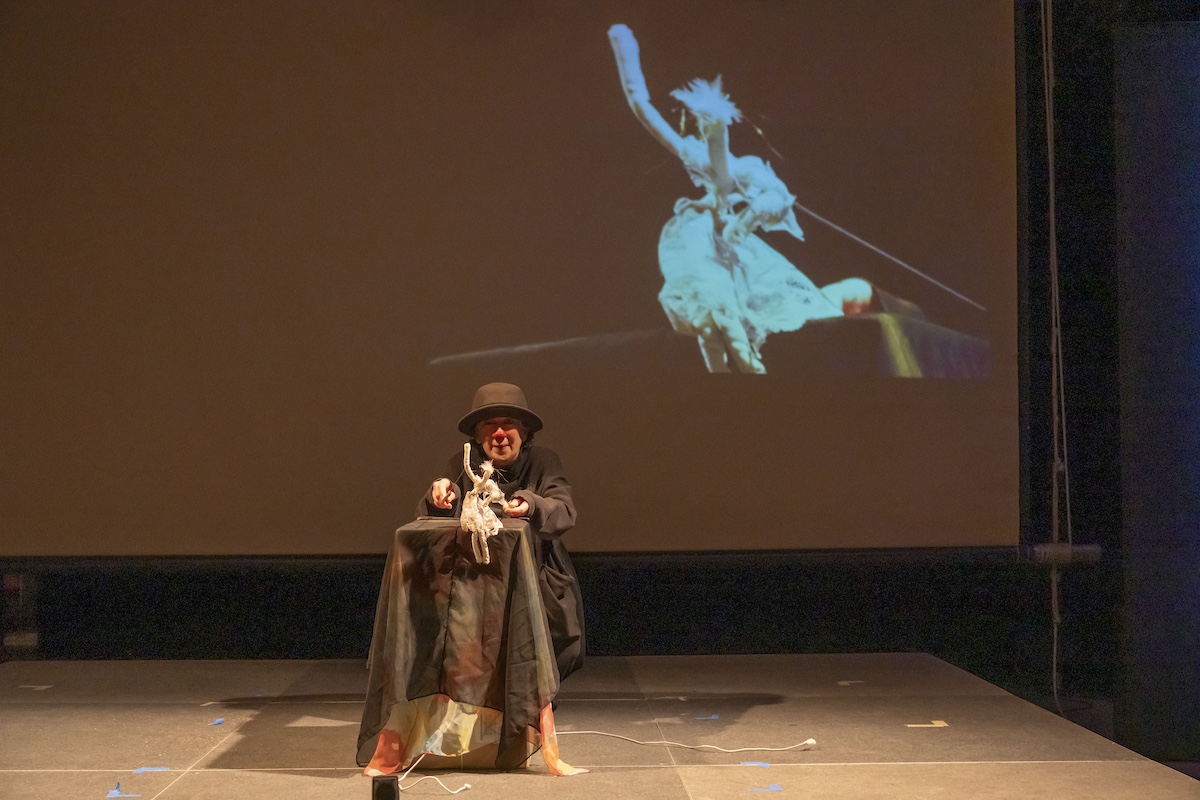
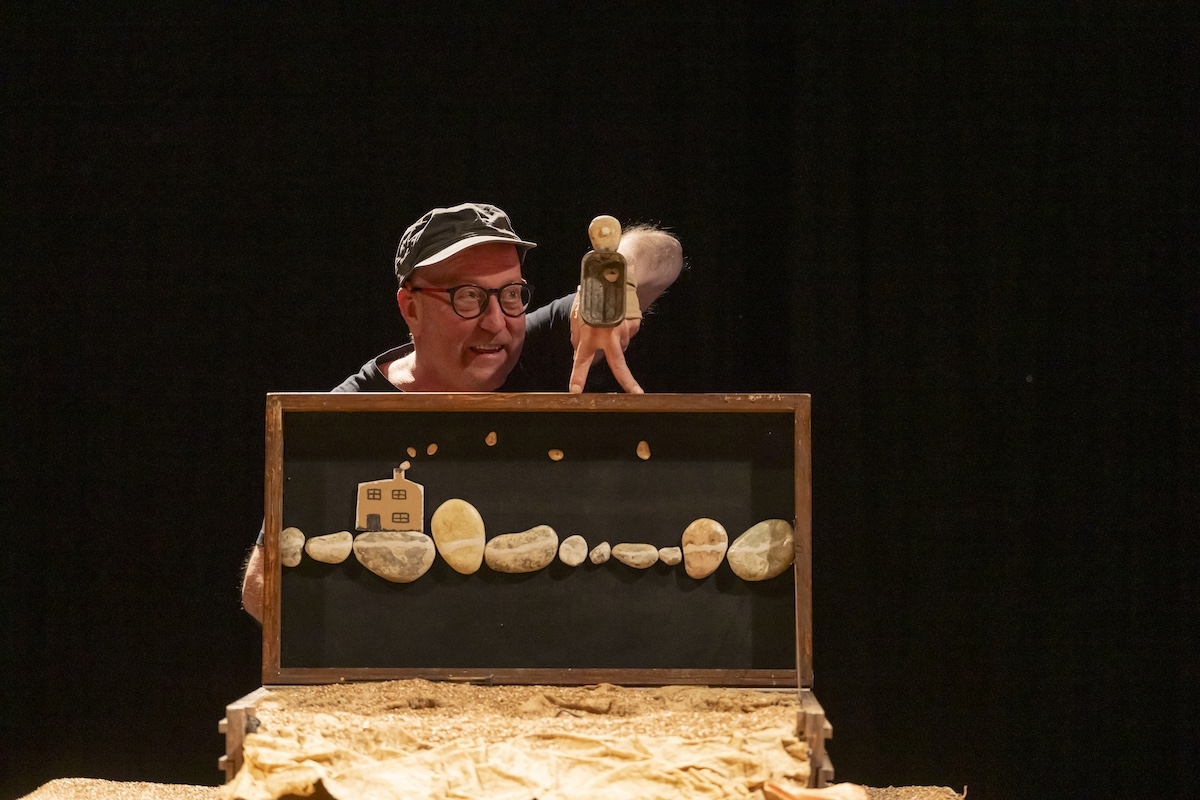
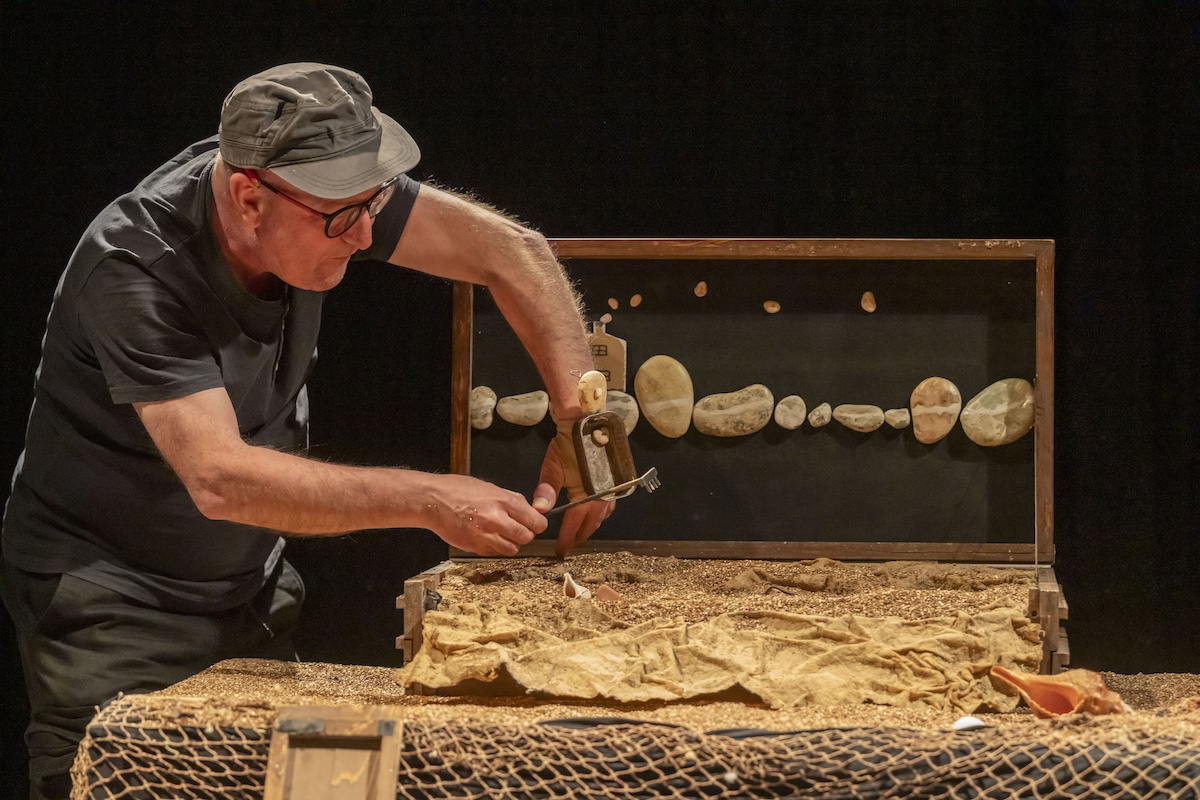
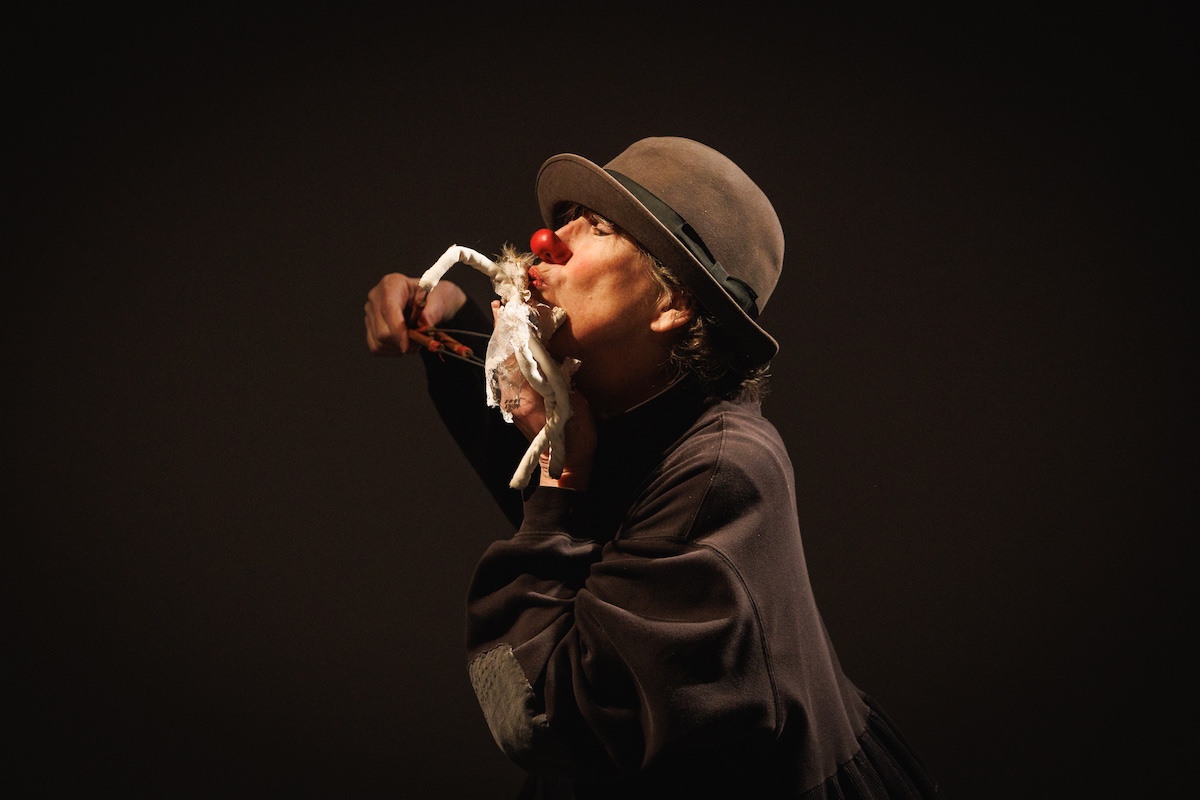
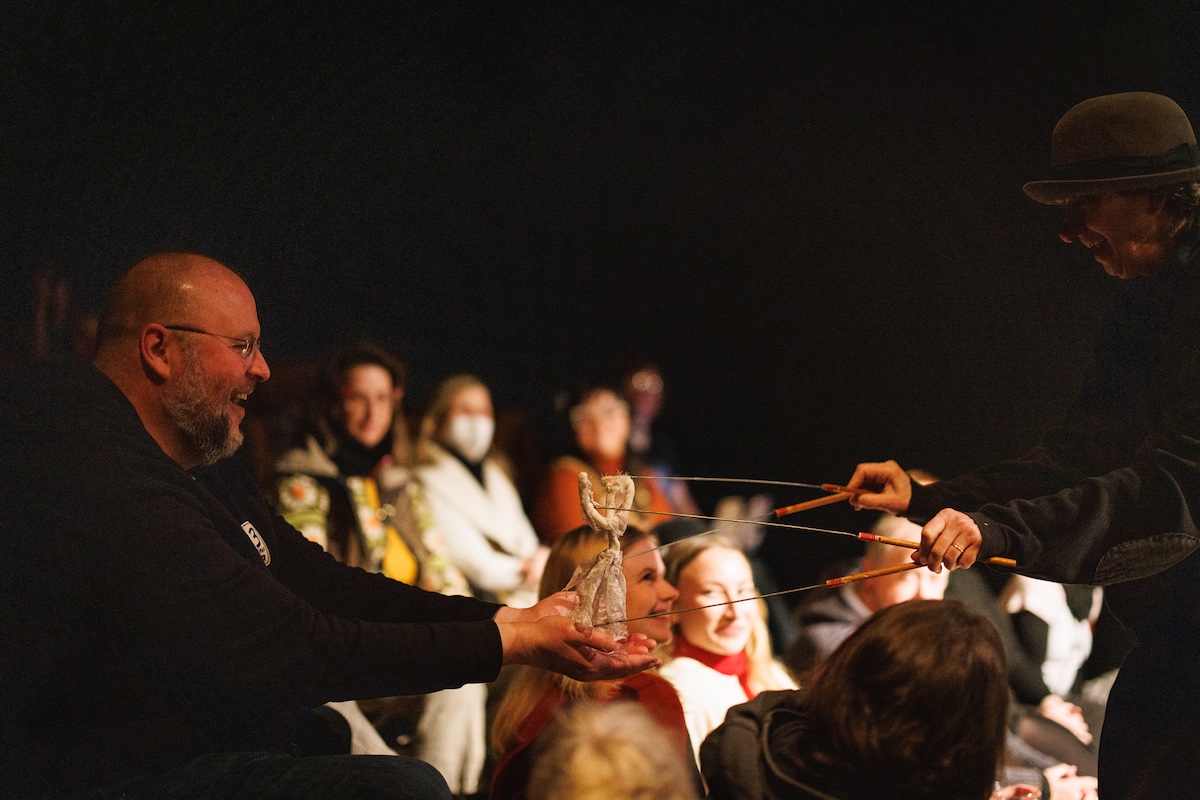
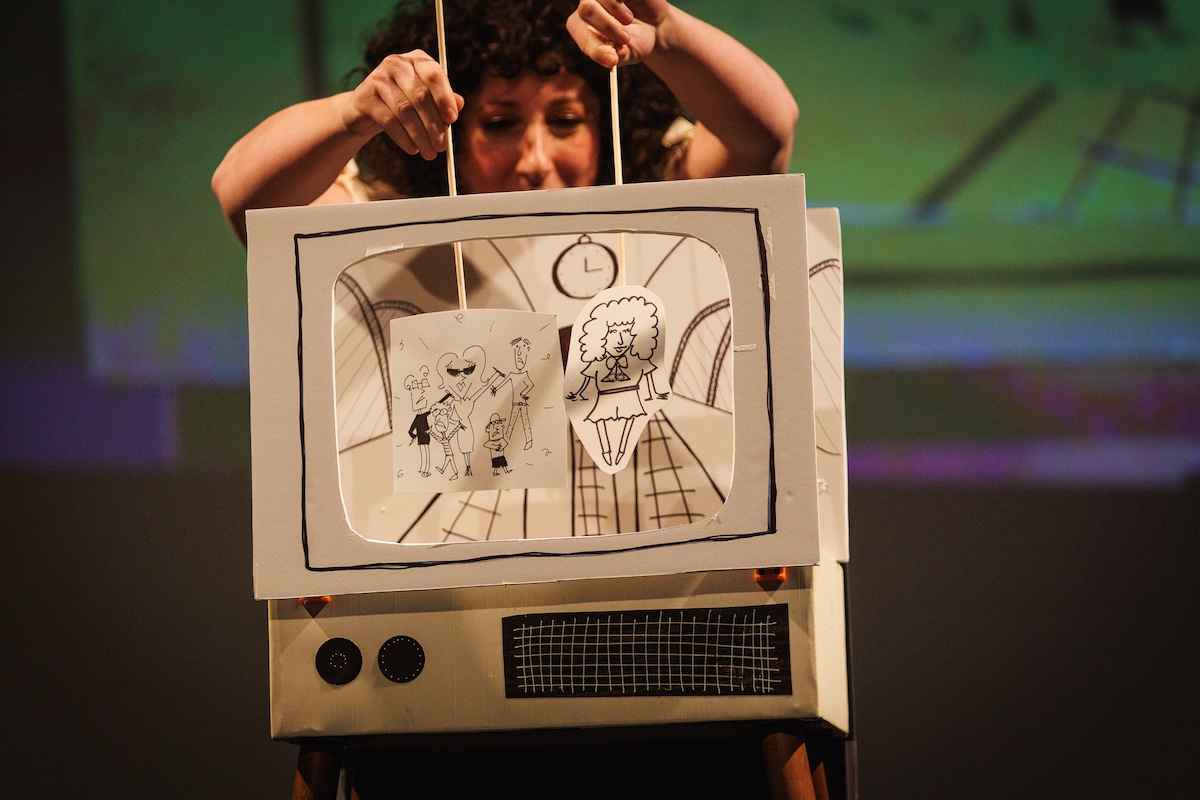
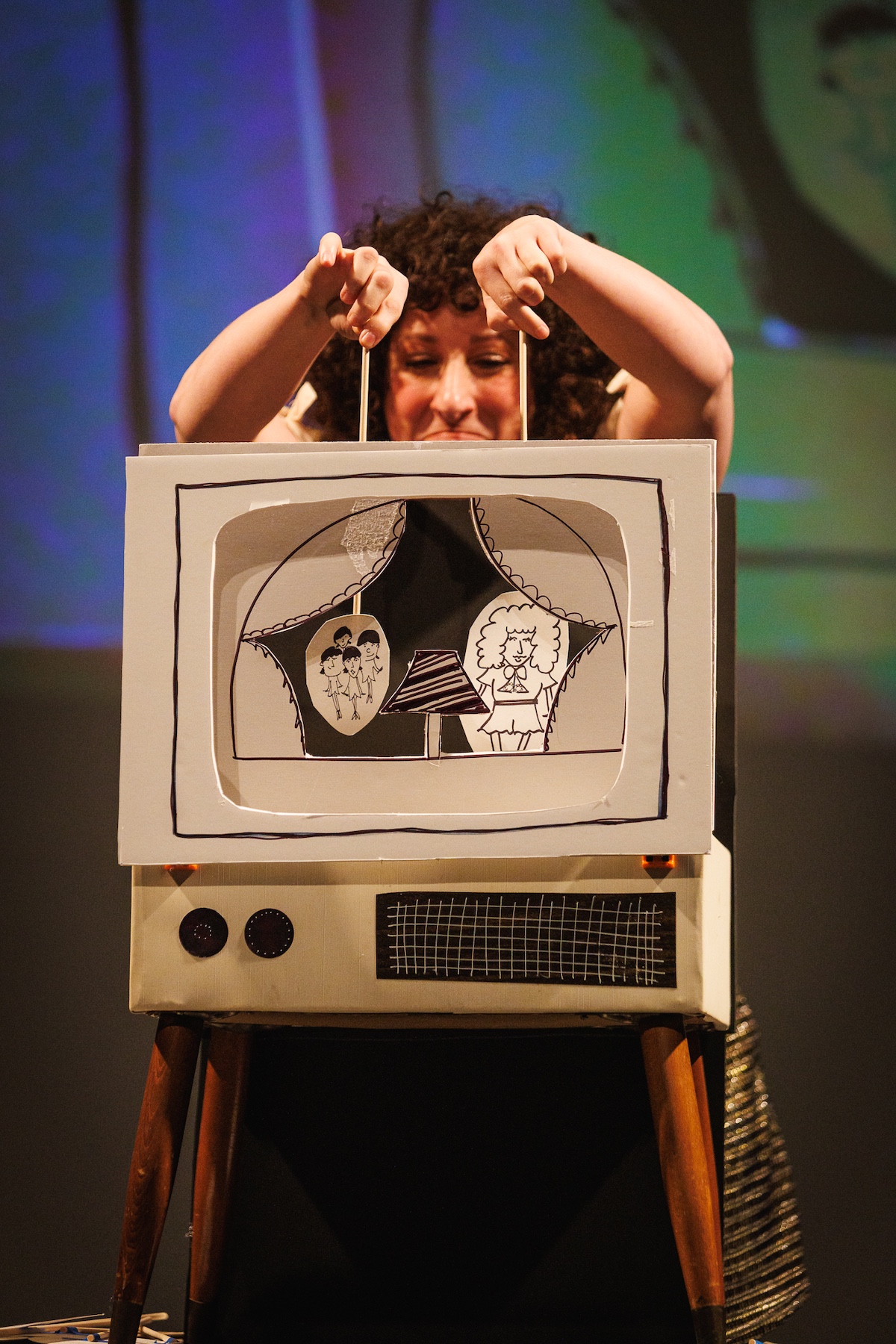
Technically, all the performances were “short” when it came to time. On the first night, “The Morning Commute” boiled down heroine Plucky Rosenthal’s train journey to Grandma’s house into a few minutes’ time. The whole performance took place within a toy-theater proscenium shaped like a vintage television, augmented by a 1960s soundtrack. Each fellow passenger was delightfully voice-acted until a train crash (gasp!) brought the story to a sudden end. Tian Gombau dealt with the time limit by excerpting part of his longer piece, Stone by Stone, for the crowd—a teaser about building a house and a new friend using his collection of stones that hopefully brought more audience members to The Free Neighborhood Tour, where Gombau performed his full piece in different communal, nontheatrical spaces spread throughout the city of Chicago. This penchant for “short” performers extended into a piece by Karen Hoyer, titled “Kloc and the Ballerina,” where a classical clown, Hoyer in a blousy black dress with a round red nose, received a package covered in stamps and wrapped in twine. It opened to reveal a pint-sized ballerina in sparkling white. Twisting her rods, with all the deft skill of a lacemaker, the puppeteer led her through a series of graceful moves and great leaps––dancing her out onto the shoulders and upturned palms of delighted audience members before she returned to the stage for her bow. There is a lot of joy to be found in little things.
Looking back over this array of performances in different mediums, it is worth noting how a finished performance hints at the time invested in it. Many of the performances described above (to create a record of the sheer variety of creative work on display at this year’s festival) use humble materials like cardboard, paper, and fabric and rely on meticulous craftsmanship to enliven the everyday. All benefit from extensive planning and rehearsal, built on that performer’s combined training and previous experience. Su and McLeod use their grant from the Puppet Slam Network to allow proceeds to go straight to the artists by covering specific venue fees and other producing expenses. Yet what we pay as a crowd, broken down across the participants, still undoubtedly fails to convert into any reasonable rate-per-hour for the artist’s labor in creating each show. Writing about Jim Henson’s choice to eventually license his Sesame Street characters, Elizabeth Hyde Stevens points out that an original work of art is difficult to monetize because it takes so long to create, “making it, in a sense, a gift,” (2013: 24), and these Nasty, Brutish & Short performances are certainly not as cute and cuddly as Henson’s more marketable characters. Licensing helped Henson escape the pressure of his early commercial work and leave a financial legacy substantial enough for his daughter Heather Henson to fund future artistic endeavors, including puppet slams like Nasty, Brutish & Short (starting in 2005 alongside Green Feather Foundation, formerly known as IBEX Puppetry, according to The Puppet Slam Network home page). While some puppeteers, like Henson, manage to find a following sizable enough to allow financially successful work to fund later fringe projects, festival puppeteers participating in the slam are likely still dealing with the classic artist’s dilemma: How do you have both the time and money to make art? Why labor over what you cannot monetize?
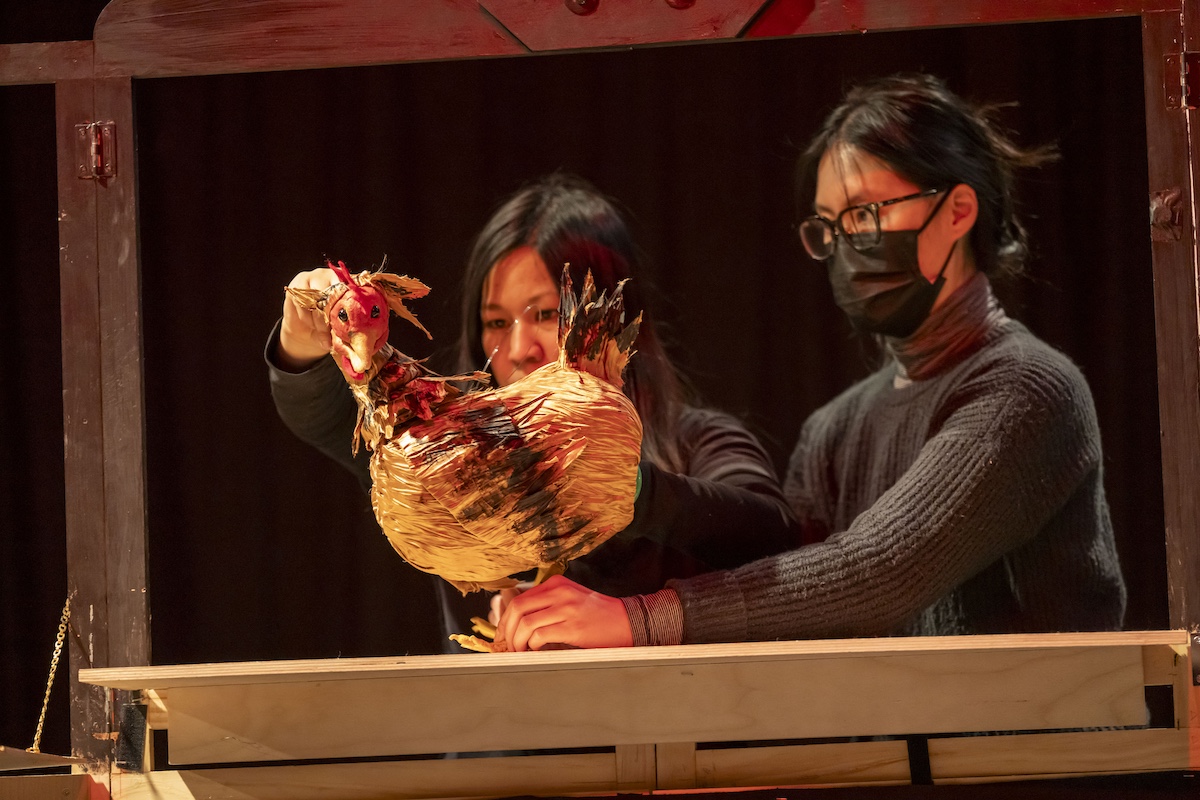
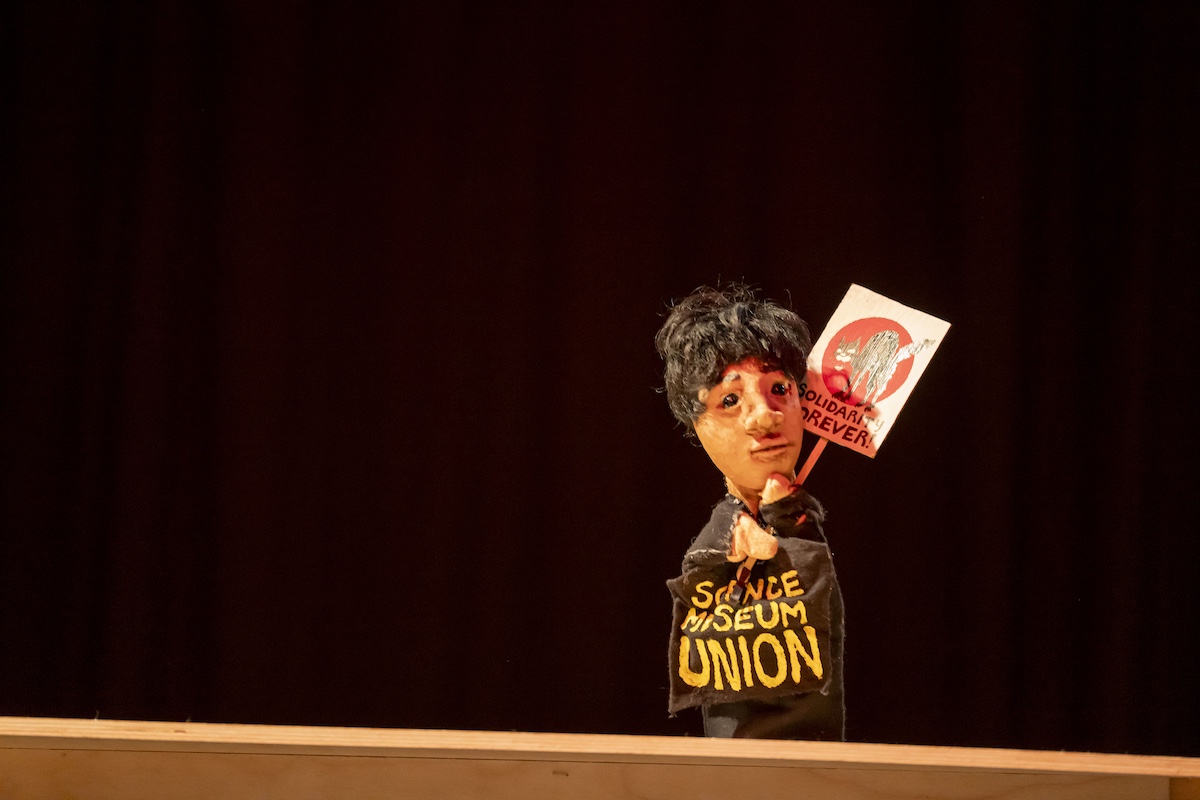
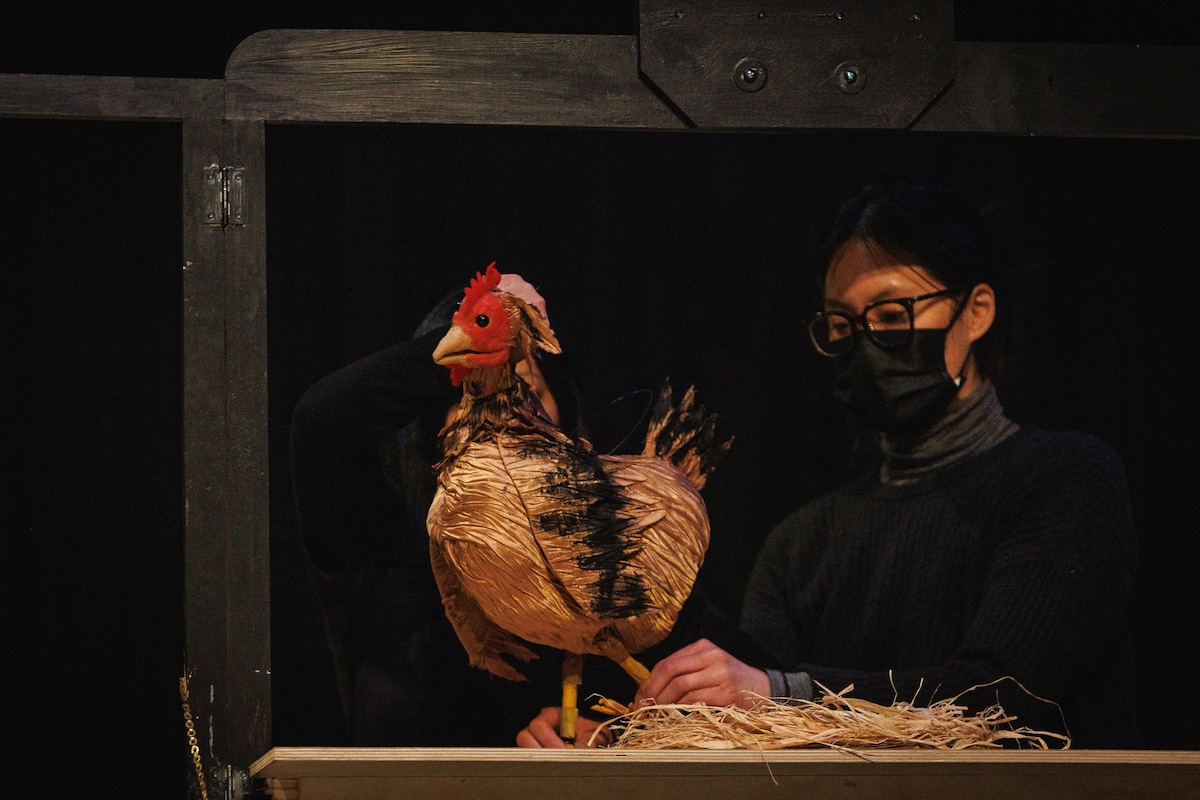
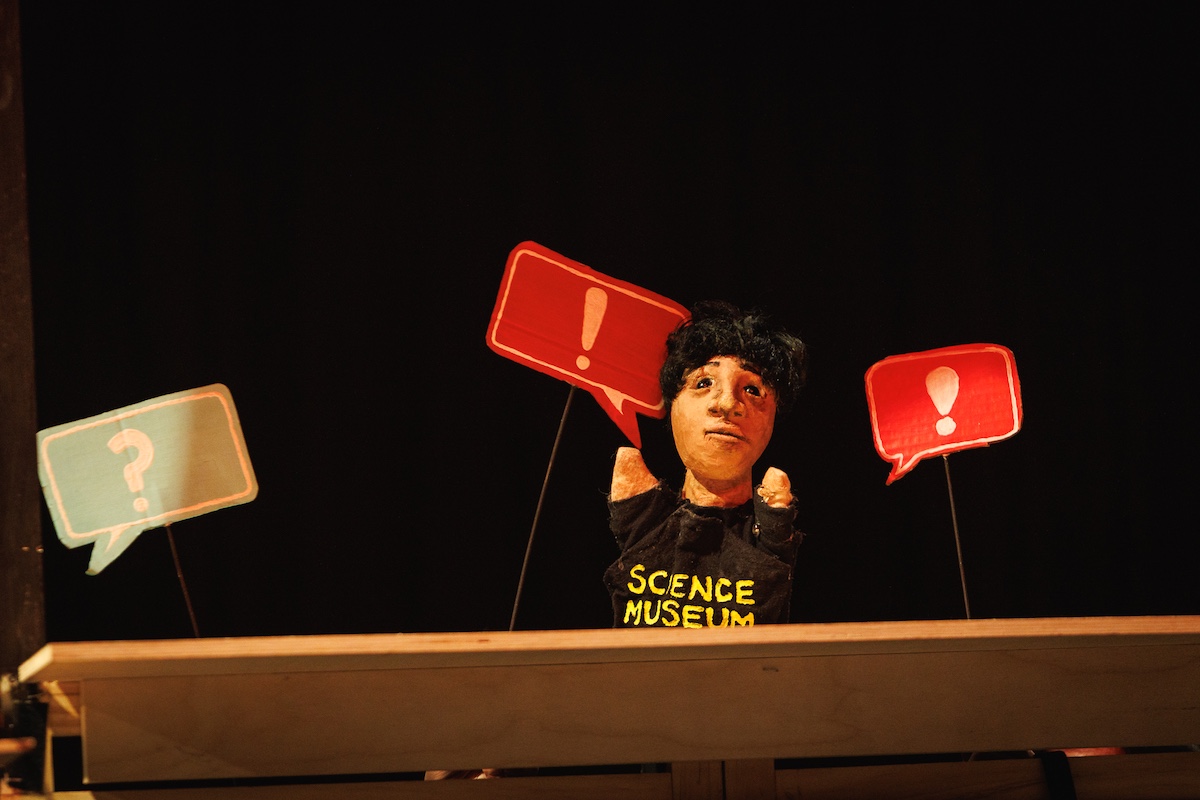
The first piece on January 23 by Oahn Vu, entitled “Time Flies,” was very literal about the trade-offs of being an artist. In one sense, the title seemed to refer to the chickens we saw onstage. One was a realistic-looking, bunraku-style puppet, built roughly to scale, whose expressive neck and flapping wings gave it life. Another was a tiny rod puppet. The third manifestation of “time flying” came onstage with a hand puppet, whose scenes were interspersed with the chicken check-ins. While life on the imaginary farm seemed pastoral, reinforced by a symphonic soundtrack, the urban artist we visited was clearly living a hectic life. Plagued by pop-up notifications (that we saw as a hovering swarm of symbols on rods), they were torn between making it to a protest, attending their dad’s birthday dinner, going to rehearsal, and submitting a grant report. In their harried state, a moment of distraction––watching a leaf floating on the wind––seemed to prove fatal when a car crashed into them (and, to add insult to injury, backed up and ran them over a second time). As only a puppet can, they got back on their feet to bow, but the philosophical sting stayed. Can art be political enough? Or do we also need time to protest? Do you honor the day job, especially one that might be artistic in its own right, or give time to developing your own work? Where does family fit in? As the scenes toggled back and forth, the puppeteer kept up a steady vocal patter of “tick-tock, tick-tock” sounds––reminding us that the clock was always running, no matter which path our hand-puppet proxy chose. It seems frustrating, but truthful, that the piece asked questions but did not give answers. I’m sure it took a lot of time to make those chickens.
On January 24, Penny Benson confronted the audience with another familiar dilemma––the wastefulness of the artistic process. At the beginning of the piece, the puppeteer unwrapped a diaphanous white puppet tied with a red ribbon from within a length of black cloth. The promising puppet promptly fell to pieces. Its butcher-paper sibling, plain but serviceable, appeared on the scene with a demand: “Put me in, Coach.” There was an echo of Ariel, Caliban, and Prospero in the setup––a testing of who had the power here and whether they had a right to it. Showing off for the crowd, the prototype puppet demonstrated that it was flexible, strong, and capable, unlike its airy sibling who had proven to be, in its words, “all shine and no spine.” As the puppeteer tried to resume the scheduled program, their puppet creation became more and more confrontational: Why should I, the puppet, as a “work in progress,” a part of the necessary “chaos of creation,” bow out quietly? The debate devolved into a well-staged fight between the puppeteer and the puppet, who was willing to go as far as choking its creator to avoid being boxed up again. (Though one wonders, of course, what would happen if it went too far—surely they would both go down for the count?) As artists try and try again, they inevitably create waste. They are losing resources, time, and emotional energy on work that remains unfinished, that never goes on display. There is either the literal, physical waste to contend with or, as some of the dialogue suggested, the need to labor intensively—“upcycle” materials—to avoid the guilt of throwing things away. Either way, the imagined price of the eventual finished product rises yet again.
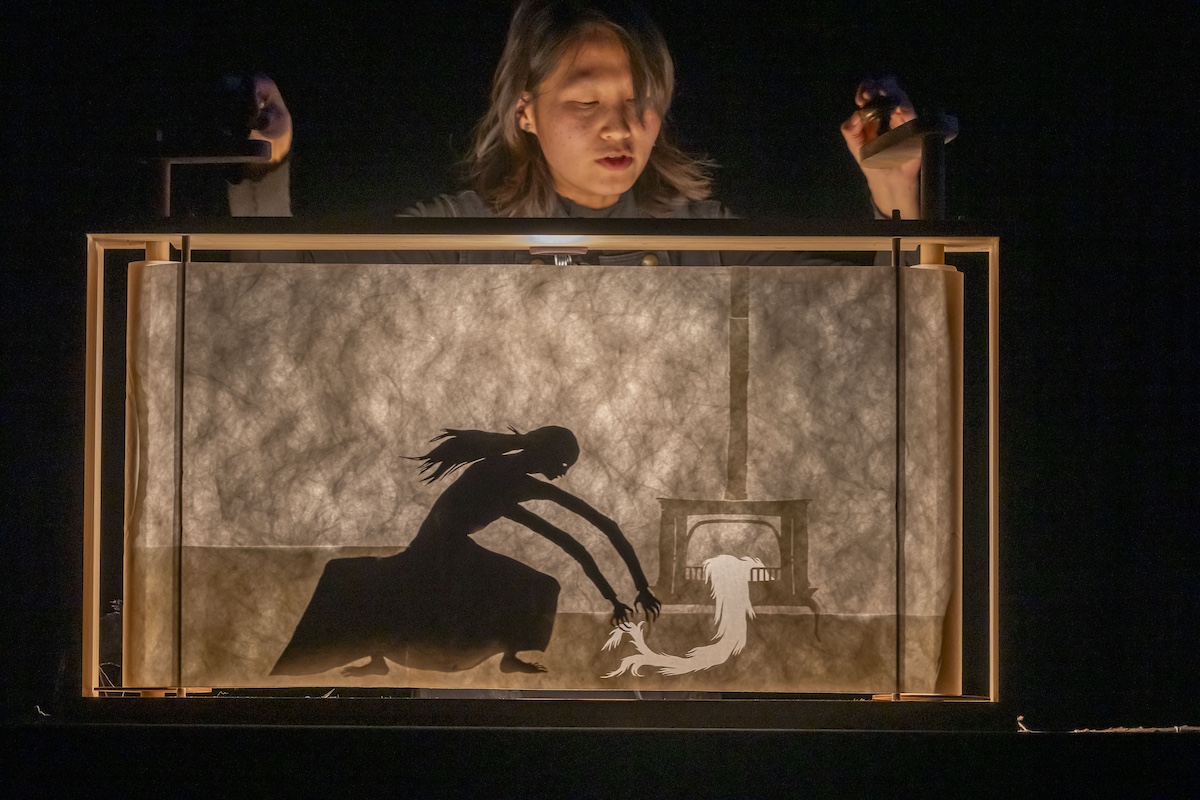
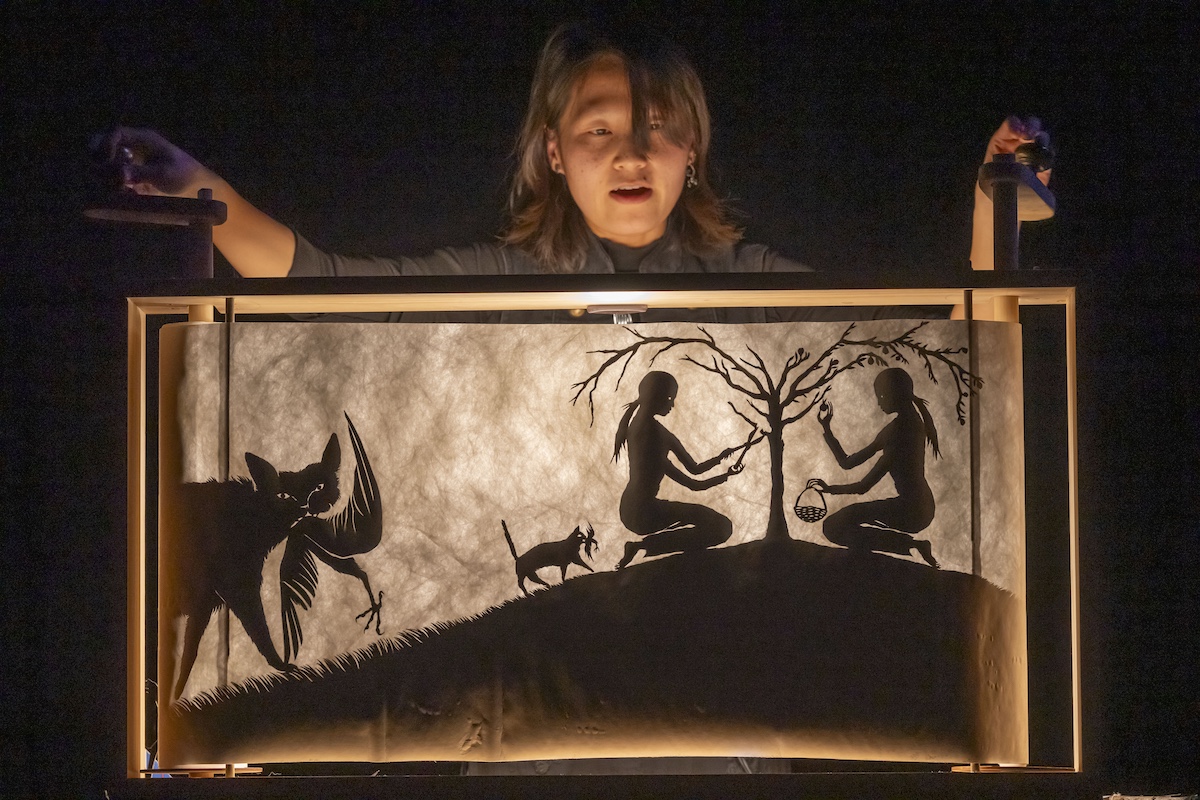
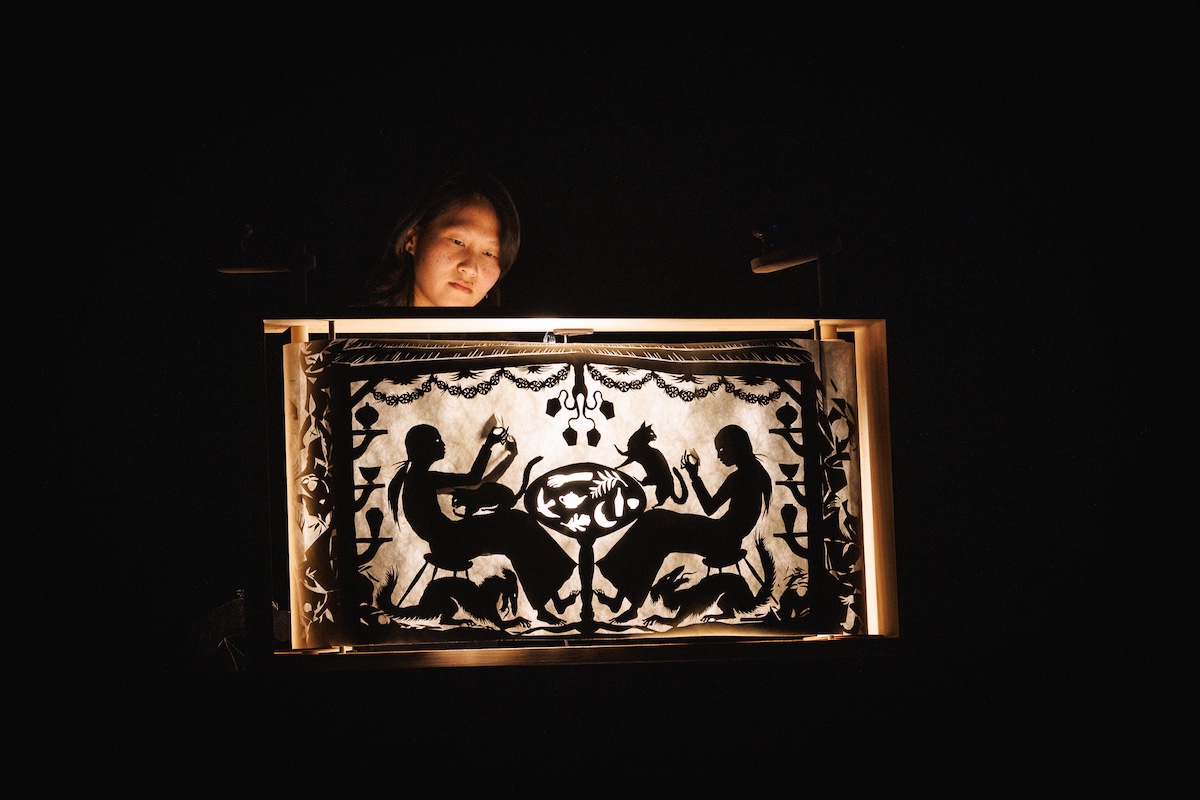
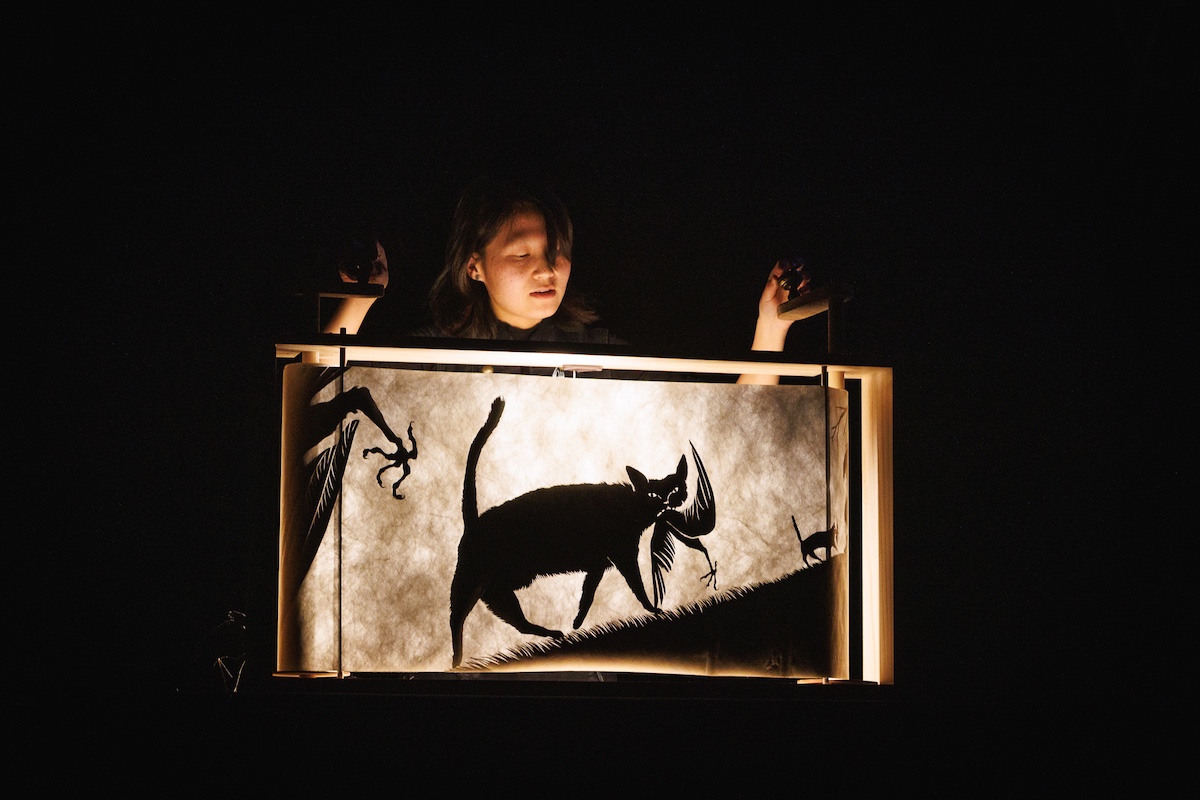
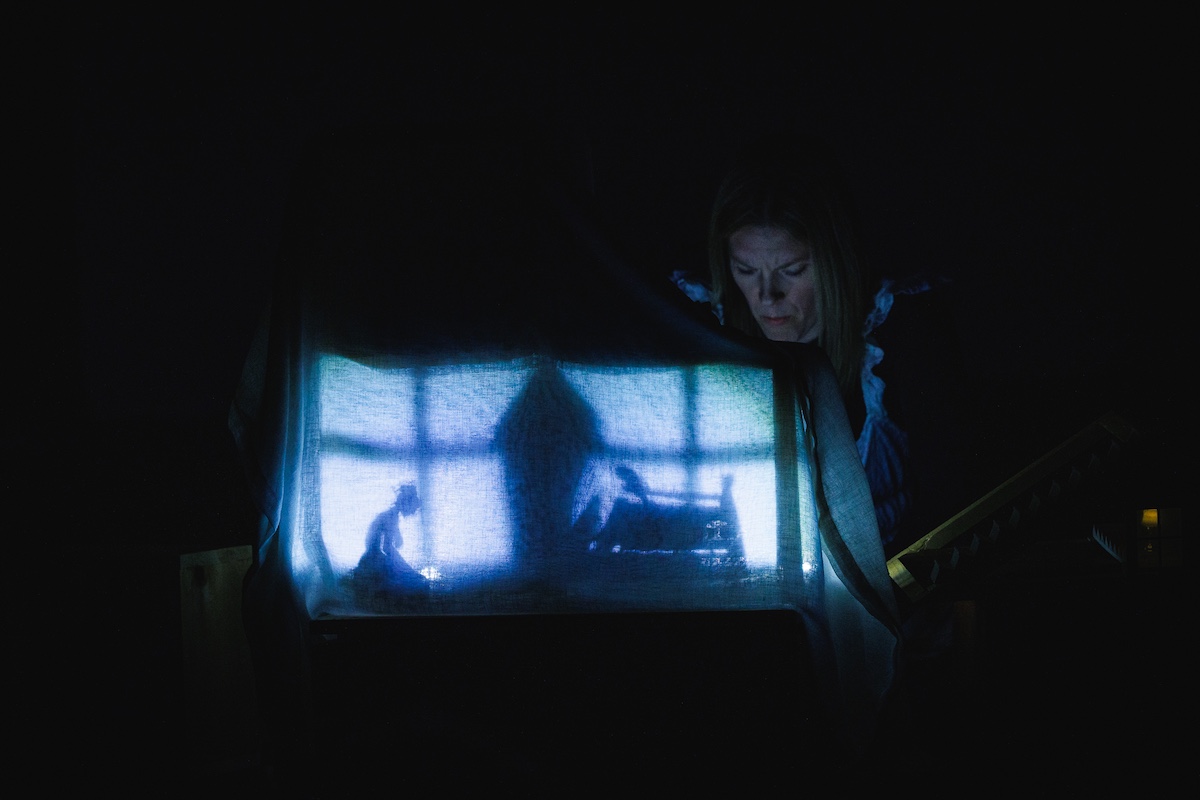
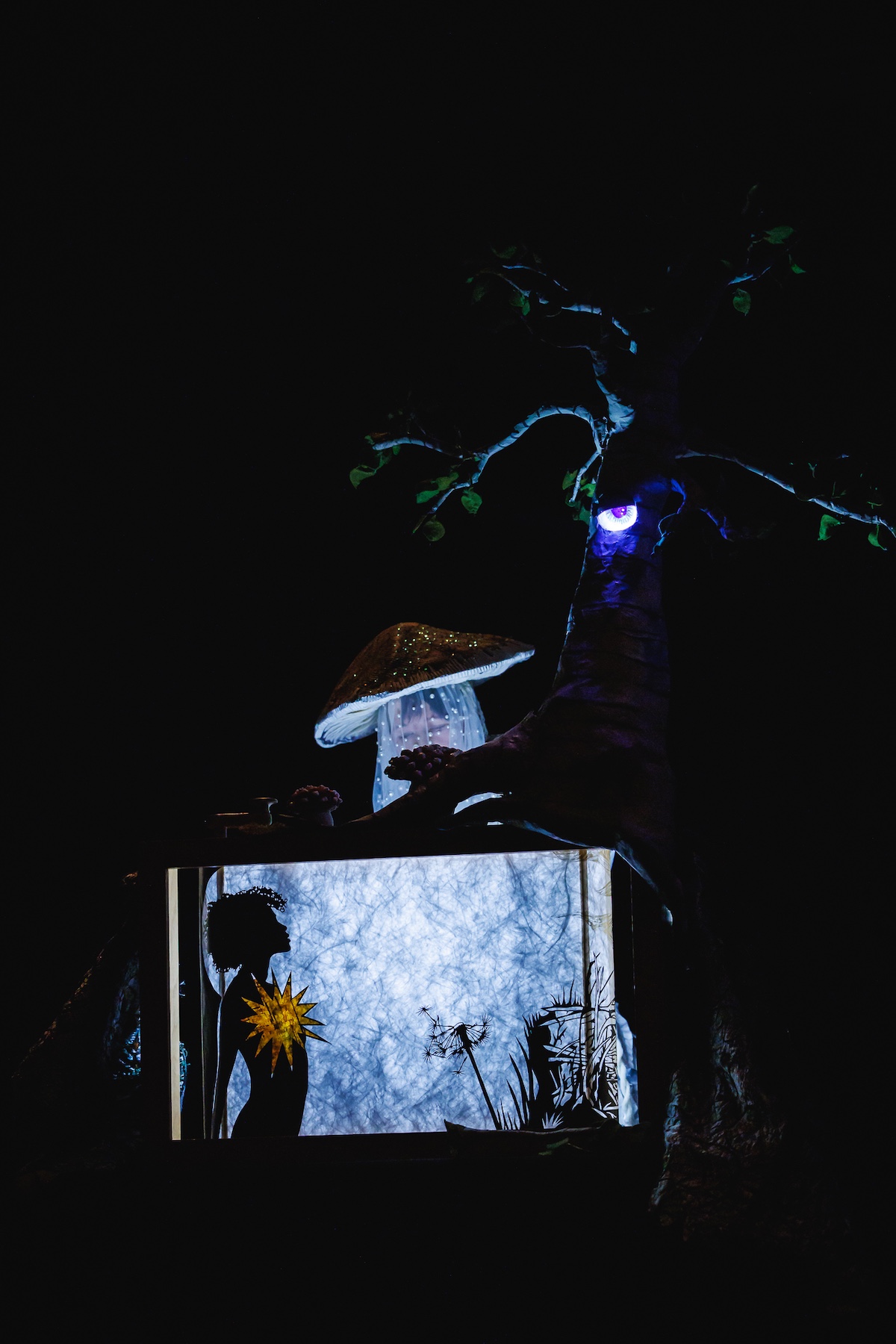
Labor is a commodity that is paradoxically limited and limitless for artists. In his writing, Lewis Hyde productively distinguishes self-motivated labor––that situationally ebbs and flows––from strictly clocked work hours. As “Time Flies” reminded us, our time is finite and, for most of us, work takes its share. Yet, in Hyde’s terms, the artist can put all the labor they want into their art without paying anyone (including themselves) a working wage for their time. What makes art worth investing in, given its poor rate of return? “The Artist” by Maisie O’Brien, presented on Friday evening, offered one answer––art, made in memoriam, hedges against loss. The shadow-making puppeteer in their parable says, to their world of beloved trees and animals, “I love you, and this is how I will keep you safe.” By cutting them out of paper, the artist doubles (or even triples, given the mirror nature of many of their lacy shadows) what they love. However, in their fairy tale, preservation proves to be a tricky business. The puppeteer, who is the artist, awakes one day to find the shadows gone, with not even their own reflection looking back at them from the mirror. To recover their world, they must make sacrifices––re-creating a version of their first puppet, a tree of life, using their body and breath to set it in motion and jump-start creation again. The flashing scissors of the artist in the shadow show suggested the process that presumably lay behind the piece––cutting out the delicate images and carefully adhering each one to the translucent scroll used to present them in performance so they flowed smoothly from still to still as tree branches twisted into roots and animals scurried under foot. The artist’s meticulous labor was clearly on display––a labor of love, a gift of time made concrete, and well worth more than the ticket price.
Works Cited
Hyde, Lewis. “The Labor of Gratitude,” in The Gift: How the Creative Spirit Transforms the World. New York: Vintage [e-book edition], 2019, 51-71.
Hyde Stevens, Elizabeth. Make Art Make Money: Lessons from Jim Henson on Fueling Your Creative Career. Seattle: Lake Union Publishing, 2013.
Nasty, Brutish & Short: Coming Together in Community to Create Good Chaos
An Essay by Tim Cusack
I’ve volunteered to write about both Nasty, Brutish, and Short (NBS) puppet slam events taking place during the second weekend of the Chicago International Puppet Theater Festival, and as I study Google Maps trying to figure out the best way to get to the venue on that Friday night, I’m wondering if I’ve made a terrible mistake. I haven’t driven in decades, and as a New Yorker, I’m super comfortable with public transportation, but it’s looking like taking that route to the Constellation Theater on the edges of the West Lakeview and Bricktown neighborhoods is going to entail a fairly lengthy ride on the Elevated followed by a bus transfer. I hate taking the bus, and it’s January in Chicago, (i.e., COLD), so waiting at an outdoor stop when the air temperature is in the teens is just about the last thing I want to do. What have I gotten myself into? I decide that I’ll walk from the train station, keeping an eye out for any approaching buses and hopping on if one comes along. My hope is at least the physical exercise will keep me somewhat warm.
Fortunately, the friend I’ve invited to be my plus-one lives in Chicago. She quickly sets me straight that my plan is bananas, one that I will come to regret if I tromp through frigid north Chicago. I pay for dinner, and she pays for an Uber to the venue. As soon as we pull up to what looks like a converted garage on North Western Avenue, I feel immediate and immense gratitude for her intervention. We seem to be in the middle of nowhere, and the avenue that I would have traversed to arrive here stretches past strip mall after strip mall—all completely deserted now that it’s ten o’clock at night.
“Sketchy” comes to mind as I scan my immediate surroundings, but upon reflecting on the myriad meanings of that word, I start to see that “sketchy” in many ways is the perfect distillation of the entire experience: rough, unfinished, improvisational, celebrating brevity, marginal, a little dirty, slightly dangerous, and not interested in mainstream respectability. All of these qualities were on display during both nights featuring work created mostly by local Chicago puppeteers, (My date for the second night also sprang for a car for us. I’m a lucky guy with amazing friends). If the ur-narrative of the 2020s in the United States is the dismantling of every structure that undergirded its imperial system, the work on display represented a grass roots resistance to, but also celebration of, that dissolution. Chants of “Fuck ICE” broke out periodically during both evenings. (F-bombs and scatological humor abounded throughout the show.) One got the sense that many of the folks present for the performance were also on the frontlines of the Department of Homeland Security’s invasion of Chi Town last year. The Empire is dying. Long live the artists who will imagine us into a better post-collapse future.
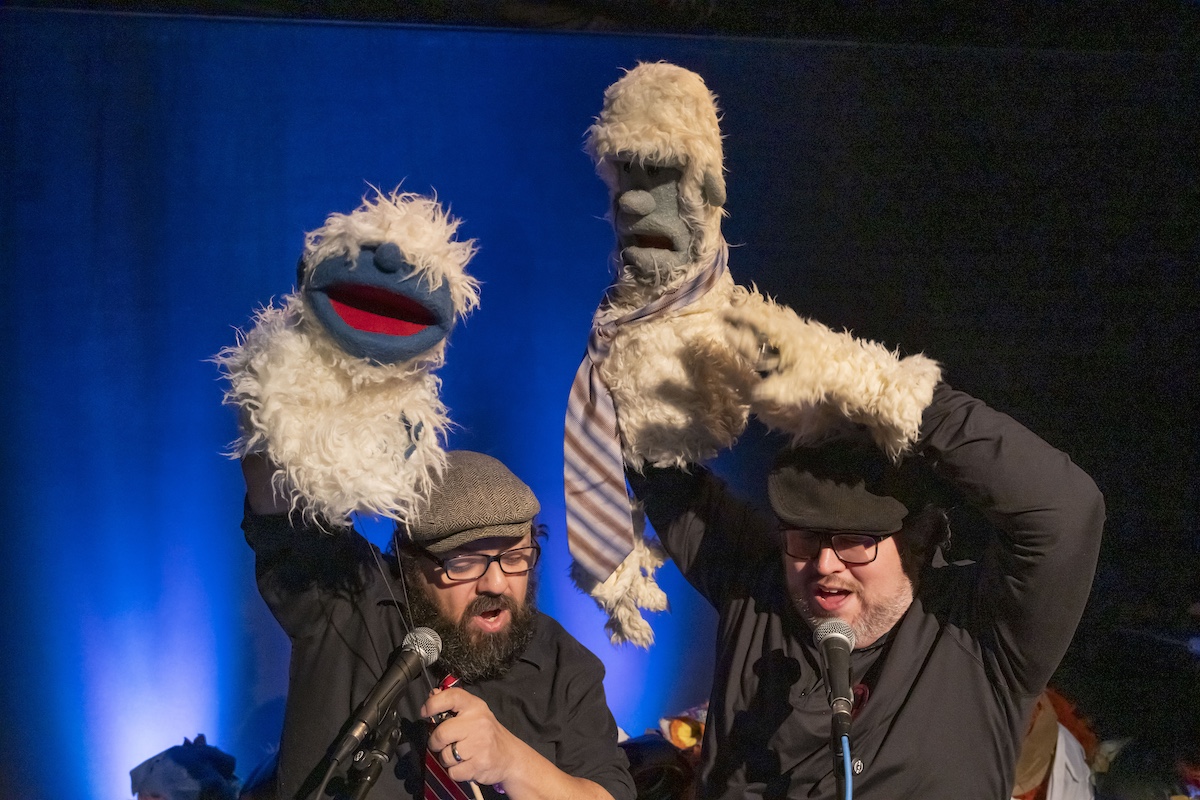
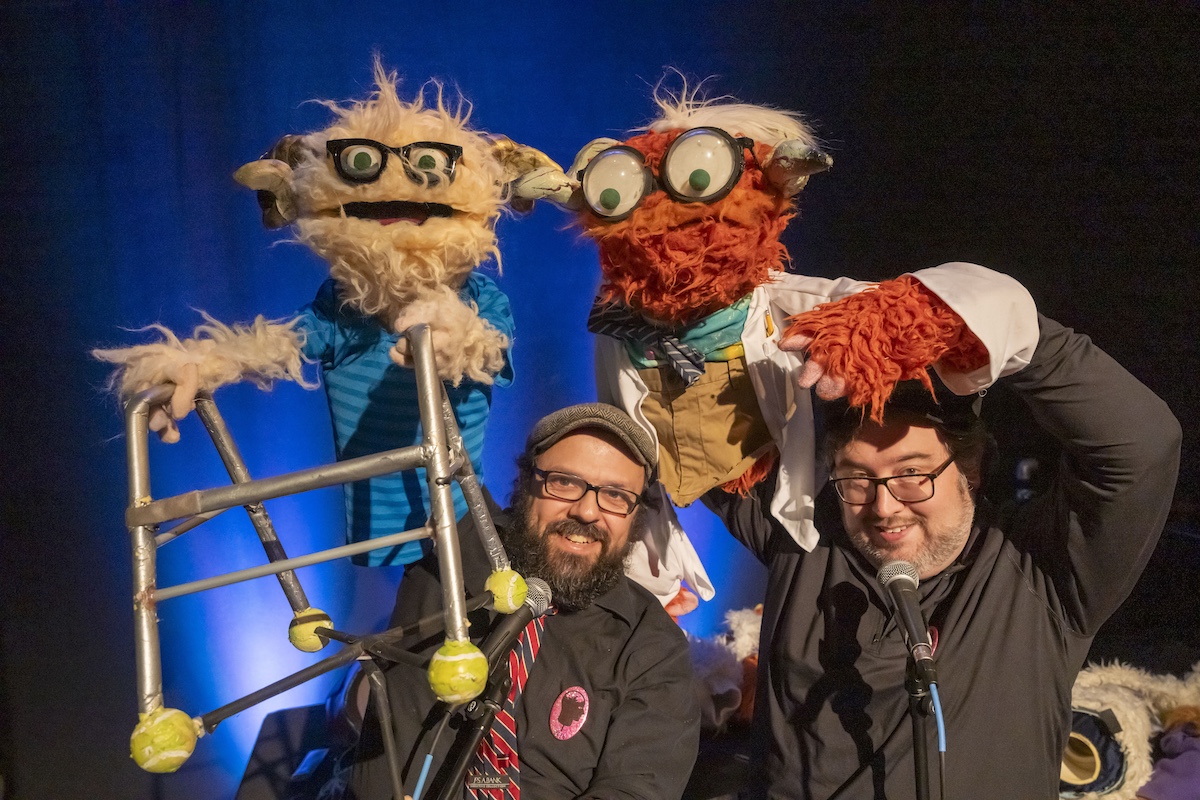
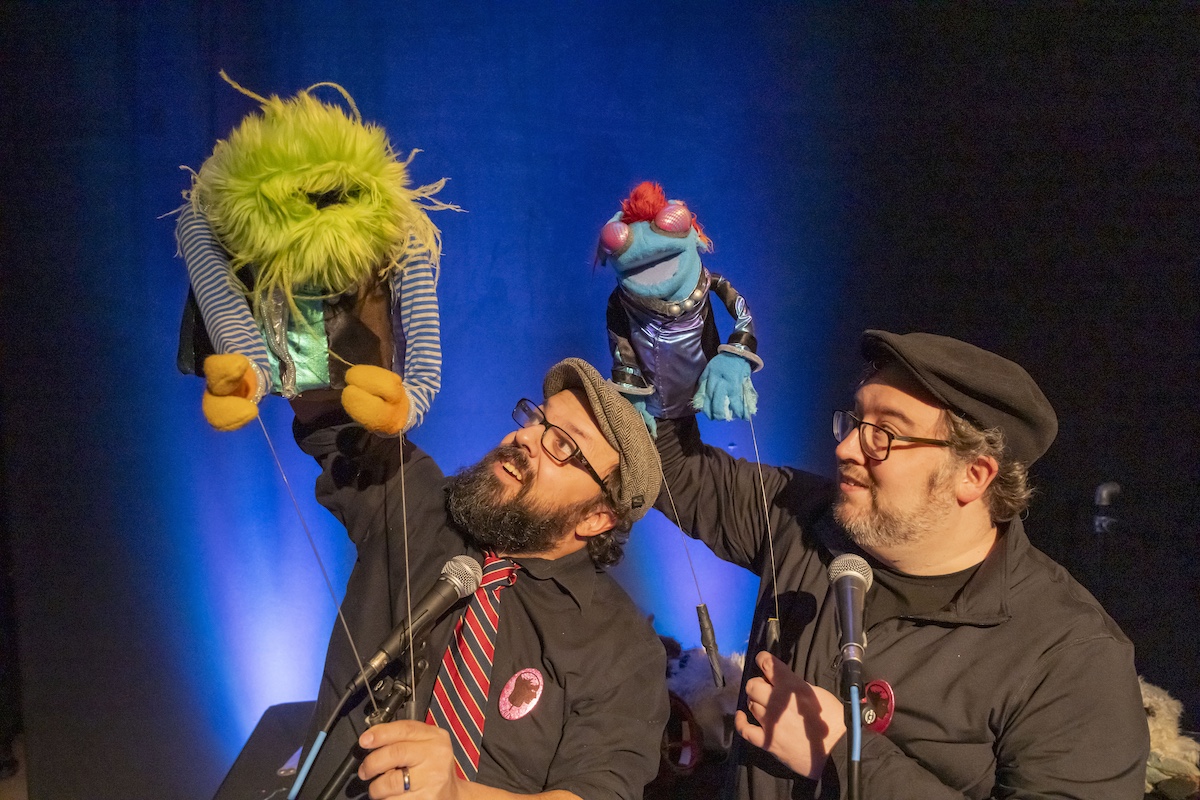
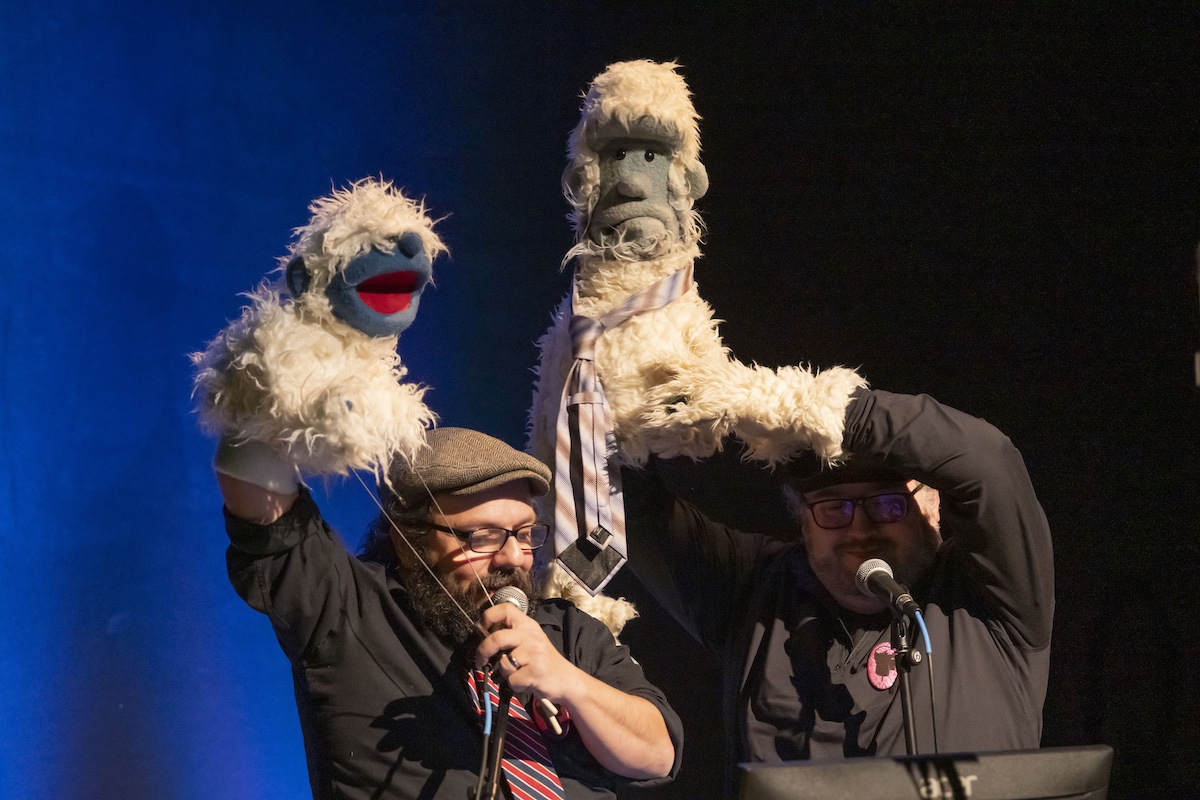
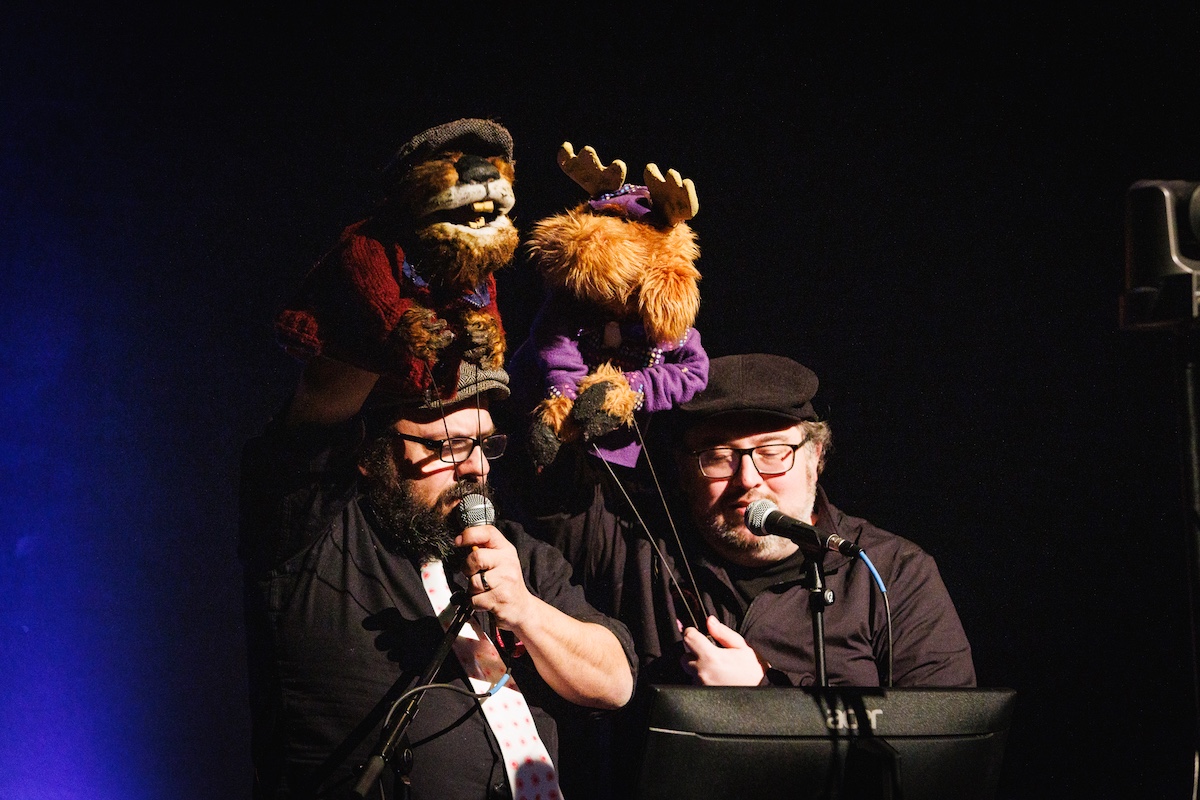
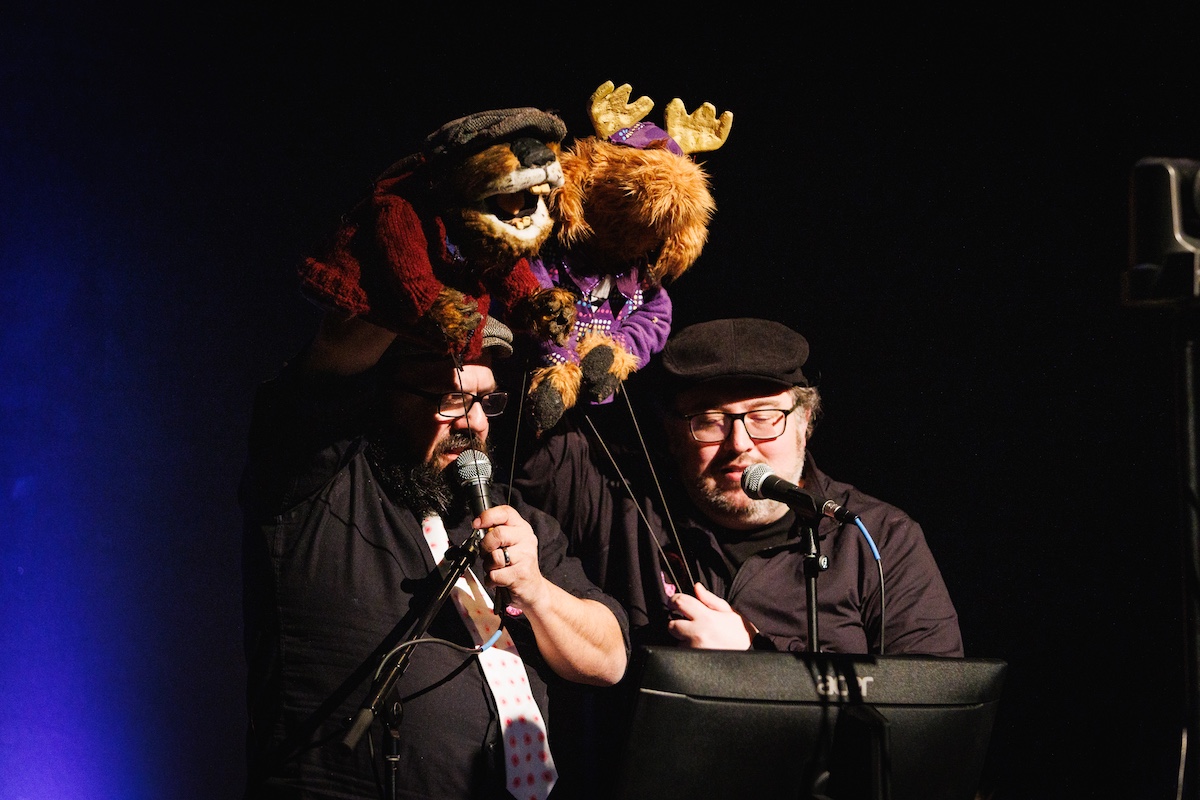
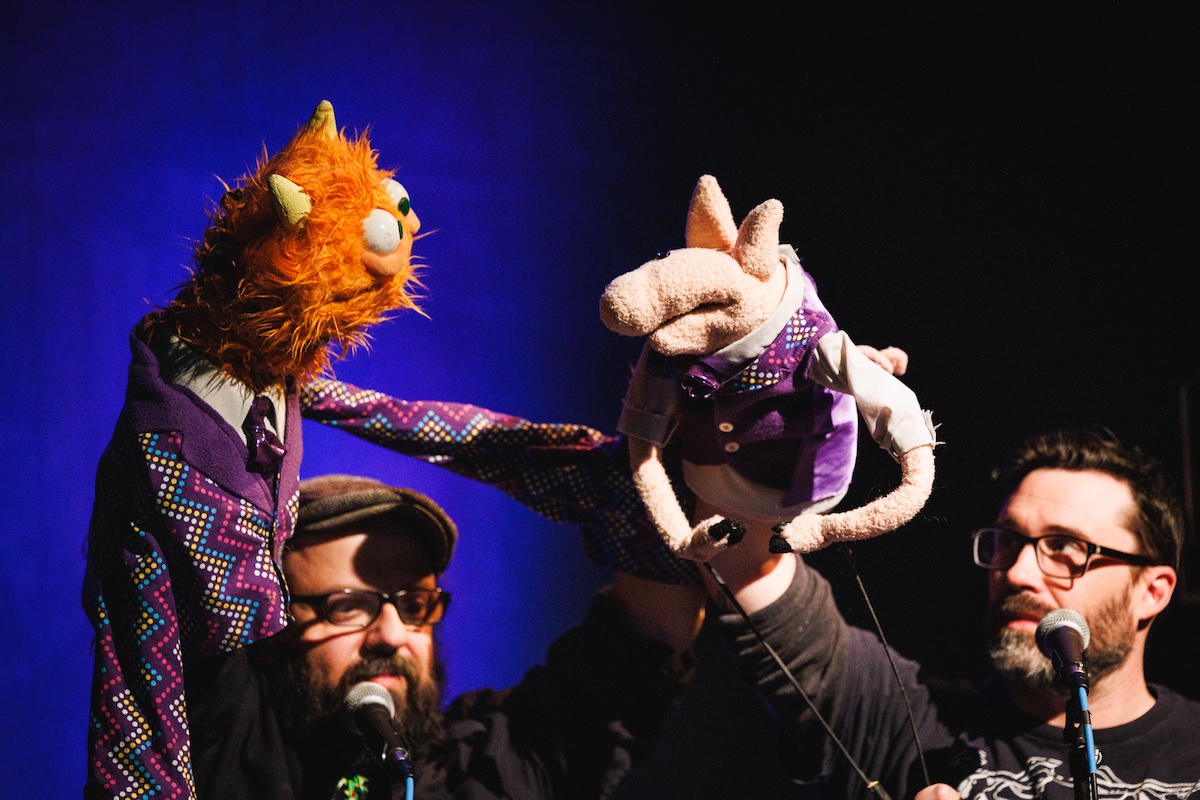
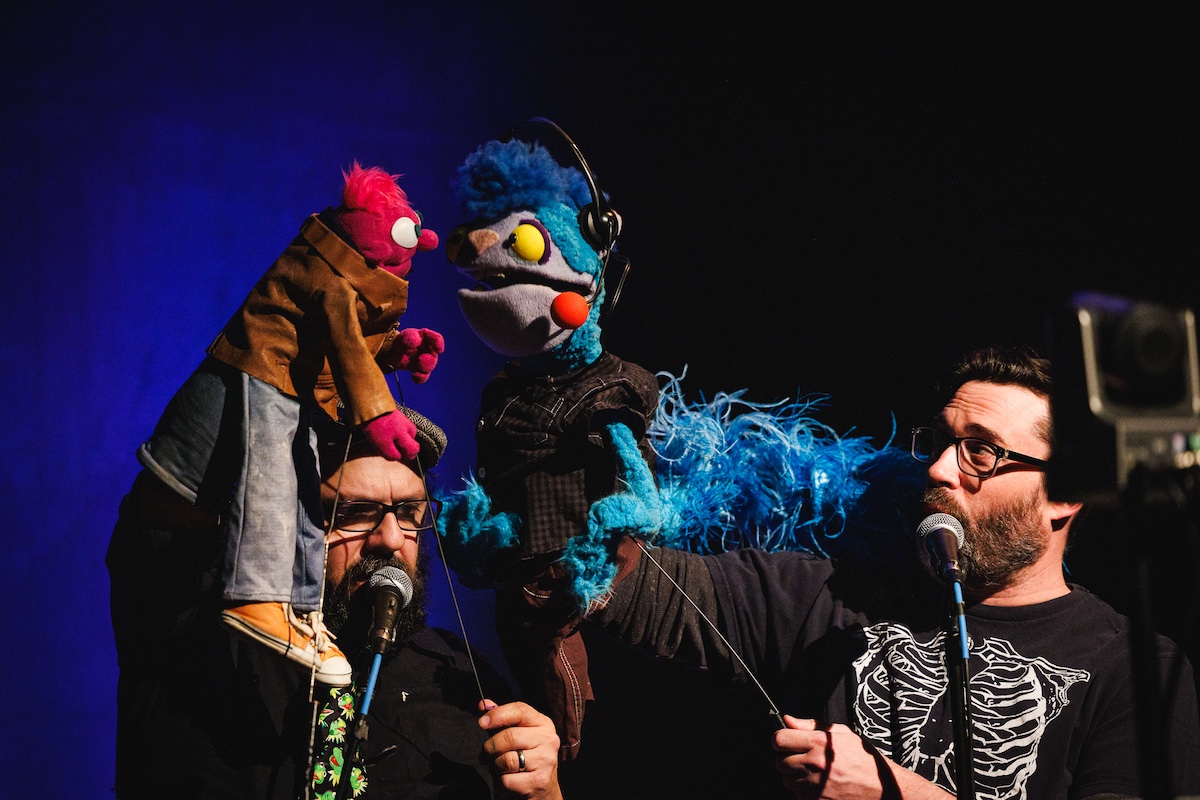
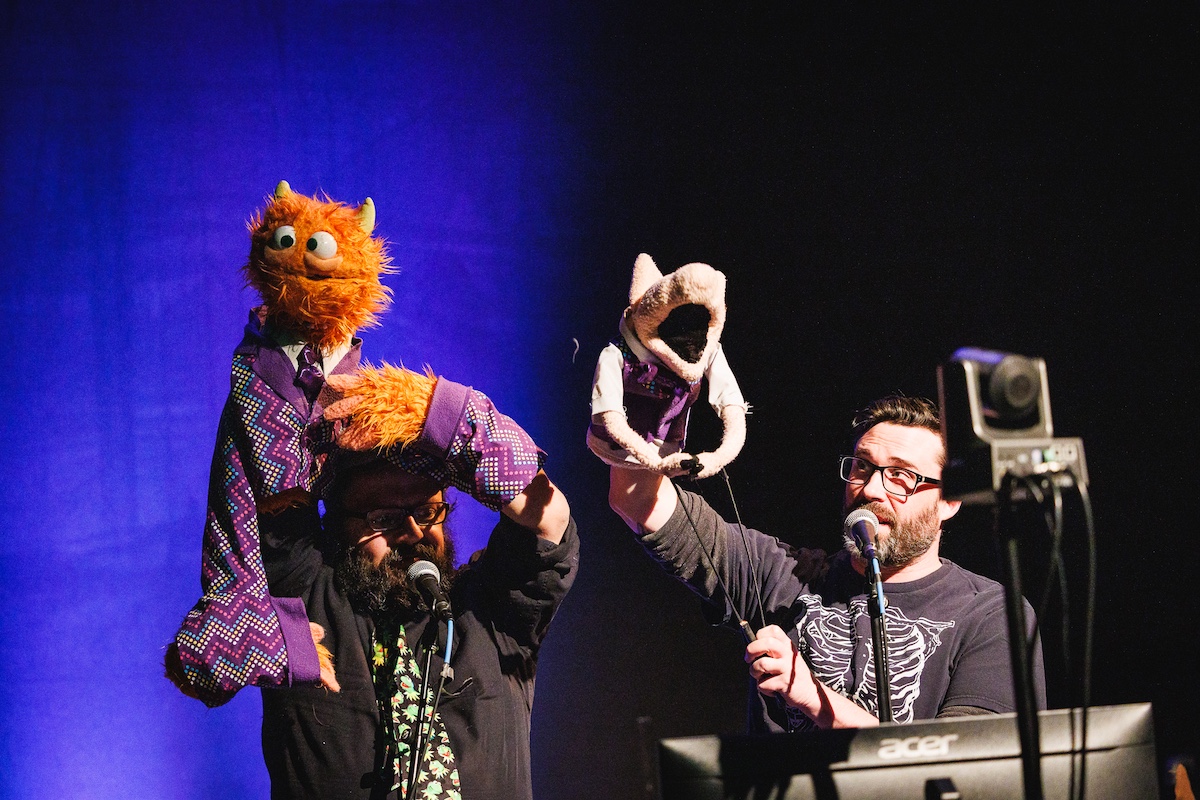
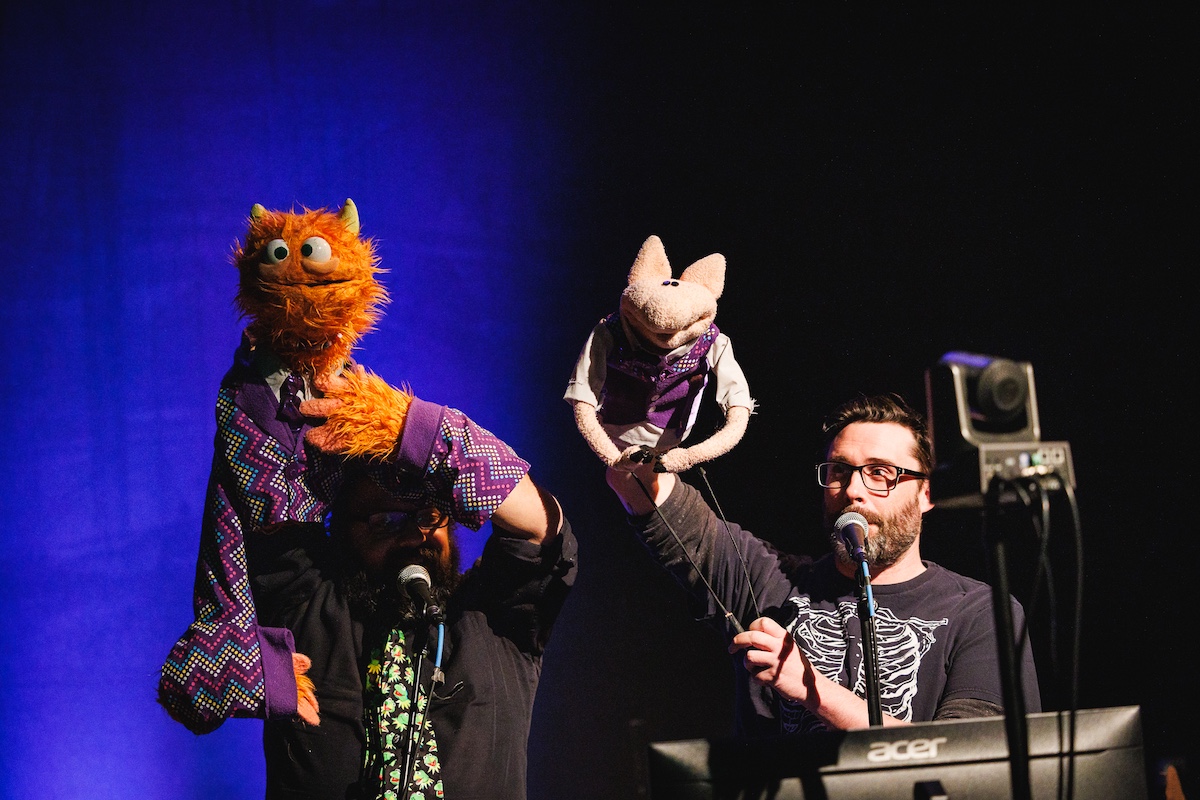
I wanted to learn more about how the cabaret sustains itself, so I reached out to co-curators Caitlin McLeod and Myra Su to ask them if they would be willing to sit down for an interview. Despite having a show that night, they agreed to meet me for coffee at the Puppet Hub in the Fine Arts Building on Friday afternoon, but only Caitlin appears for our appointment. Myra has been laid low by the flu—a reminder that theatre artists are always vulnerable to the possibility of health concerns disrupting their work. Later that night, Noah Ginex, serving as the host of the evening through his puppet character Jameson, will repeatedly enact communitas by publicly announcing that Myra’s fever has broken and wishing her a speedy recovery as she presumably watches the event in real time on its YouTube livestream. He even admonishes her to go to bed because of how late it is. These expressions of concern for her well-being feel particularly poignant and sweet coming from a Muppet-style puppet, but he also manages to throw some comic shade at Caitlin in the same moment, implying that she’s “dying up here” without Myra’s skills as an MC.
In our interview, Caitlin explains that there are three primary stakeholders committed to ensuring the continued existence of NBS: (1) Rough House Puppetry Arts, which serves as the umbrella fiscal sponsor for the series¹, enabling financial support; (2) the Puppet Slam Network, administered by Heather Henson’s Green Feather Foundation, that offers to underwrite $1000 of expenses for each slam for up to four slams a year, as well as publishing a newsletter that publicizes these types of events happening across the country; and (3) the management at Constellation Theater. Caitlin tells me that NBS has had a twelve-year association with that space, a mutually beneficial relationship in that Rough House doesn’t need to put cash up front to rent the venue, but they do need to pay for the technical staff who manage the sound system and run the livestream. The venue also gets to keep the entirety of the intake from the lobby bar, which if the two performances I attended are any indication, appears to be doing a fairly substantial business. Of course, its location in an undesirable, transit-desert area of the Windy City probably helps guarantee that this relationship will continue. By combining all of these resources, the team behind NBS is able to ensure its ongoing presence in the Chicago puppetry and theater scenes.
I am surprised (and heartened) to learn that each group of artists on the program who are presenting excerpts from new work all receive a flat fee of $150. (And to be clear, the amount of compensation is the same whether it’s one puppeteer or several.) I had thought that perhaps this was a “pay to play” situation or an open mic, where just having a guaranteed platform in itself is a form of compensation, but Caitlin explains that these are curated events for which there are numerous applicants. They produce four different slams each year during the festival, plus additional ones each spring and fall. With five artists programmed per show (plus one special guest from the main festival), that’s twenty acts in total. For those twenty slots during the festival, they received sixty applications in total—a number that has increased each year and an indication that puppetry is continuing to attract young artists interested in this form of theatre. But as she and I discuss, the fee barely covers the artists’ expenses, and most, if not all, of the participants are actually losing money by taking part in the event. Presumably the participants needed to either use a rideshare service or fill up their gas tank to drive to the venue with their puppets. An Uber or Lyft with tip is going to be around forty dollars, while current oil prices are resulting in fifty-dollar trips to the gas station. Thus transportation alone can end up eating nearly a third of the total fee. However, trying out their ideas in front of a live, enthusiastic audience of puppetry fans is part of the research and development process for creating new work, so for the artists it’s all worth it.
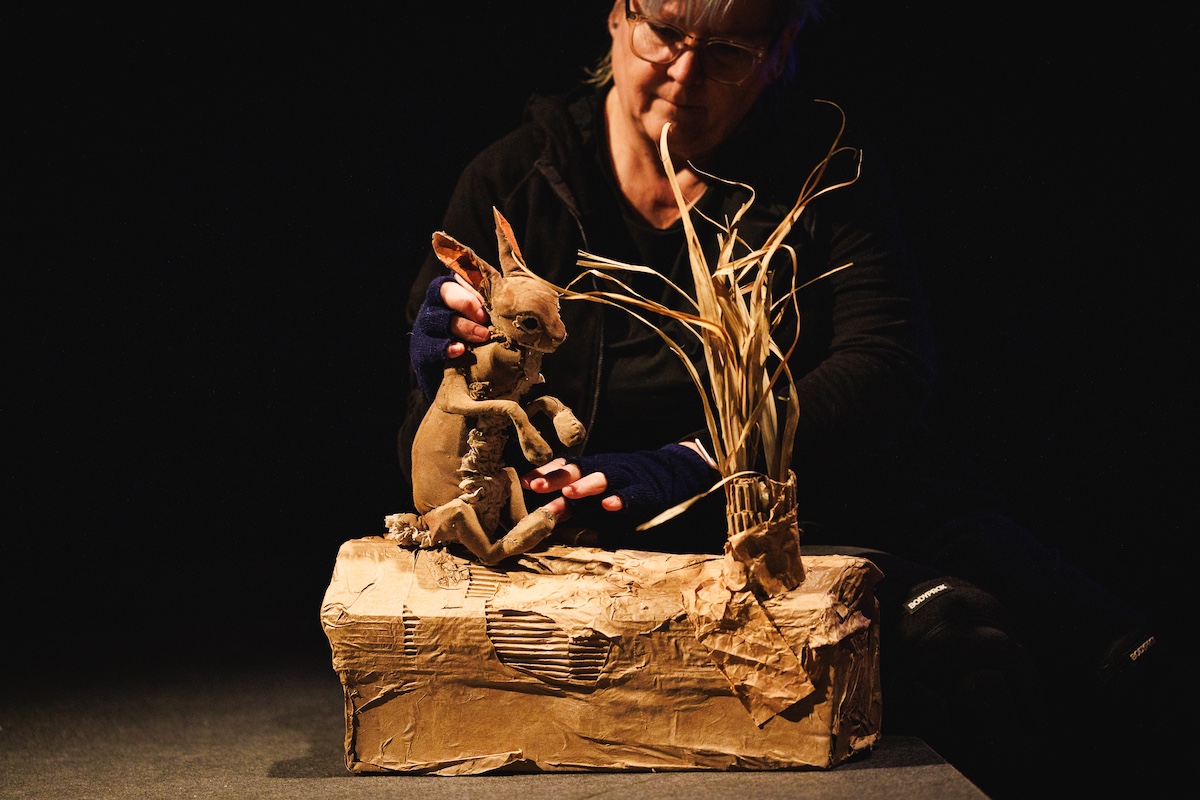
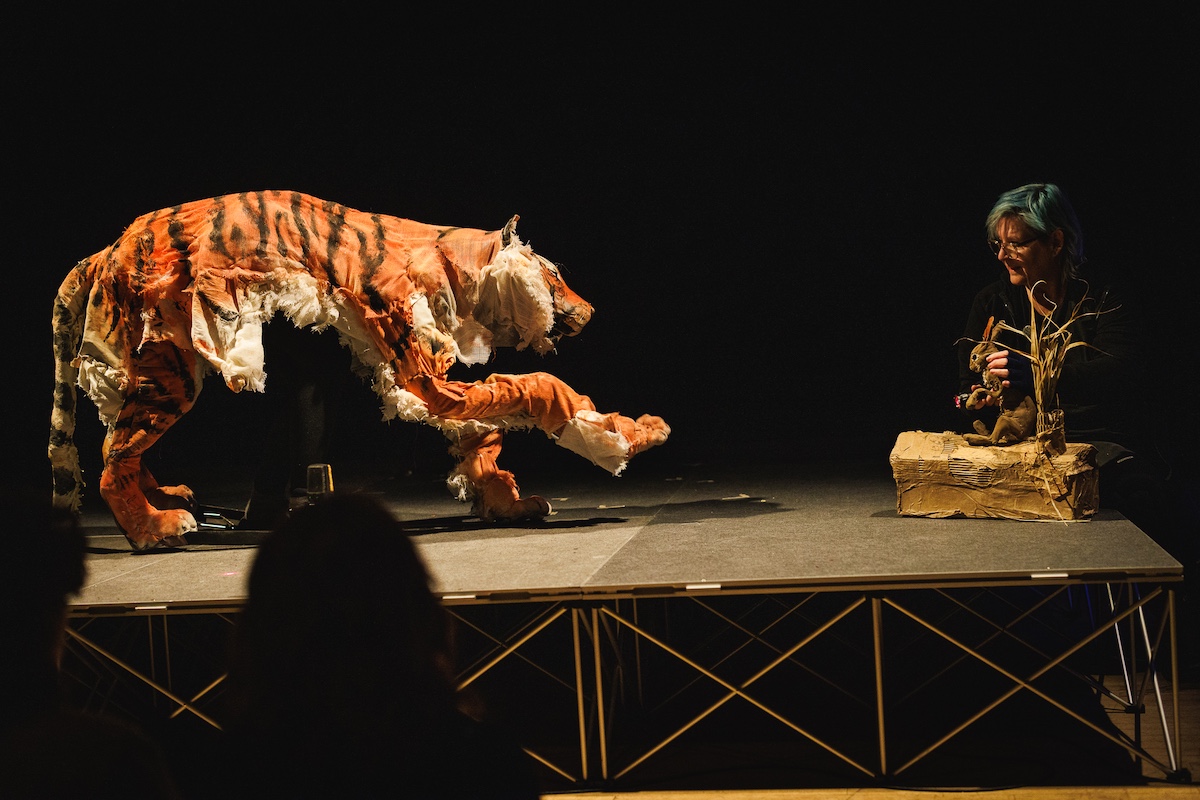
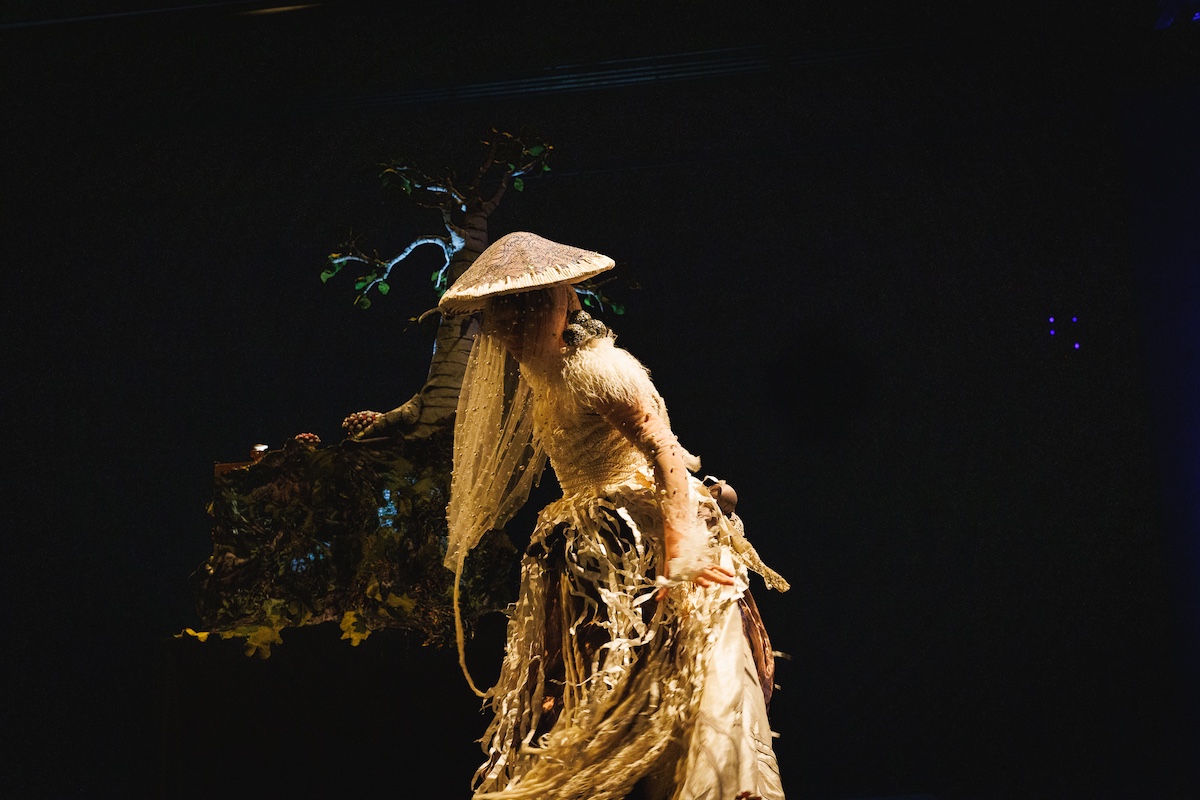
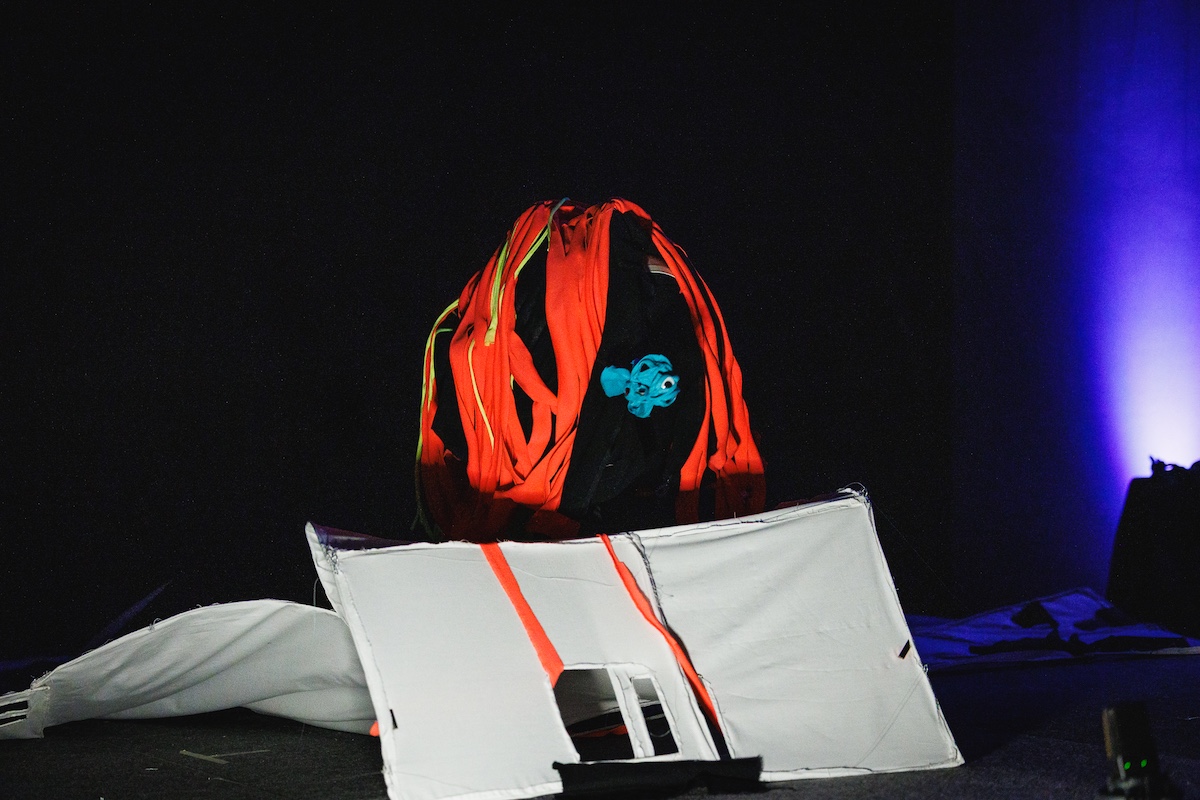
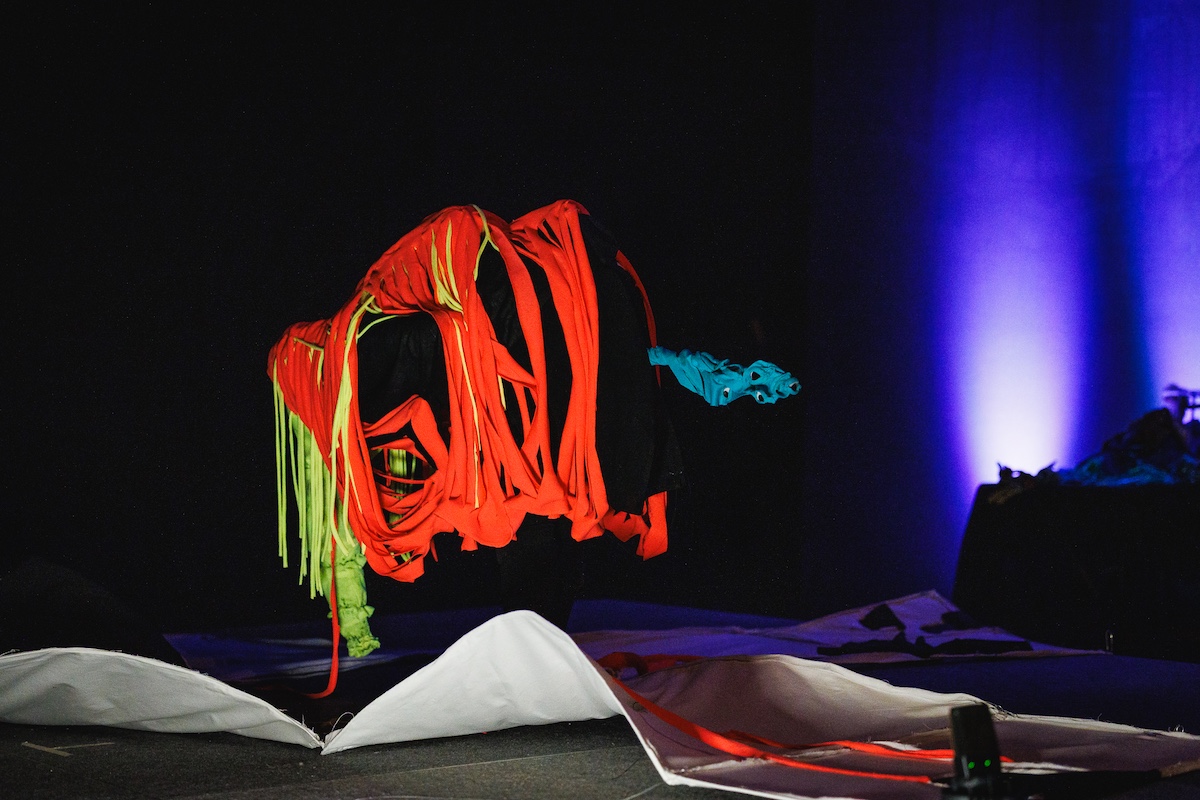
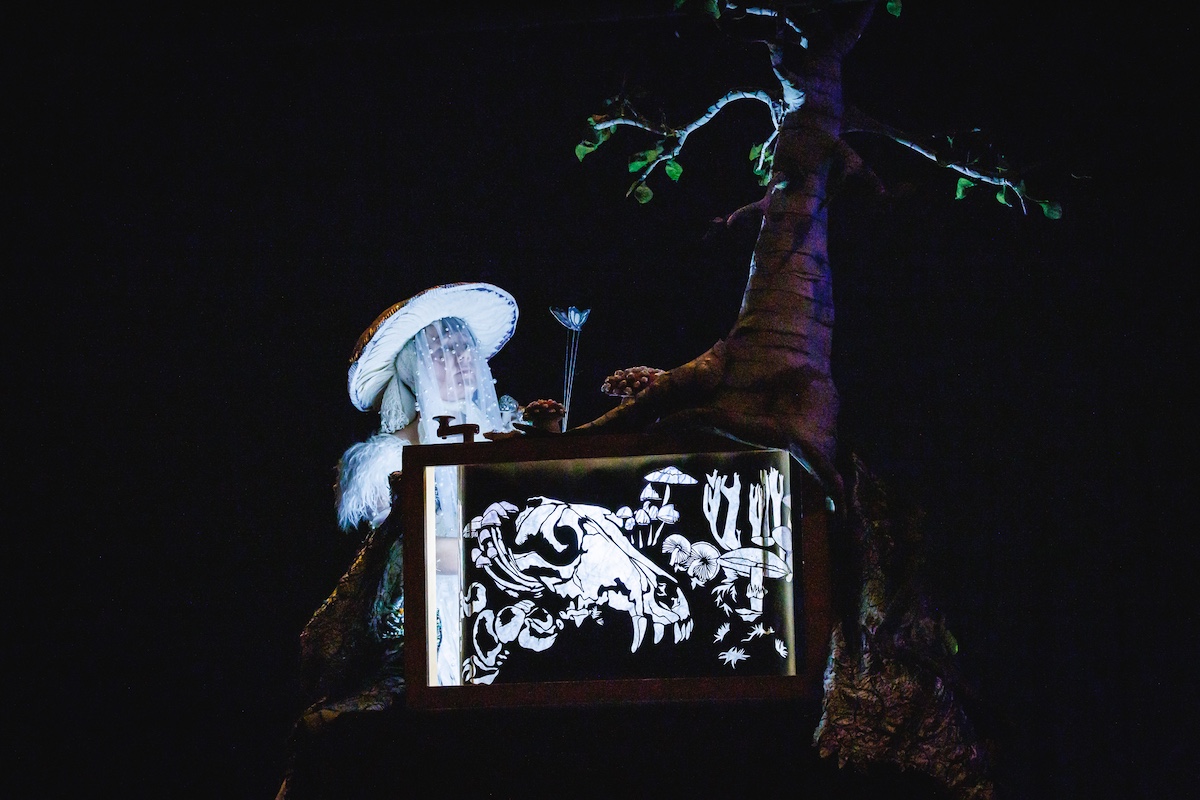
One of the chief pleasures of the puppet slam format is that each piece is only seven to ten minutes in length, so if you don’t like what’s currently onstage, you can go to the bar, order a drink, and by the time you return to your seat, something completely different will have taken its place. Since all of the work onstage is at varying stages of their process, I don’t think it’s appropriate to comment at length about any one of the pieces, but I did want to share moments that lingered in my memory: Flora & Fauna presented a tiny jointed rabbit puppet and a huge full-body puppet tiger interacting–with the rabbit triumphing; Theatre Nobody used an overhead projector to show satellite images of a rustbelt town while the artist shared a disturbing story of his confrontation with an African-American security guard; Pink House Puppets crafted a gorgeously illustrated black-and-white cranky representing the underground fungal mycelium that sustains our forests turned by an elegant woman dressed like an 18th-century aristocrat; Steven Widerman’s Puppet Company manipulated tetrahedron marionettes that glided along the floor of the performance space like abstract otherworldly creatures; Claire Saxe transformed a large cardboard box into a “Beast Box.” with long squishy puppets moving in and out of its numerous openings in increasingly erotic ways. In a country that seems to incessantly demand of its citizens that we all be exactly the same, the sheer variety of puppetry forms, styles, and narratives on display and the way that NBS elevates the sketchy over polished perfection, gives me hope that the dark forces we are currently battling aren’t going to ultimately succeed, not with this community embracing this kind of creative chaos.
¹ Fiscal sponsorship is a fairly common model in the nonprofit arts sector. Established organizations that have completed the expensive and time-consuming process of securing an official 501(c)(3) tax-exempt determination from the Internal Revenue Service will often partner with newer organizations or individual artists to accept donations from private individuals and/or grants from both government agencies and NGOs on their behalf. Only donations to an official 501(c)(3) organization are tax-deductible, so this is a way for artists unaffiliated with a not-for-profit corporation to garner support. In exchange, the larger, more well-established organization will often retain a certain agreed-upon percentage of the funds to underwrite administrative costs.
January 23, 2026 Live Stream
January 24, 2026 Live Stream
Jan 30, 2026 Live Stream
Jan 31, 2026 Live Stream
Festival Performances
About the Performances
 January 23-24 and 30-31 2026
Constellation
3111 N. Western Ave.
Don’t let the evening end! Come join the fun at this fan-favorite late show where eyebrows meet lowbrows. Enjoy Chicago’s long-standing puppet cabaret with your hirsute host Jameson and somewhat furry friends for a naughty night of raucous, dark, sassy, sad and highly unusual puppet theater. Out-of-towner puppeteers are invited to join local legends for friendly unwinding. All shows are at Links Hall this year for the Nasty, Brutish & Short puppet cabaret.
Reviews & Interviews:
Dispatch: International Puppet Theater Festival Launches With Innovative Shows Performed by Puppeteer Teams and Solos by Third Coast Review Staff for Third Coast Review (Nasty, Brutish and Short review by Karin McKie)
Lineup
January 23:
Maisie O’Brien (Philadelphia, PA)
Rubicon Studios (Boise, ID, and Chicago, IL)
Zlata Godunova (New York City, NY)
Karen Hoyer (Chicago, IL)
Oanh Vu (Minneapolis, MN)
Tian Gombau (Spain)
January 24:
Heidi Tungseth (Minneapolis, MN)
Felix (Chicago, IL)
Plucky Rosenthal (Chicago, IL)
Maïté Agopian (Fairbanks, AK)
Penny Benson (Seneca, SC)
Dante Ingram (Chicago, IL)
January 30:
Brzezinski & Schap (Boston, MA)
Pinkhouse Puppets (Barton, VT)
Theatre Nobody (Chicago, IL)
Flora & Fauna (Chicago, IL)
Claire Saxe (Chicago, IL)
Mark Down (UK)
January 31:
Eva Cranky Pantz (Brooklyn, NY)
The Puppet Company (Chicago, IL)
Lindsey Ball (Chicago, IL)
Tanima (Chicago, IL)
Daniela N (Cincinnati, OH)
Anurupa Roy (India)