2026 Festival Archive: Free Neighborhood Tour with Tian Gombau
Free Neighborhood Tour with Tian Gombau: Stone by Stone
January 22-25, 2026
Various Locations
Presented by Chicago International Puppet Theater Festival
With special support from Pat Yuzawa-Rubin and Chicago Park District
Scholarship and Resources
Building Community Stone by Stone
An Essay by Skye Strauss
Including Tian Gombau’s Stone by Stone in The Free Neighborhood Tour promised award-winning puppet theater to a broad audience as part of this year’s festival. According to the Chicago International Puppet Theater Festival website, the tour “brings free, family-friendly performances to locations outside of Chicago’s theaters” in order to offer audiences “moments of community enjoyment while expanding the city’s base of puppet enthusiasts.” Who these untapped audience members are has a variety of answers. These shows are for the young—and the young at heart—to expand the age range of a festival largely aimed at adults (knowing full well that the children at these shows might someday grow up to be adult festival goers). They are also free—eliminating, or at least lowering (depending on transit costs), socioeconomic barriers to attendance, broadening access to the arts across class lines. They also “visit” neighborhoods with different cultural identities, neighborhoods that are populated by different racial and ethnic groups in a segregated city. Clearly, this is an optimistic bid to diversify the festival’s audience in a variety of ways.
Slogging through the snow from the Green Line, and later watching other attendees pile out of cars and cabs, I also considered how audience members who choose to follow the puppets are drawn to neighborhoods they might not ordinarily visit. This is both hopeful and potentially troublesome. It is not uncommon for the arts to serve as a tool of gentrification. People are drawn to a new-to-them neighborhood, their positive experiences at arts events rewrite their understanding of that place, and eventually they move there and rearrange the character and resources of that community to suit themselves. To be the positive force these tour stops are intended to be, they need to do more than invite people to new places; they also need to foster care about the people in those places and a capacity to respect and protect difference.
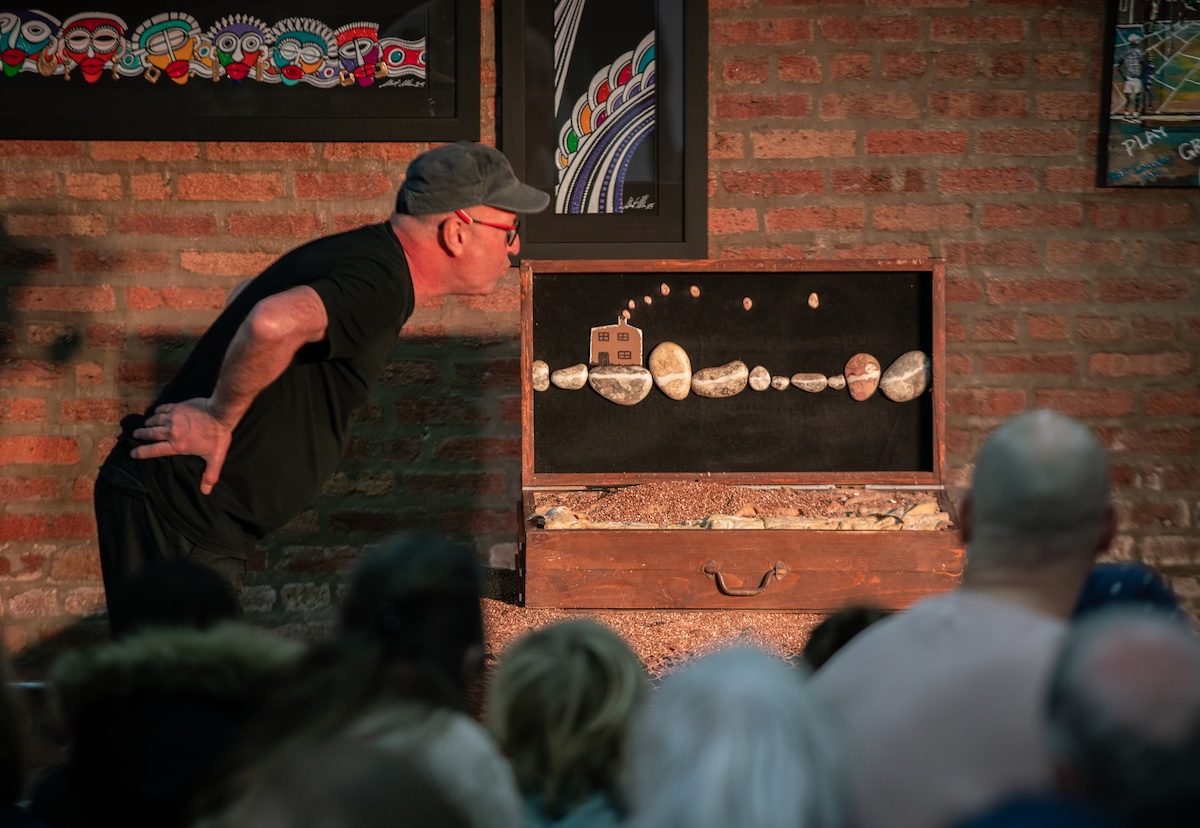
I attended Stone by Stone for its last performance, at the 345 Gallery in East Garfield Park. The site, combined with the show, offered the sort of hopeful cultural collision The Free Neighborhood Tour’s mission implies. A Spanish guest performer was putting on a show in a gallery space aimed at cultivating urban artists, where pieces on the walls celebrated Blackness and were visibly influenced by African colors and motifs. As parents and children bundled in out of the cold, representatives from the gallery were mopping up salt and slush and herding children into the semicircle of seats closest to the stage. In this case, the community was focused on its youngest, most impressionable members.
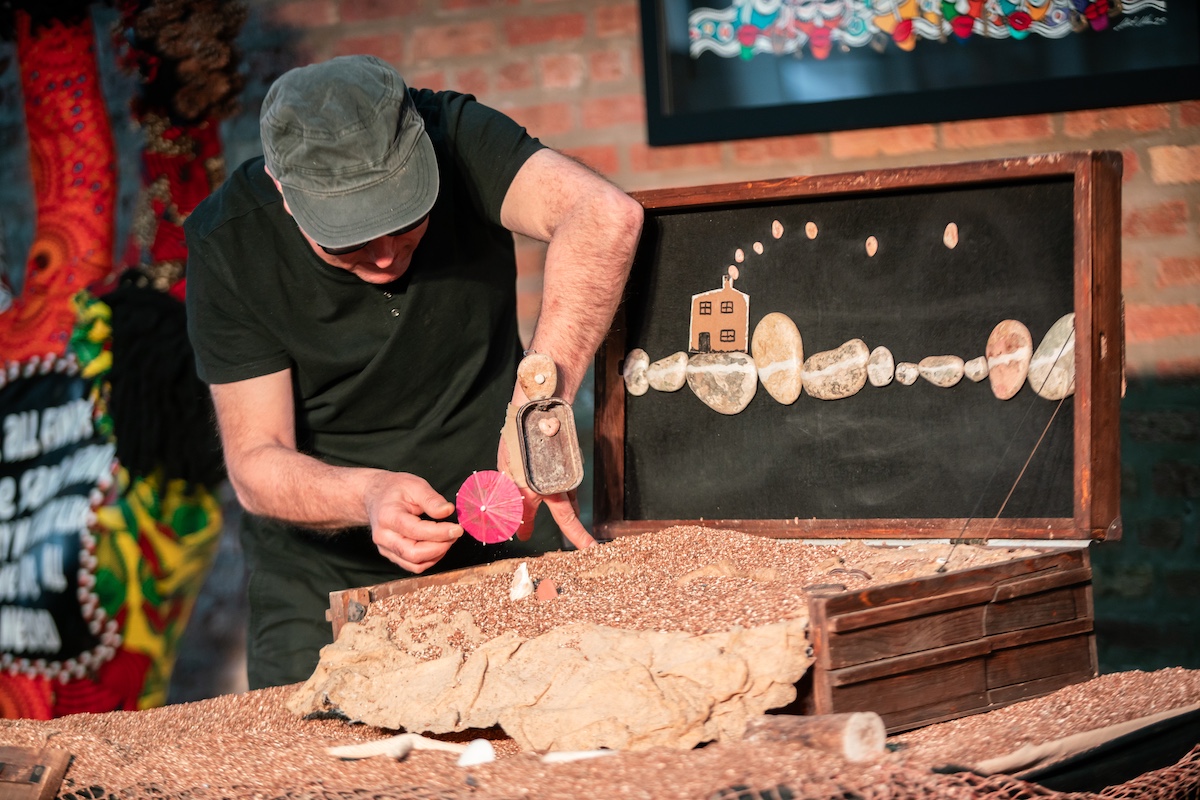
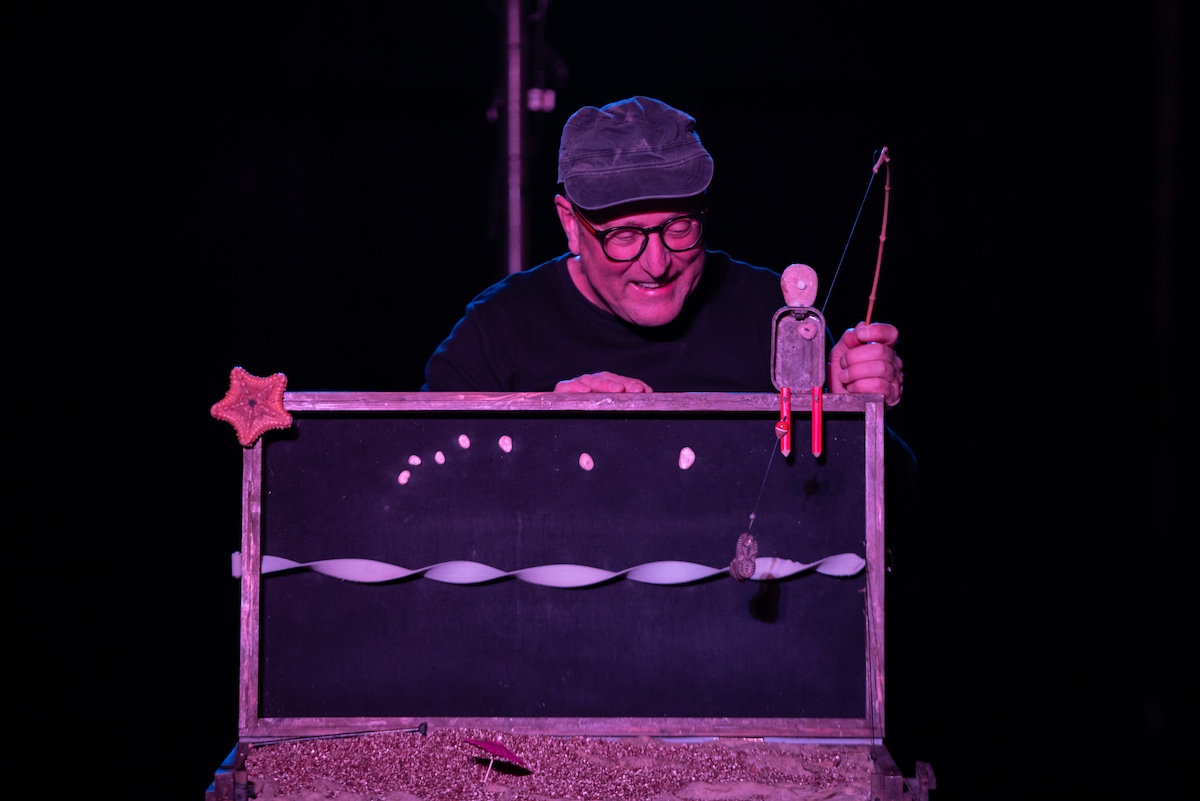
It was obvious that we were going to take an imaginary trip to somewhere warmer. Even before the preshow announcement specifically introduced Valencia, Spain, into our mind’s eye, the crate draped in fishnet, studded in shells and starfish, and surrounded by “sand” made it clear that we were going to the beach. The ambers and blues of the lighting combined with the sounds of seagulls and crashing waves helped to carry us further toward the ocean as the show began. Gombau recalled walking barefoot on the beach and beginning to collect stones, which he showed us meticulously organized into specimen drawers like once-living things. The immediate link to a youthful habit of collecting flotsam and jetsam to pass the time on family vacations offered a bit of nostalgia to the adults and an invitation to identification to the children. More importantly, Gombau’s object-manipulation skills and gift for seeing what is possible in what is present uses the commonality of the stones to extend a crucial invitation: We will create this show together, in real time. Be my community, imagine along with me.
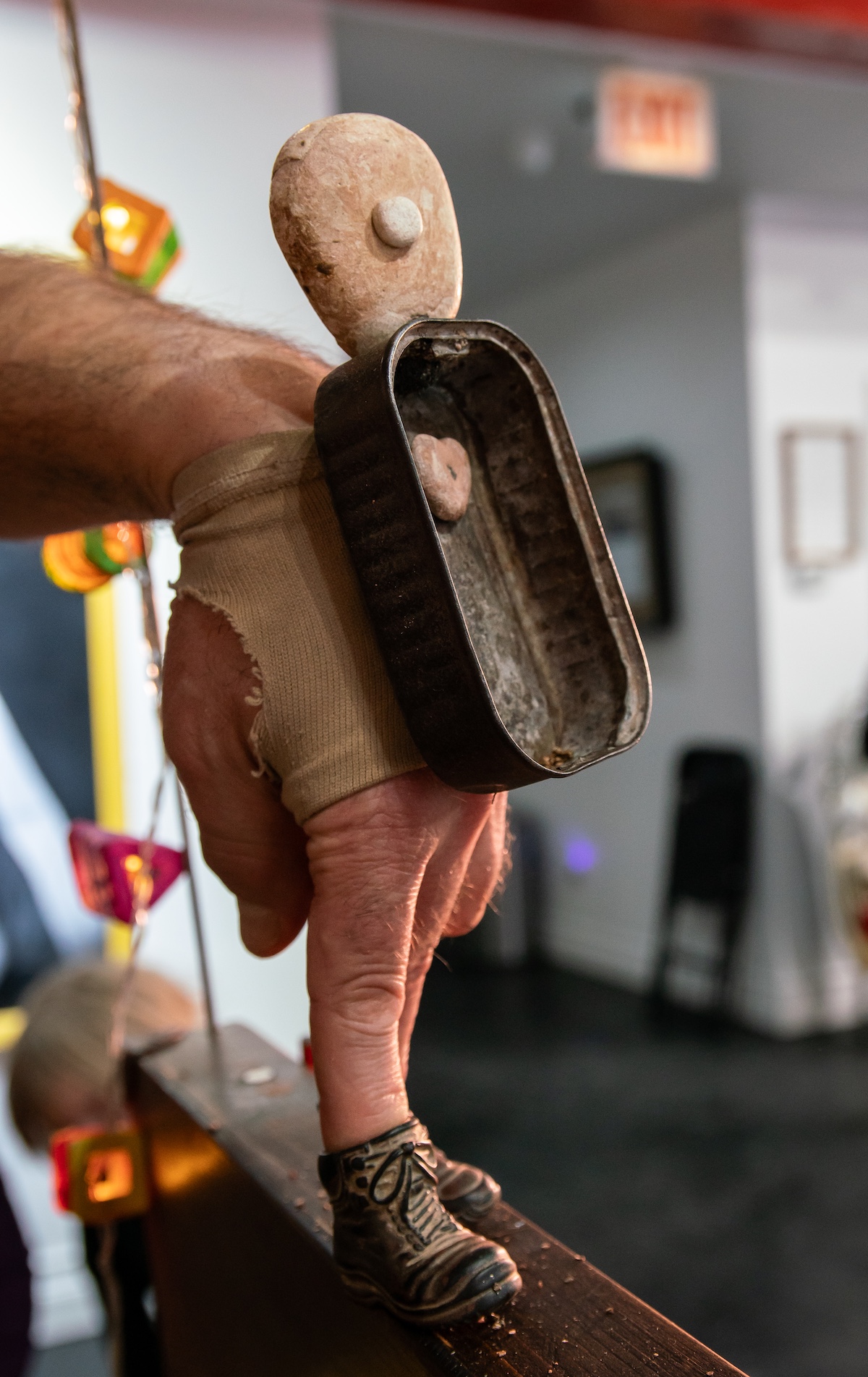
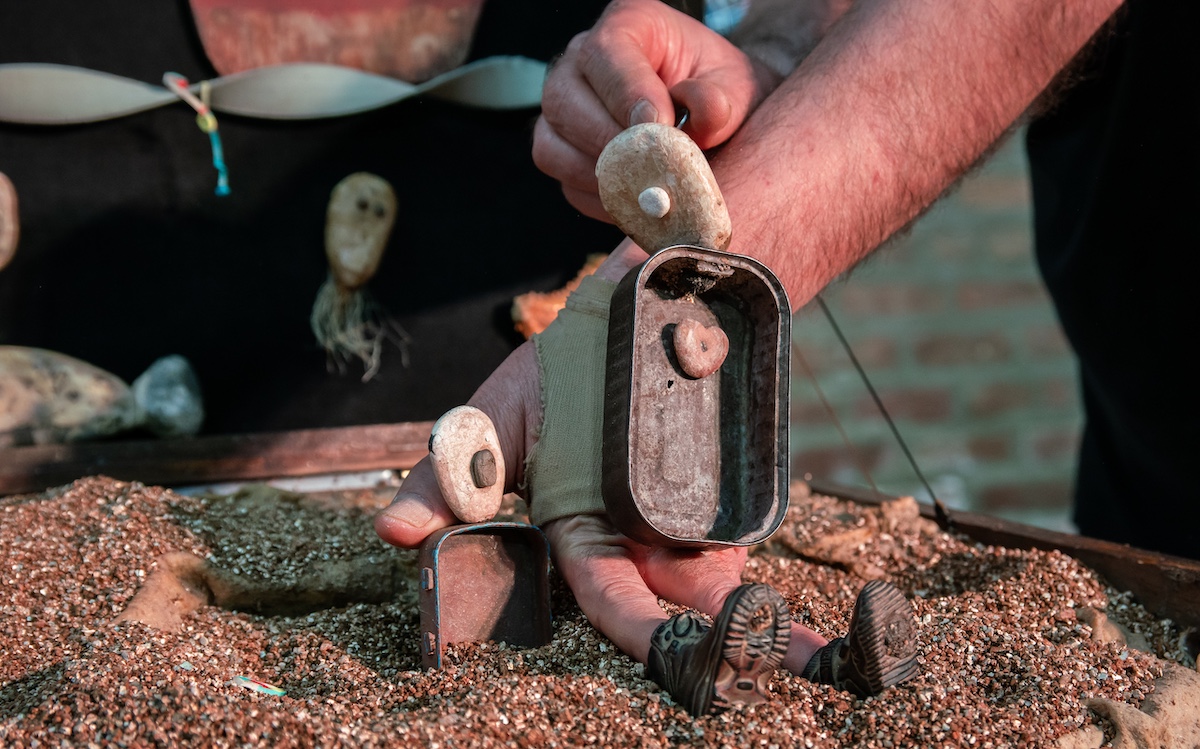
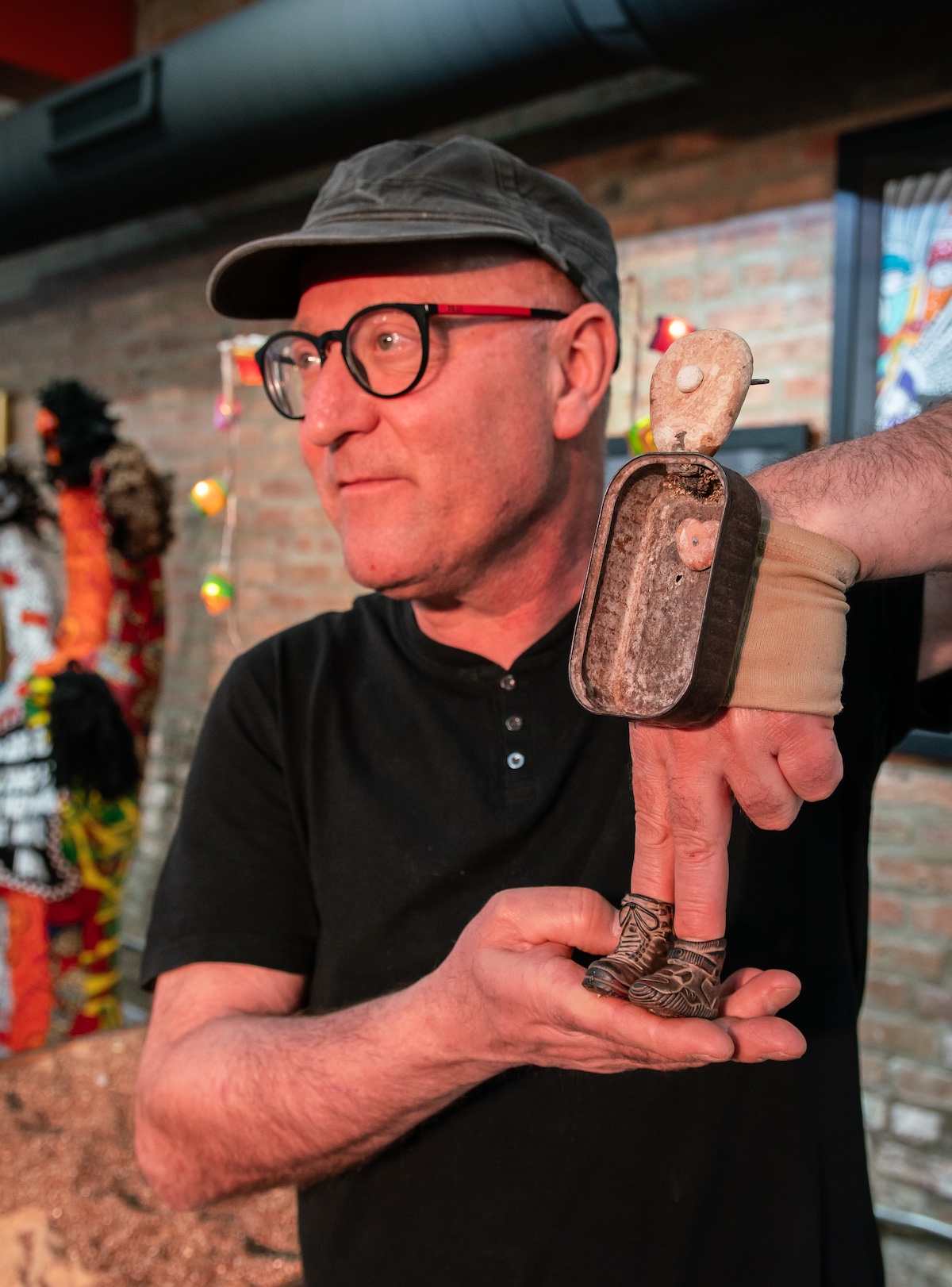
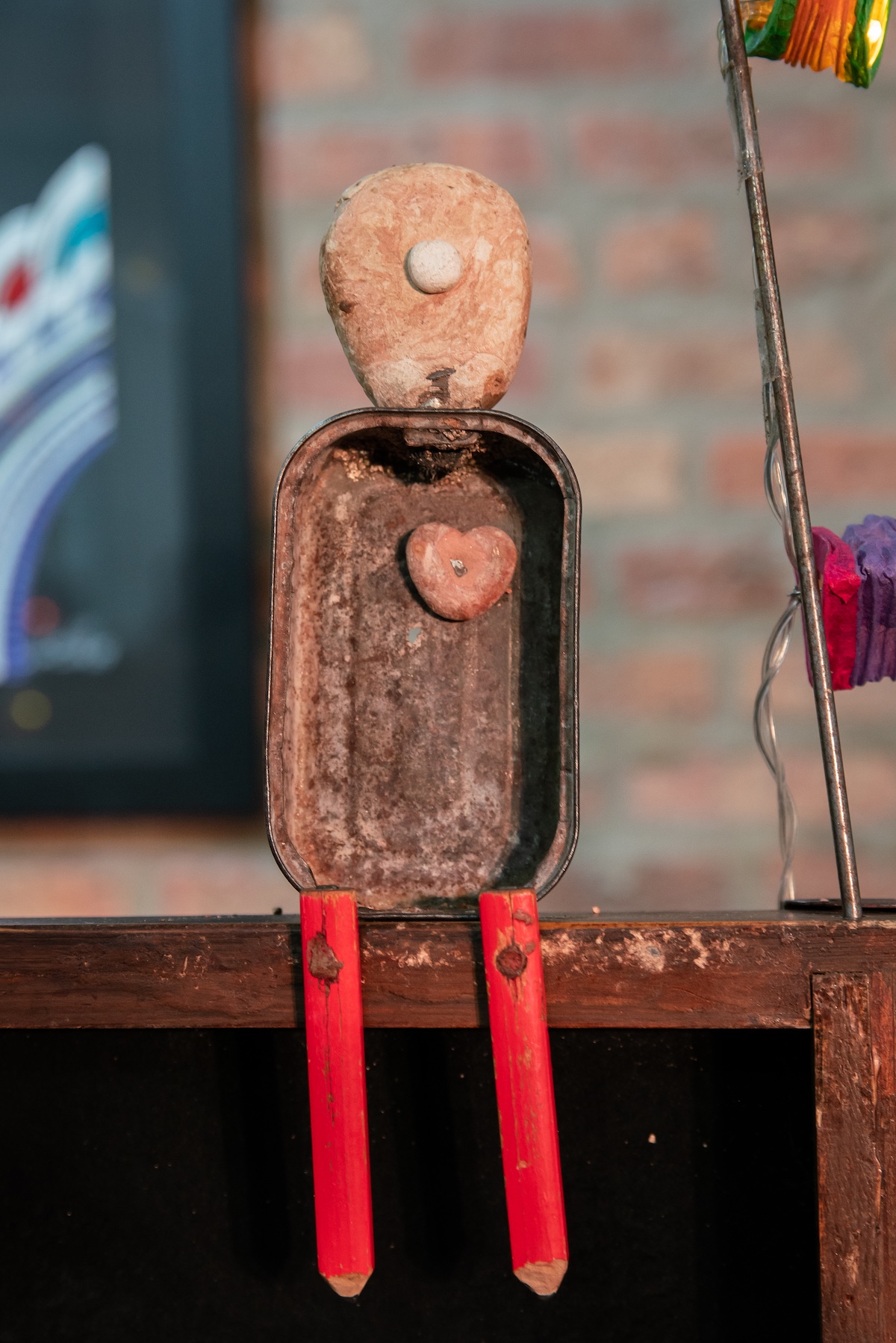
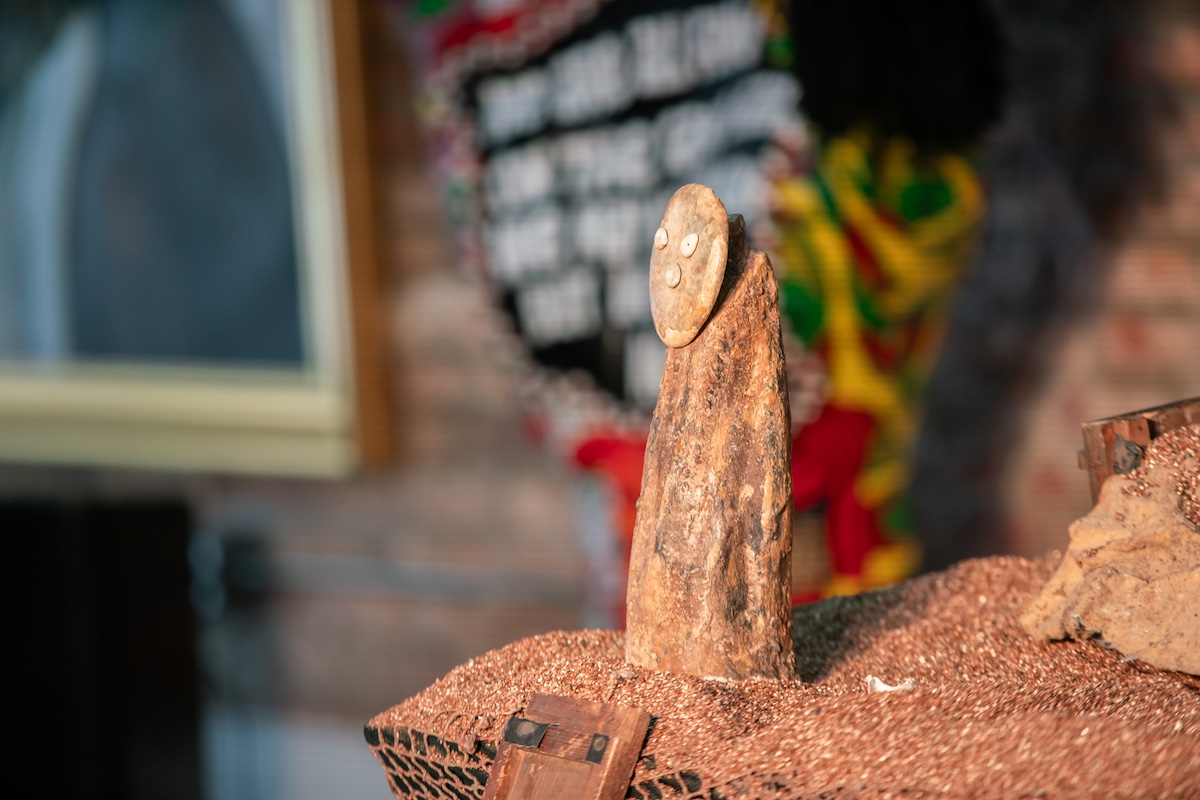
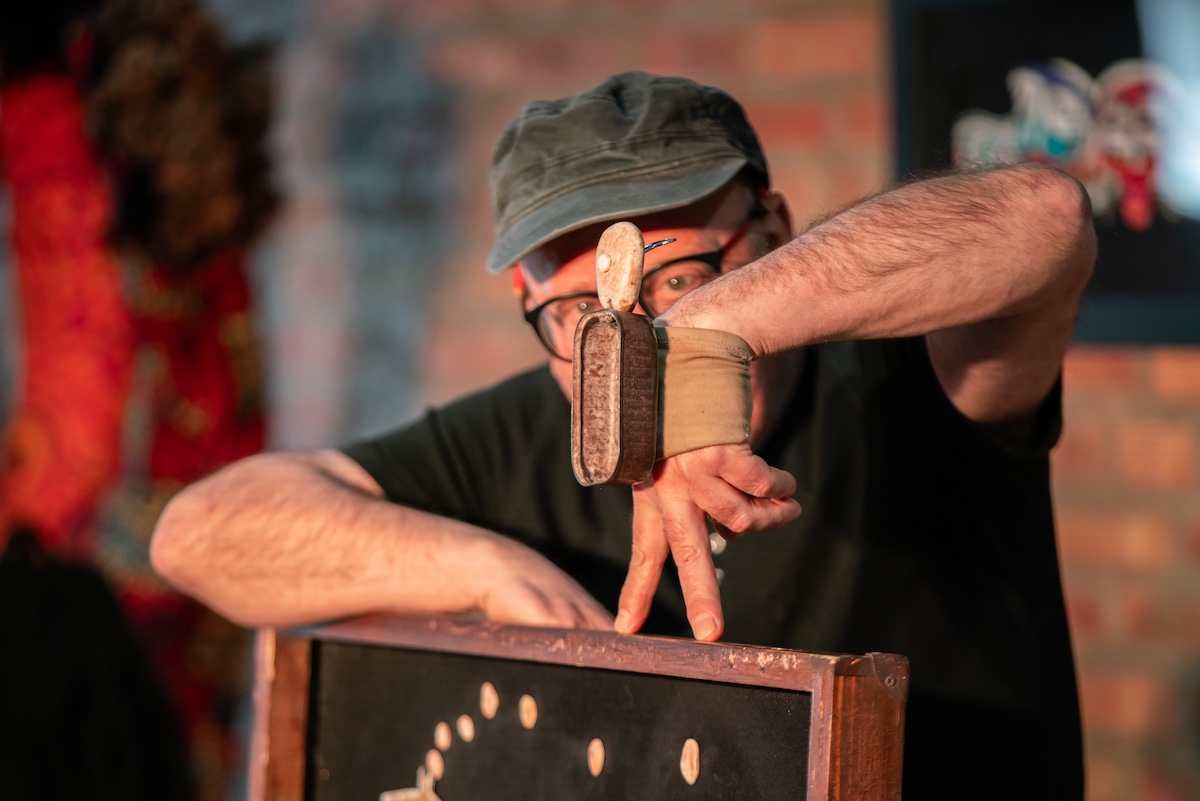
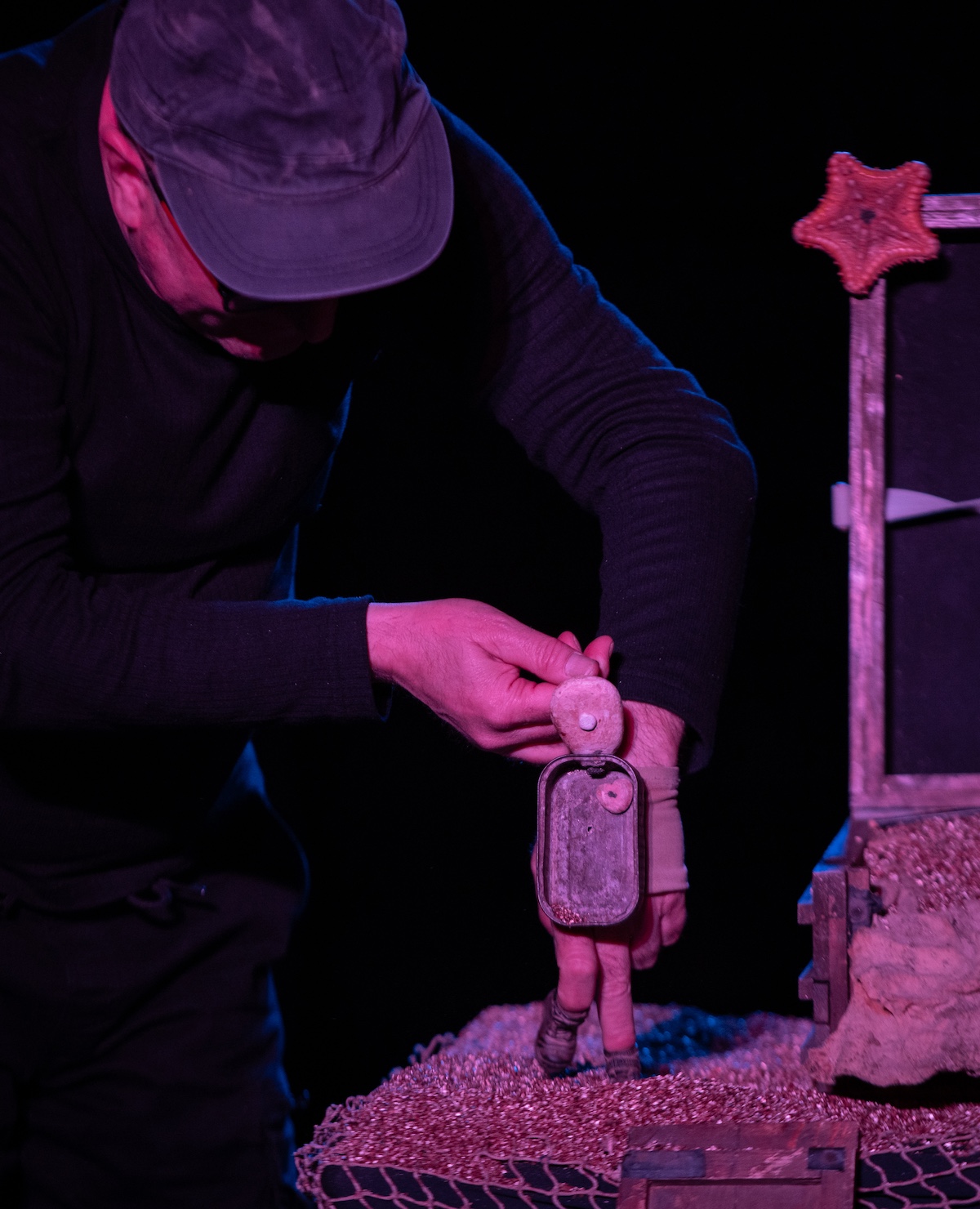
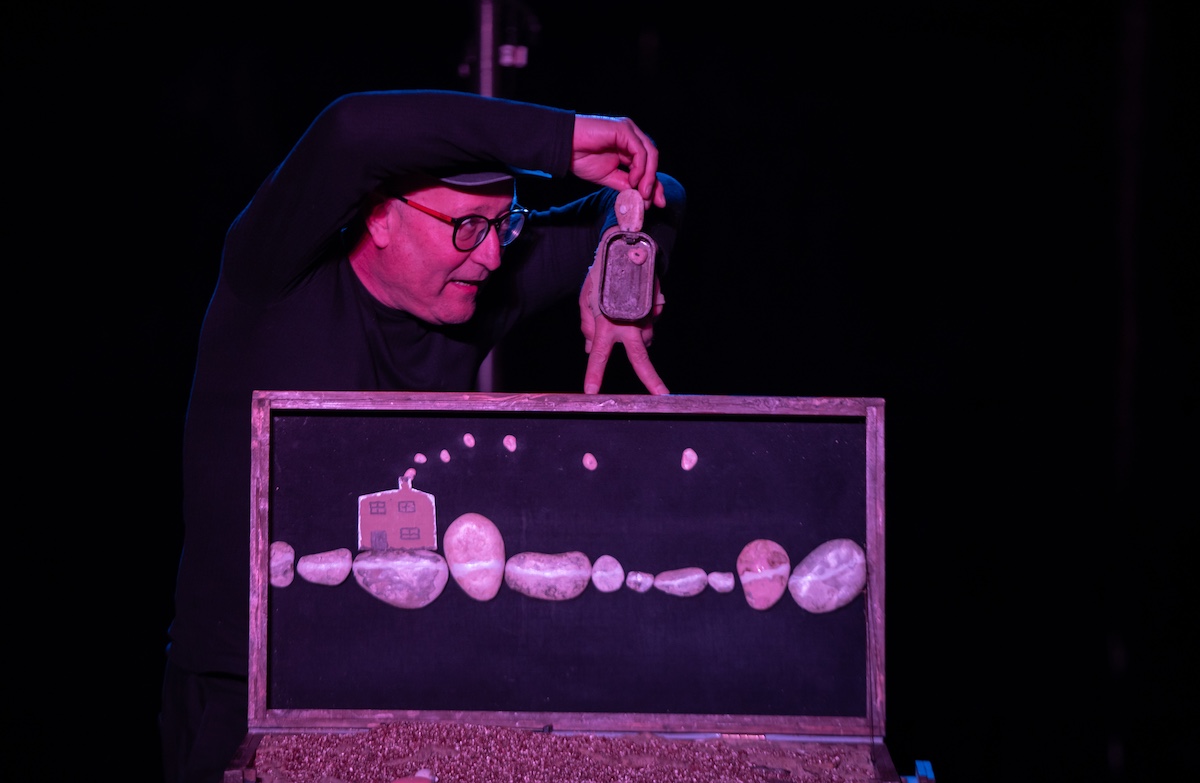
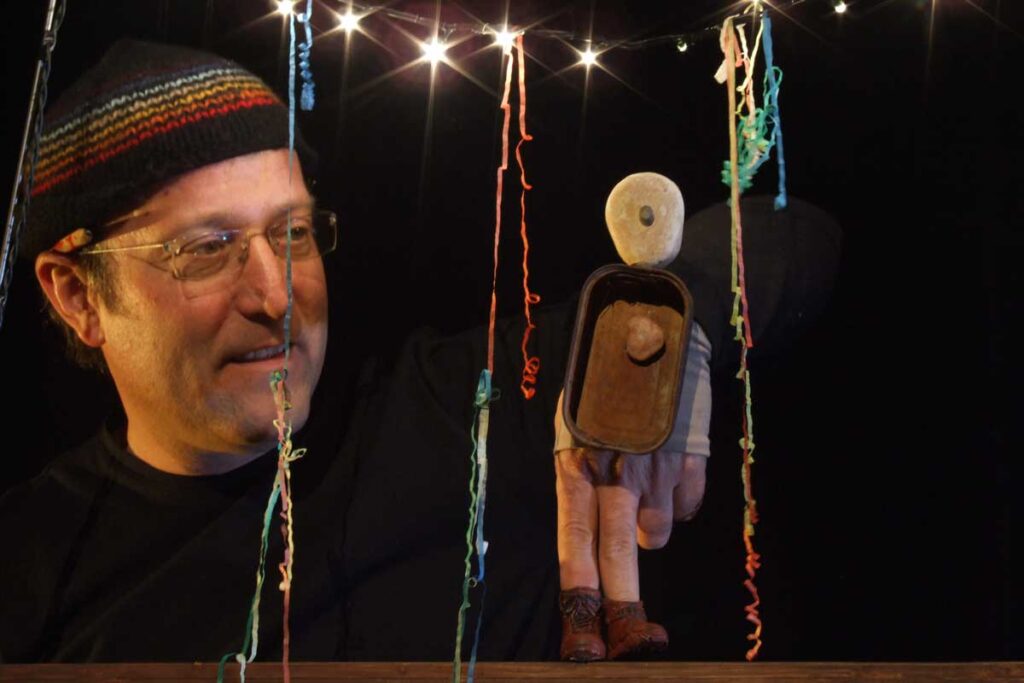
Like so many children’s shows, there were moments where Gombau actively asked his imaginative little audience members to tell him what they saw. While sticking stones to a black magnetic board, he asked: “Are they balloons? Clouds? Butterflies?” The answer was productively unclear until he built a small stone house that recontextualized the trail of stones as puffs of smoke coming from the chimney. Another “discovery” sequence, later in the performance, created a school of swimming fish. On shore, Gombau’s beachcombing eventually uncovered the Tinkerman who perhaps inhabits the shack. This pint-sized protagonist has a stone head perched on top of a sardine-tin body atop legs that are the puppeteer’s nimble fingers. Gombau called him into life by tapping out a metallic heartbeat on his hollow chest. Once the Tinkerman was “living,” actions as simple as watching him kick sand elicited a flurry of giggles from the little audience members down in front. Their delight was even more remarkable if you’ve encountered children’s capacity to be brutal when bored. I saw some of the youngest audience members practicing their boos and hisses before the show, but by the time they met the Tinkerman, they were clearly converted by Gombau’s amiable attention––distributed between them and the performing objects onstage. They were all well on their way to becoming friends.
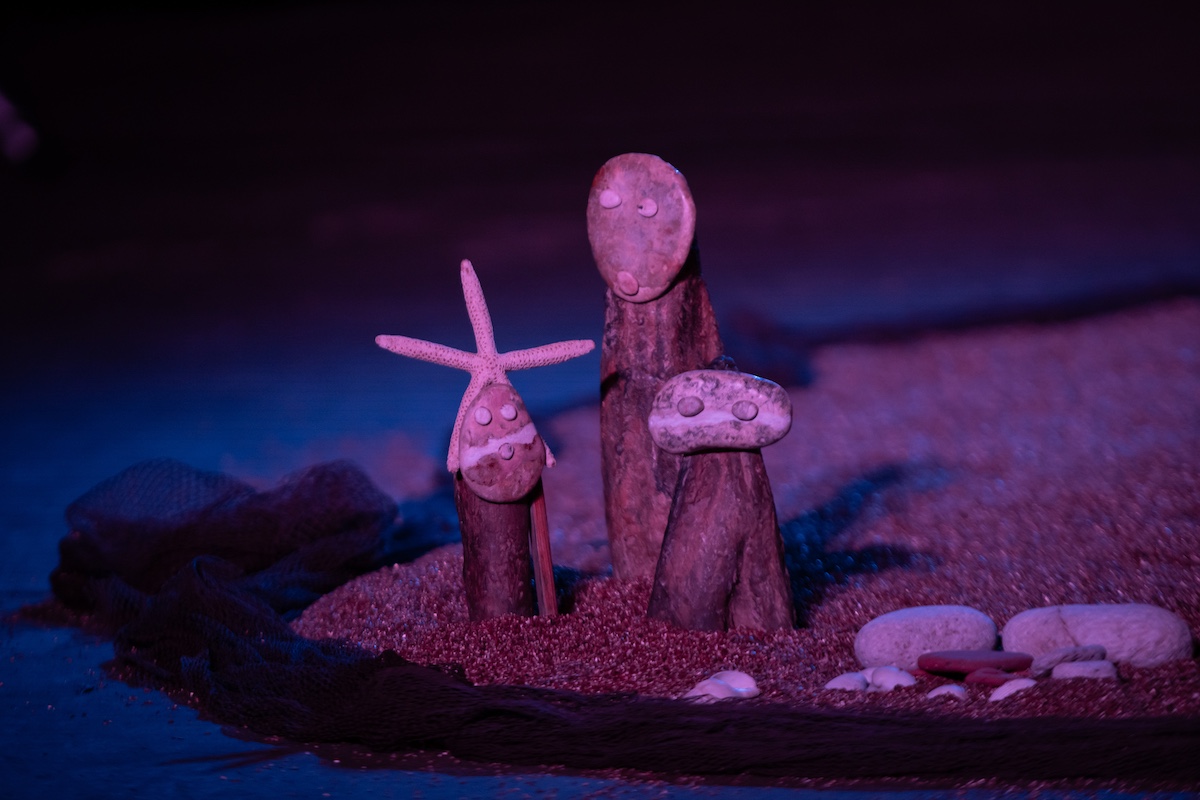
The Tinkerman seemed to enjoy his oceanside solitude, but he also longed for a friend, so we were introduced to other humanoid characters. Sadly, the Tinkerman’s bids for connection went unheeded by sour-faced stones, with repetitive catchphrase lines like “Ouch,” “No,” and “Out.” Continuing to explore the beach, Tinkerman eventually found the makings of a friend like himself. The show ended in a celebration—tiny paper lanterns folded out from behind the black backboard, and Gombau broke out party poppers to scatter confetti over the audience. Gombau did his audience the kindness of largely speaking in English, but he made an exception to teach his audience a key word at the end of the show: “The Tinkerman found a friend! Un amigo!” After a round of applause, there was an immediate chance to put this communal feeling and this bilingual practice into further action: Gombau and the crew brought the lighting and sound technician up onstage to sing Cumpleaños Feliz to them. It was clear everyone knew the tune, but no one had fully agreed on the lyrics, as people, young and old, tried to sing along. Perhaps that was the best part––a little proof that we were building something good, Stone by Stone.
Festival Performances
About the Performance
 January 22-25, 2026
Theatre Y. 3611 W. Cermak Rd. (North Lawndale); Instituto Cervantes. 31 W. Ohio St. (River North); Segundo Ruiz Belvis Cultural Center, 4048 W. Armitage Ave. (Hermosa); 345 Gallery, 345 N. Kedzie Ave. (East Garfield Park)
Spanish puppet artist Tian Gombau was walking barefoot on the beach one day when he suddenly realized there are so many stones on earth. He started to classify them and keep them as precious treasures, thinking, if you look at what’s inside them, one realizes there is something more than just a stone. The result is an ingenious, endearing, 30-minute imagination-awakening experience for children using only inanimate objects.
The Puppet Festival’s annual Free Neighborhood Tour brings free, family-friendly performances to locations outside of Chicago’s theaters to foster an appreciation for puppetry throughout the city. The tour offers a range of high-quality puppetry styles to create moments of community enjoyment while expanding the city’s base of puppet enthusiasts.
Reviews + Interviews
Coming Soon