2026 Festival Archive: KT Shivak
KT Shivak: Rhynoceron
January 22-25, 2026
Chopin Theatre Mainstage
Presented by Chicago International Puppet Theater Festival
With special support from Deb & Andy Wolkstein, Julie Moller, and The Marshall Frankel Foundation
Scholarship and Resources
Rhynoceron: The Power of Perspectives in Puppetry
An Essay by Yiwen Wu
One of the three new works receiving development support at this year’s festival, Rynoceron (created by KT Shivak and directed by Rowan Magee) in particular, with its rich array of exquisitely designed puppets and its deep commitment to use the very form of puppetry to explore the fraught history of humans’ objectification of animals, pushes the expressive power of puppetry to a new level. The underlying question of the performance, what is the demarcation line between objects and subjects, brilliantly pierces through the level of form and content, demanding us to see the power of puppetry—an art form that is fundamentally invested in the affective and agentive power of objects––to critically engage the colonial legacy of domination, exploitation, and conquest.¹
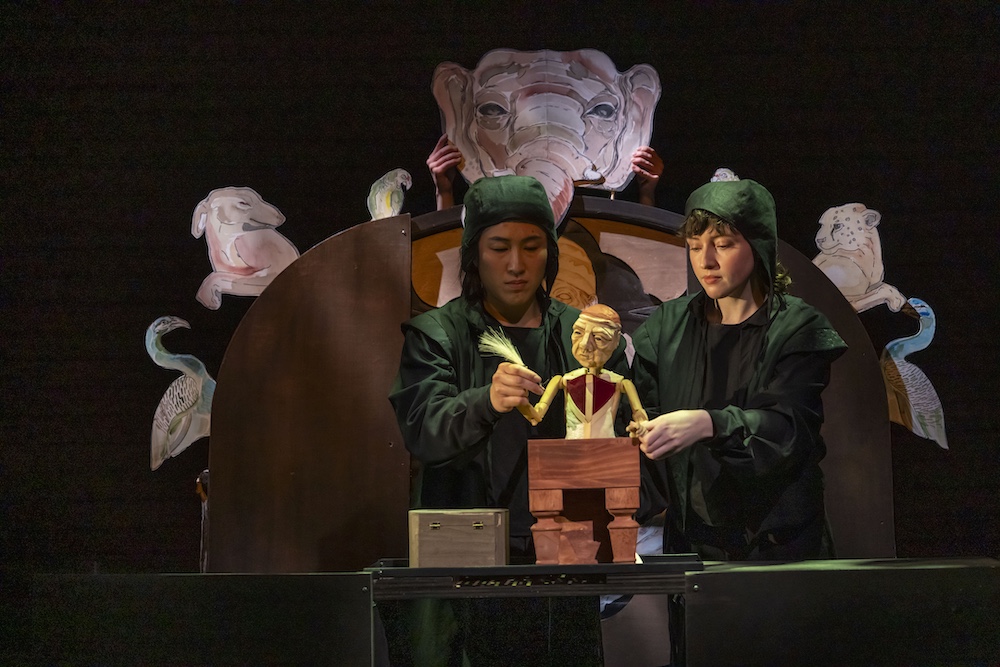
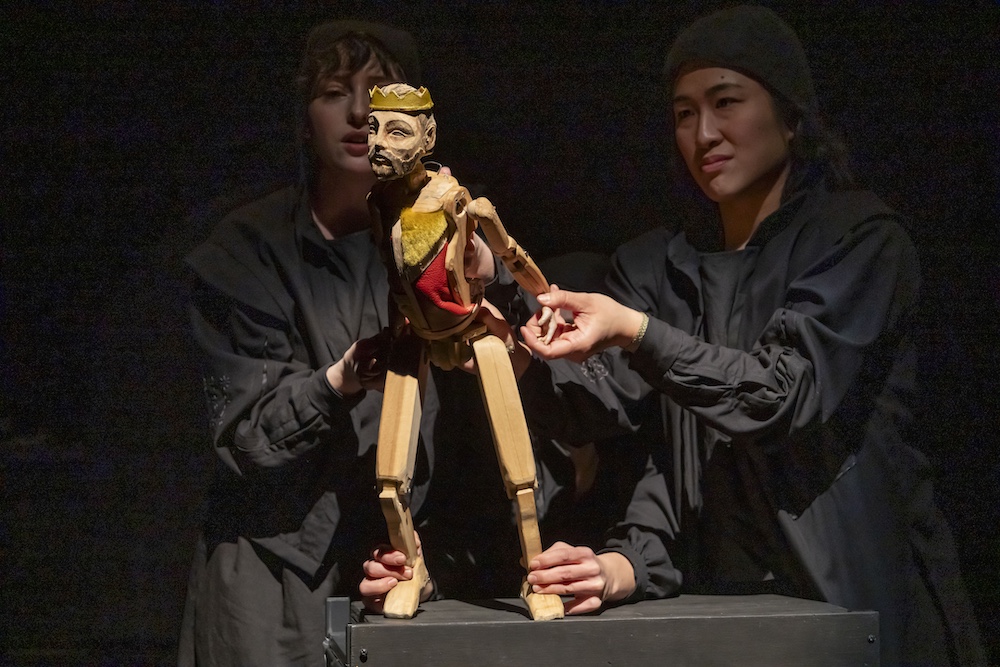
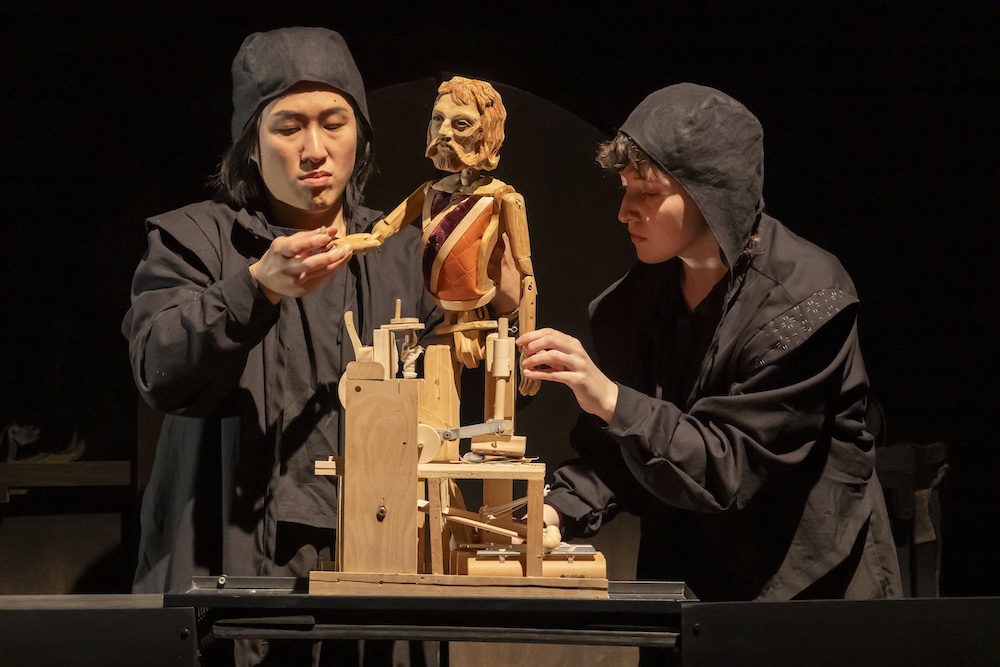
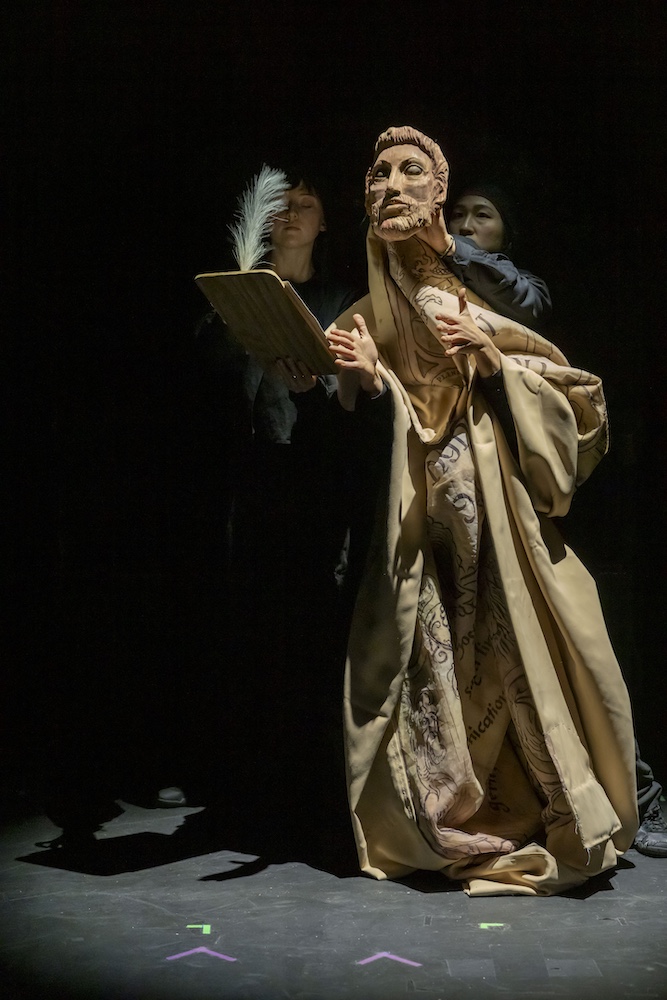
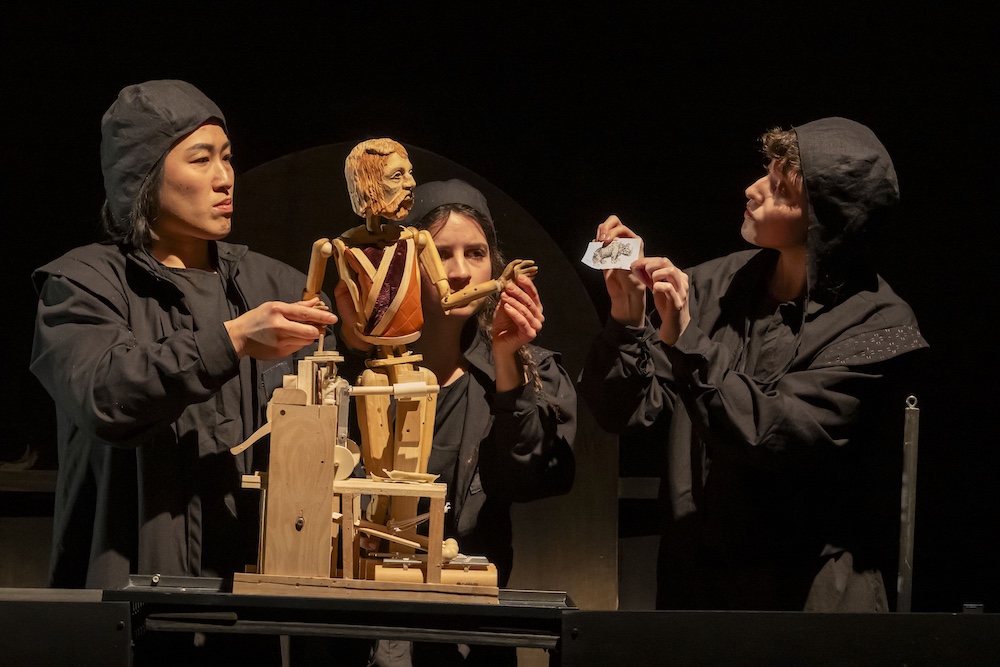
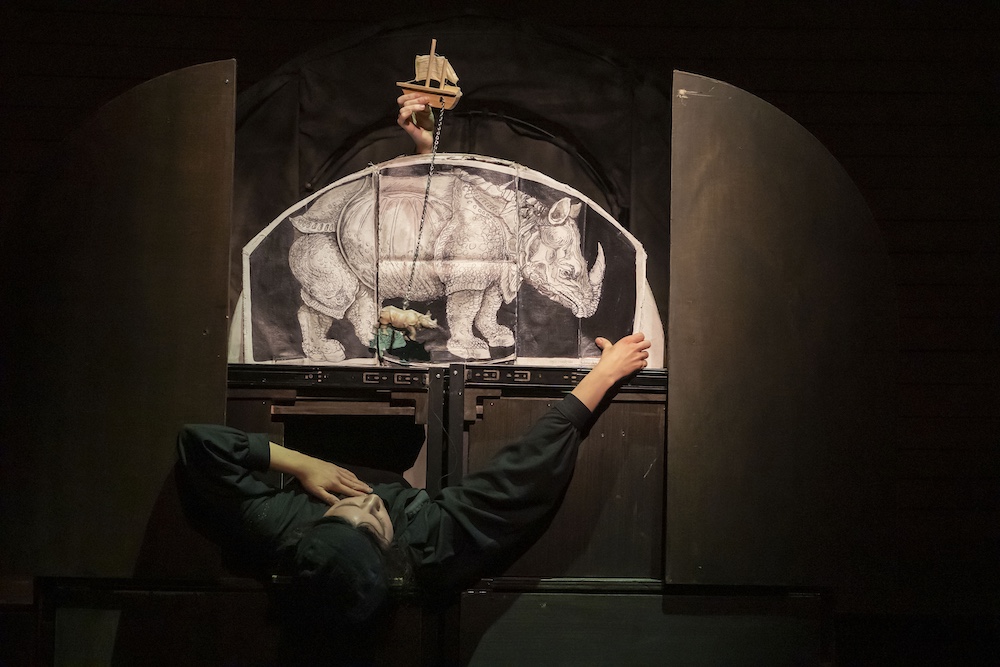
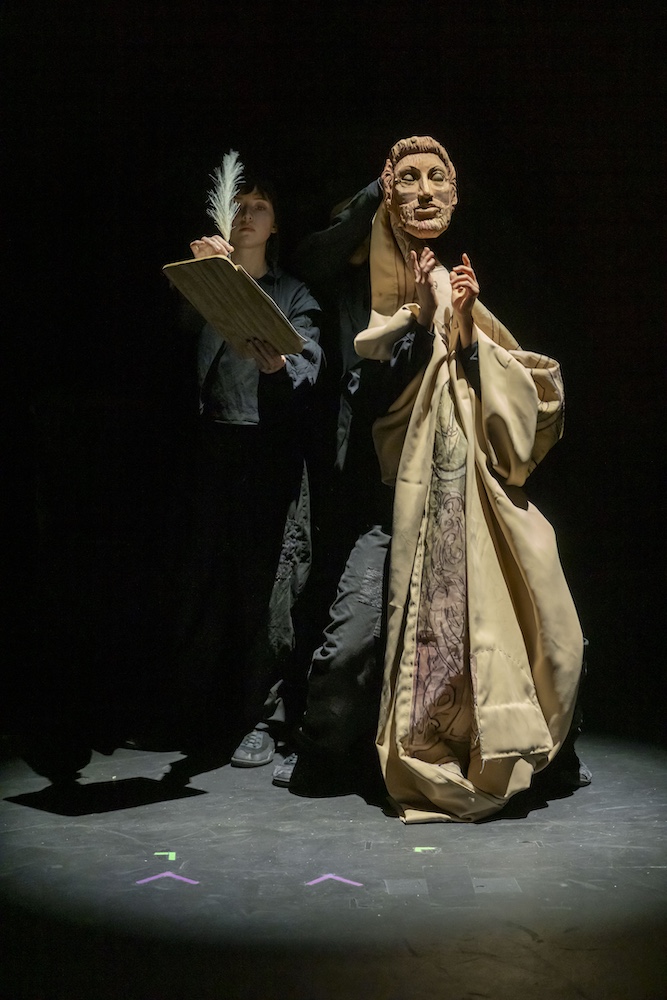
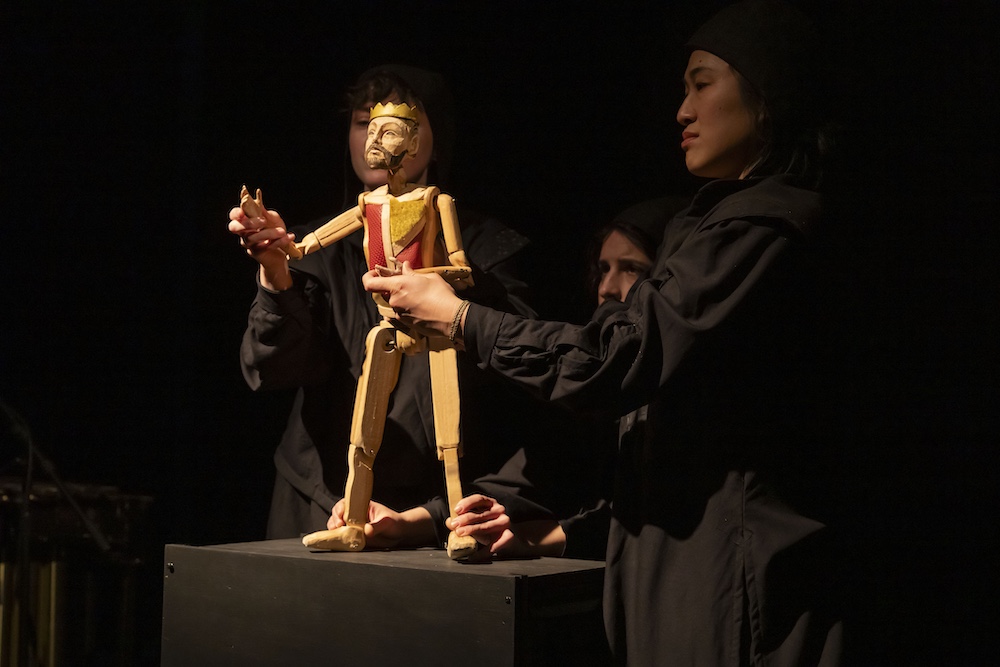
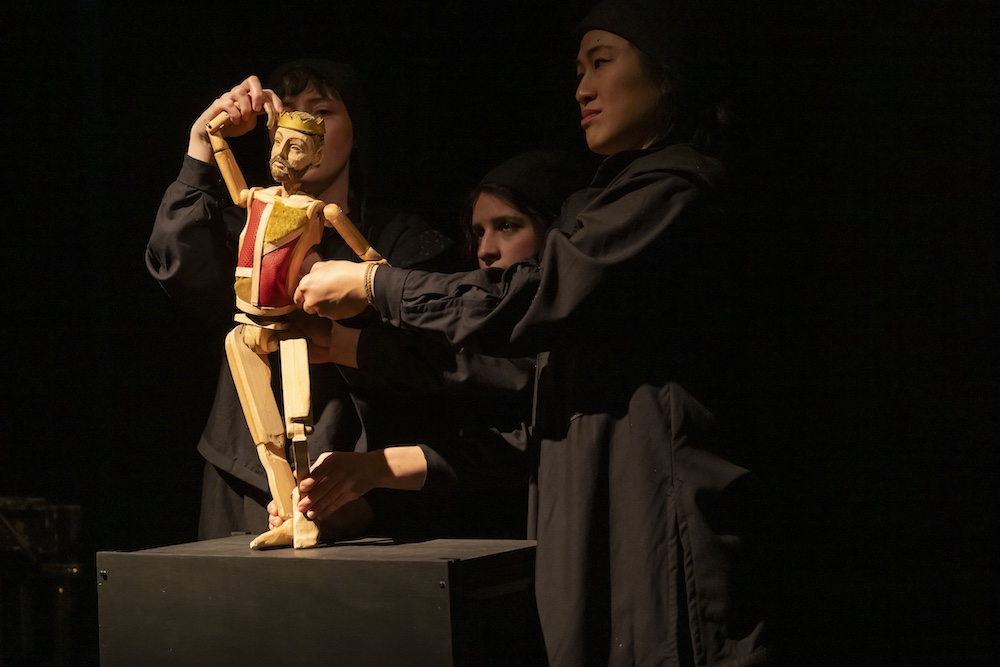
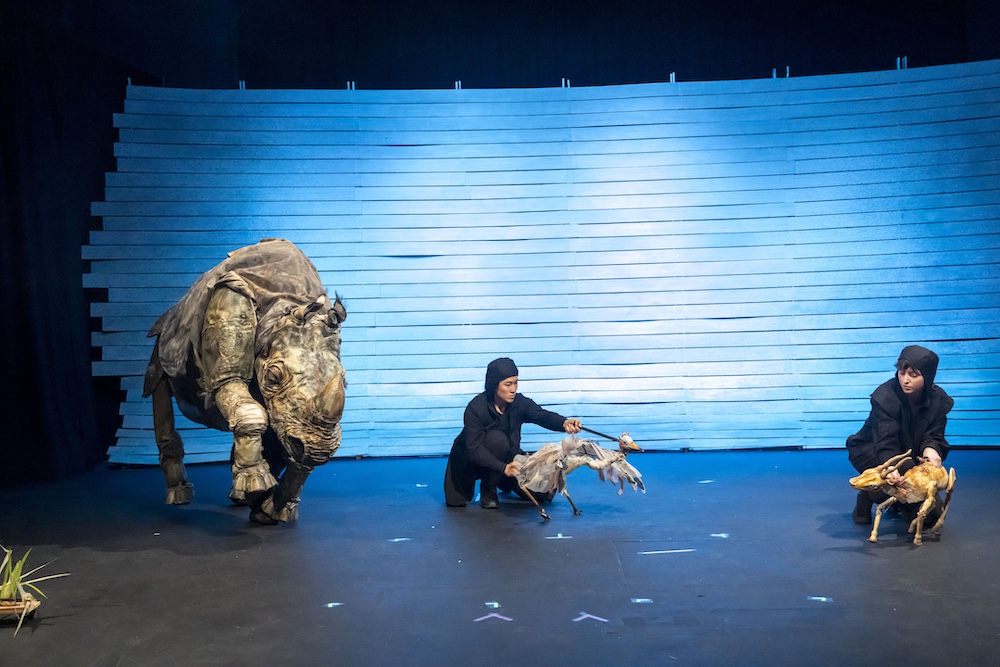
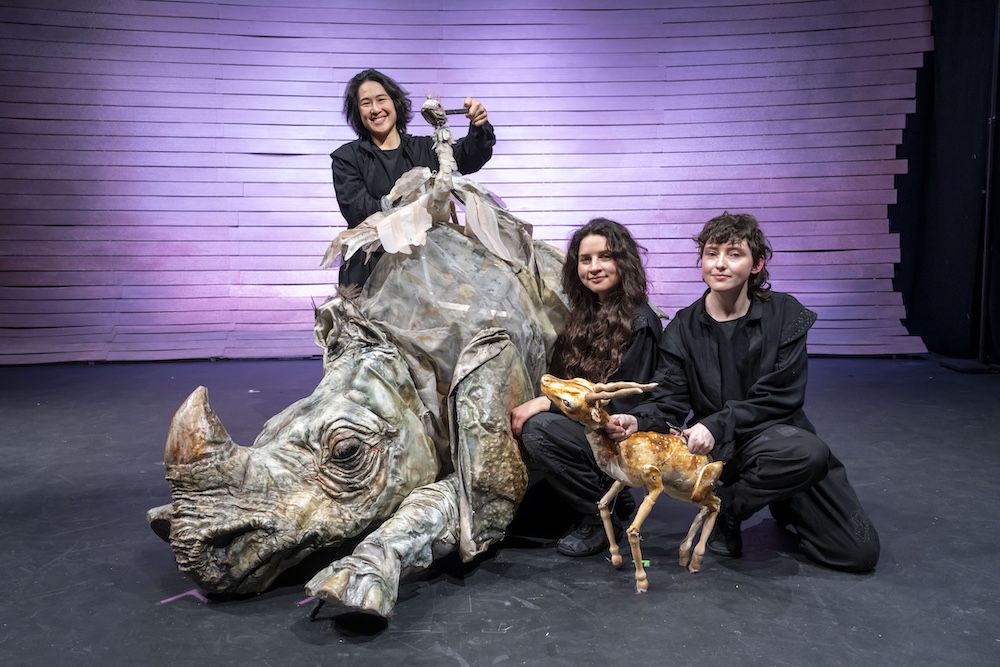
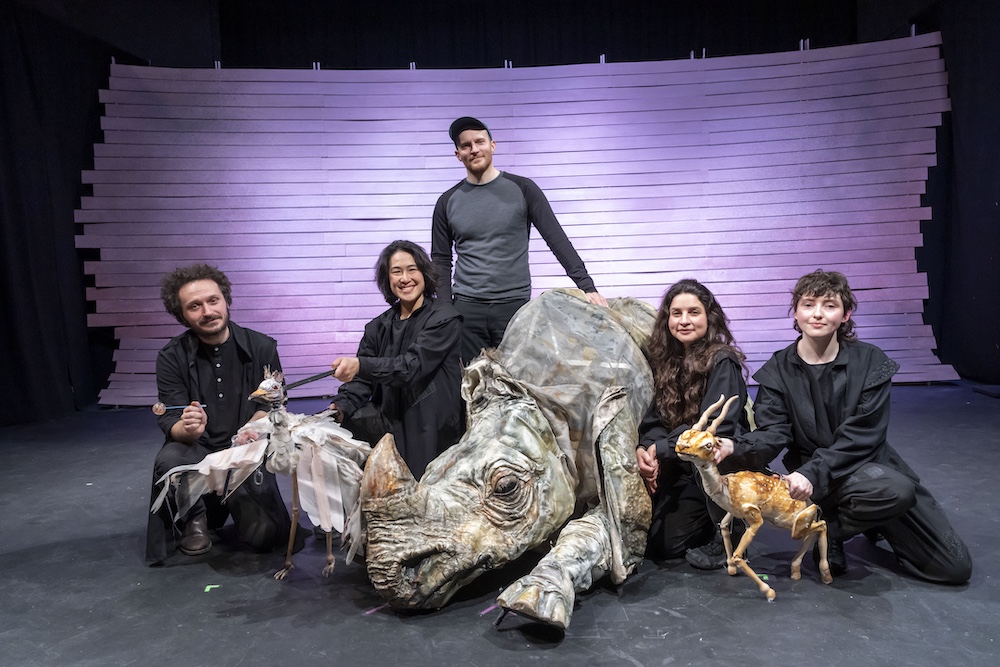
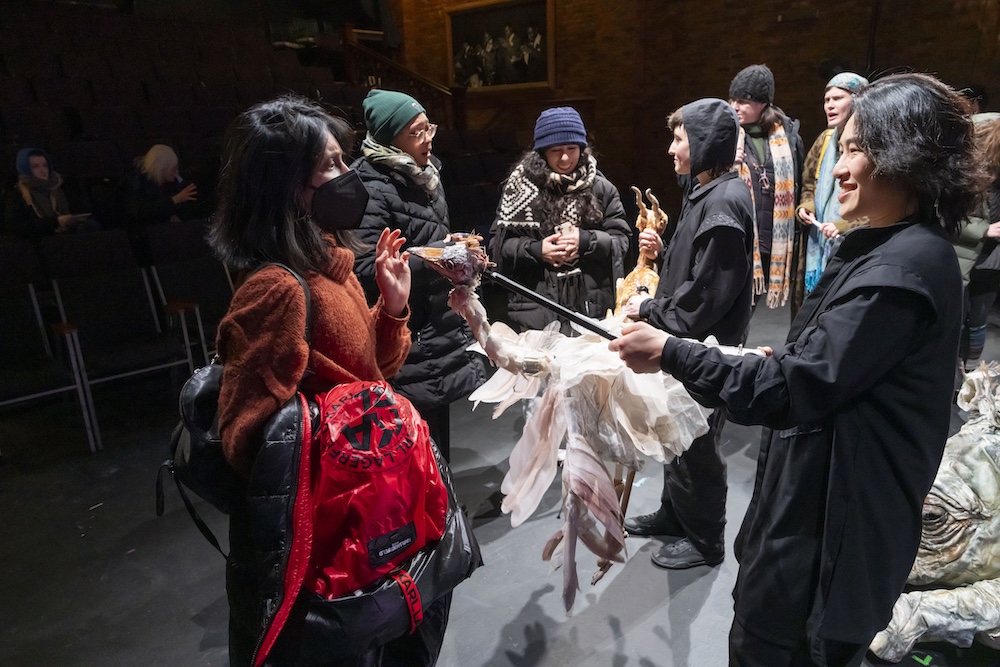
Tracing the events surrounding the arrival of a one-horned Indian rhinoceros to Renaissance Europe, the play is dramaturgically structured as two parts. The story is at first a search for the exotic beast, through the gawking gaze of the collectors: from King Manual of Portugal to Pope Leo X to the printmaker Albrecht Dürer. We witness how the rhinoceron changed hands from an Indian sultan to the king, then to the pope, and was eventually immortalized in a woodcut by Dürer, even though the artist never saw him with his own eyes. Through the expanding use of the printing press, the image spread across Europe and became a symbol of a beast that is at once terrible and desirable, sparking an obsession that lasted for hundreds of years. It is only in the second half that we transition to the perspective of the Rhynoceron, confronting this human obsession as a source of violence and destruction. The large cast of characters are vividly performed by an ensemble of just three puppeteers (Chih-Jou Cheng, Jacky Kelsey, and Shivak herself). What’s more, the two-part structure is cleverly facilitated by two distinctive styles of puppet design. From the first half to the second half, the puppets also go through a transformation from miniature toy theater to real-size, life-like puppets, further bending the boundary between things and animated lives.
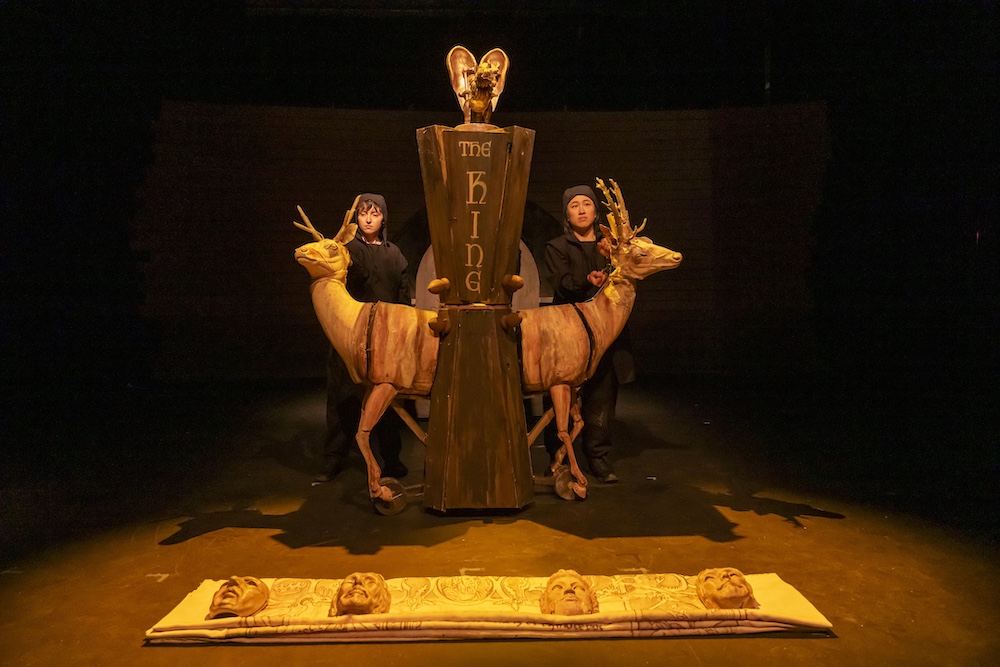
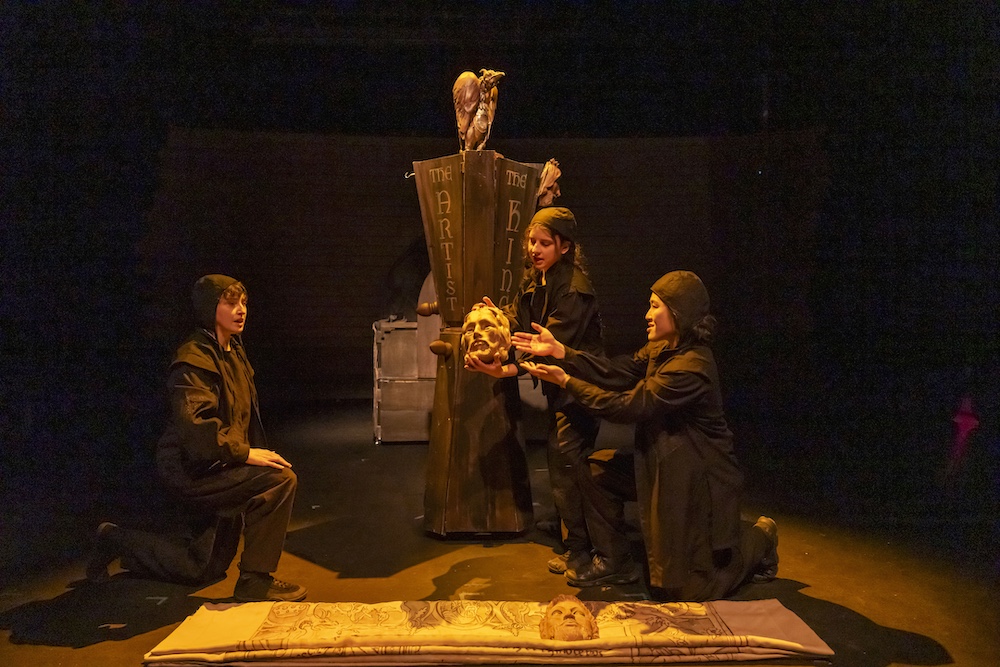
In the first half, animals, even when they are directly manipulated by puppeteers to come alive, appear to be existing in a compromised mode of being, as they are always confined to various kinds of containers. Sometimes, as objects of desire for collectors, the animals are featured as mini-caricatures that remain in a toy theater box; other times, through the perspective of the printmaker, they are represented as flat print images that are pressed into books. The most visually mesmerizing container of this sort, however, appears in the very beginning of the show. When the lights come up, the puppeteers roll on an extremely eerie Frankenstein object: It is an hourglass-shaped wooden structure, with the upper bodies of two deer protruding from the two sides of the structure. The front of the structure bears the words “The King” in gold, announcing the ownership of this object. As the puppeteers slowly open the structure, the object turns out to be a reliquary, where the king stores the bodily remains of his animal collection. The opening sequence culminates in a clear act of violence: The horn of the deer is chopped off by the puppeteer, right in front of our eyes.
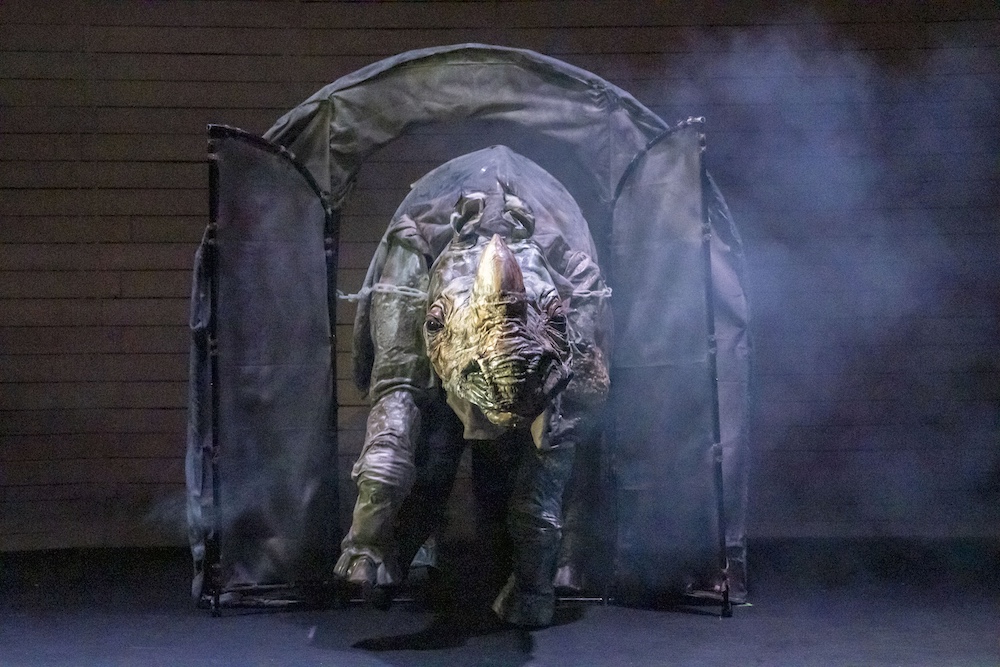
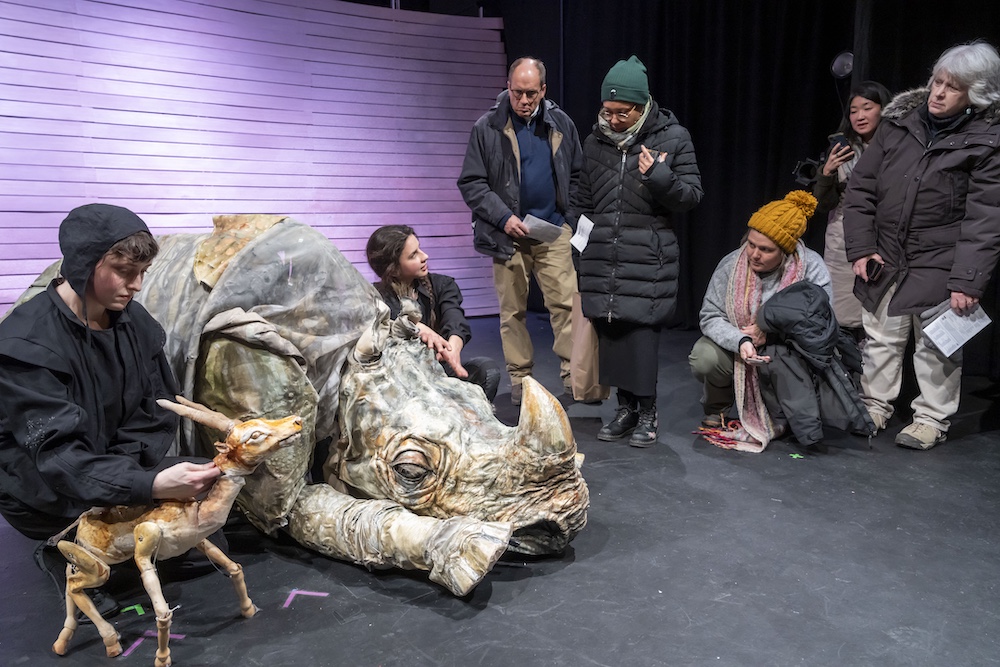
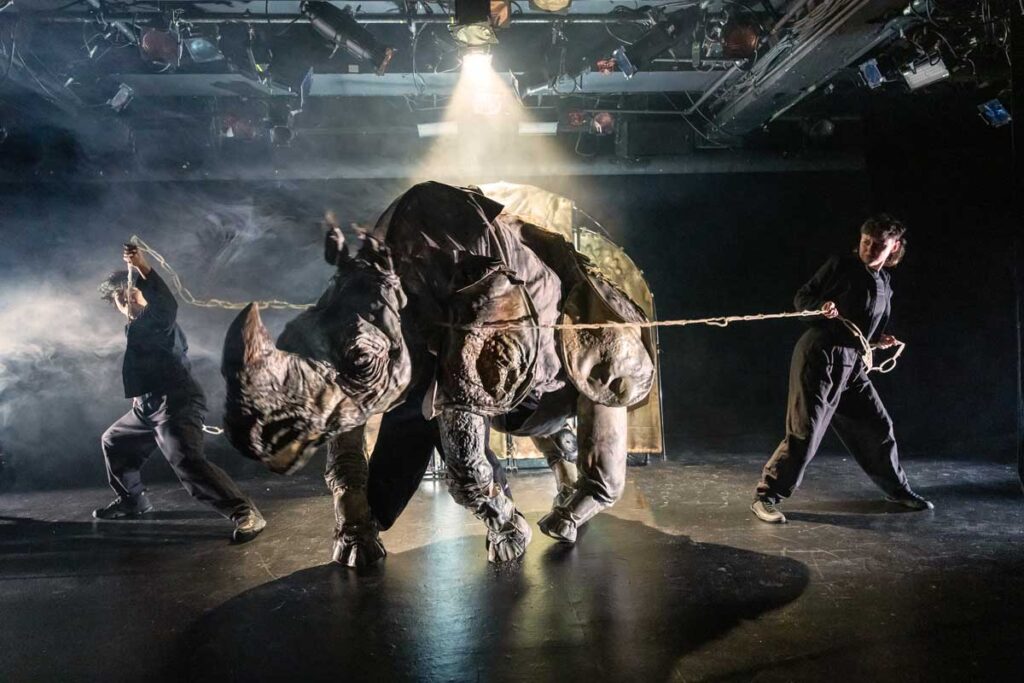
Innovatively designed yet grounded in historical references, the objects of this performance tell a profound story that is at once rooted in history and resonant in the present. The cutting of the antlers, in particular, points to the present day where rhinos continue to face extinction at the hands of humans who want to harvest their horns. The troubled history of harming animals in pursuit of human obsessions has not ended. The play hinges on the moment when it switches its setting to open nature, where we witness puppeteers take on the role of hunters, capturing flying cranes and galloping deer from their natural habitat. In the end, when the life-size and lifelike rhino puppet enters the stage, it displays an awe-inspiring wonder that far exceeds the shallow and reductive imagination of the greedy humans. Unlike Dürer who carved his image of the rhino to be a pastiche of scientific illustration and imagination based on Pliny the Elder’s description of mythical beasts, Shivak’s design of the puppet is clearly rooted in their careful observation of the actual animals. Not only is the rhino sculpted to the finest detail, including every wrinkle on his skin, the puppet’s eyes and ears are closely designed to be able to move subtly in the exact same ways as the actual animals. From miniature toy theater to life-size and lifelike, the performance demonstrates the range of puppetry as a dynamic and complex process, where different ways of making and manipulating objects do not simply turn objects into subjects but provide a unique access for us to reimagine the objects with a diverse mode of lives, demanding us to rediscover the subjecthood of animals that we have long ignored and suppressed.
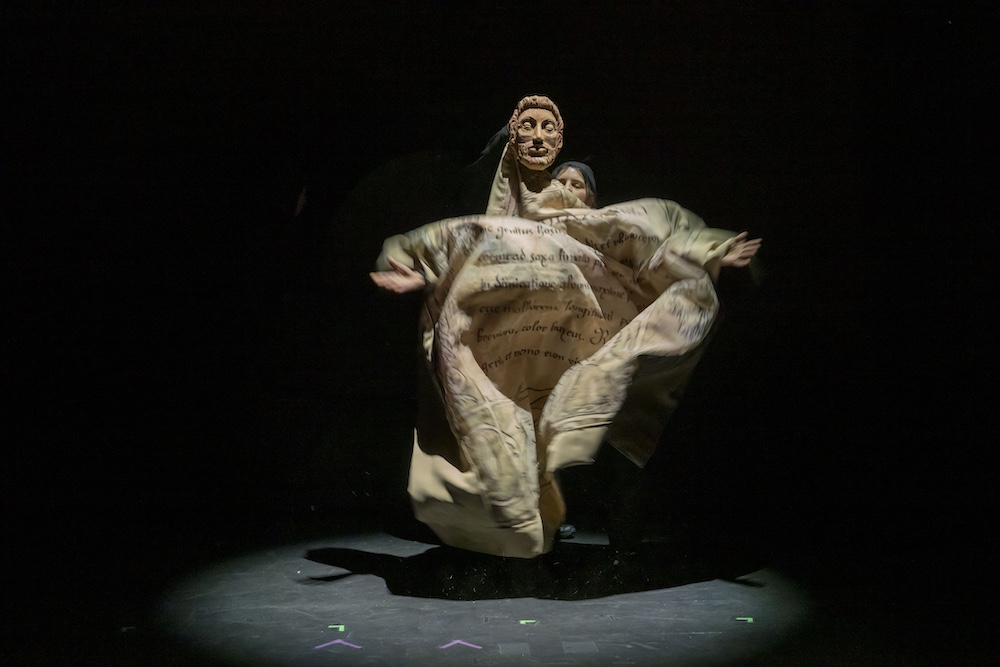
At the very end of the play, as well as in history, the rhinoceros drowns in the sea on the boat ride to Europe. When they collapse onto the ground, the chains that were used to capture them are also finally released. The puppeteers bring out a thin scroll that is cluttered with illustrated heads and hands that symbolizes the gawking gaze and acquisitive desire of humans. The scroll is so thin that we can also see the heads and hands of the puppeteers that are pressed against the gauze. In the end then, the audience members are also forced to reflect on the nature of their own viewing: Through theater, a word that literally traces back to the Greek term for “a place for seeing,” we are offered a chance to reconsider the various meanings that lie in different ways of looking, recognizing theater as the very medium through which we can remake and reanimate history in a new light.
¹ By agentive, I’m drawing on the scholarly concept of agency in objects. Carl Knappet, for example, in his “Animacy, Agency, and Personhood” (2008) asserts that objects may act in a manner similar to an agent when imbued by humans with a purpose. Janet Hoskins (2006), on the other hand, goes so far to argue that all objects, as they are made to act upon the world and on other people, always possess an innate agency. I find the concept especially relevant in puppetry, as puppets (objects), even more so than everyday objects, are deliberately made to act upon humans as agents of humans.
Works Cited
Hoskins, Janet. “Agency, Biography and Objects,” in Handbook of Material Culture, edited by Christopher Tilley, Webb Keane, Susanne Küchler, Mike Rowlands, and Patricia Spyer, 74-84. London: Sage, 2006.
Knappett, Carl. “Animacy, Agency, and Personhood,” in Thinking Through Material Culture: An Interdisciplinary Perspective, 11-34. Philadelphia: The University of Pennsylvania Press, 2010.
Festival Performances
About the Performance
 January 22-25, 2026
Chopin Theatre Mainstage, 1543 W. Division St.
A Chicago premiere, Rhynoceron traces the true events surrounding the arrival of a one-horned rhinoceros to Renaissance Europe, sparking an obsession that continued for hundreds of years. Through acts of hunting and collecting, KT Shivak’s life-size, life-like rhino puppet transforms in front of our eyes from a natural inspiring wonder to an object of human greed. Celebrated for exquisite puppet design, Shivak has won awards for designs on stage as well as for film, including Chicago’s coveted Jeff Award.
Reviews + Interviews
Dispatch: International Puppet Theater Festival Launches With Innovative Shows Performed by Puppeteer Teams and Solos by Third Coast Review Staff for Third Coast Review (Rhynoceron review by Adam Katz)
A Beacon of Warmth and Light: Puppets Take Chicago by Laura Collins-Hughes for The New York Times
To the 8th Coming of Dolls: About the Doll Arsenal by Mikhail Gurevich for Reklama