2026 Festival Archive: Sofie Krog Theatre
Sofie Krog Theatre:
The House
January 29-February 1, 2026
Steppenwolf’s Merle Reskin Space
Presented by Chicago International Puppet Theater Festival
With special support from the Danish Art Council, Puppets in Portland, Puppet Showcase Theater, and Sandglass Theater Company.
Scholarship and Resources
What People Do for Money, What People Do for Joy:
Sofie Krog Teater’s The House
An Essay by Ana Díaz Barriga
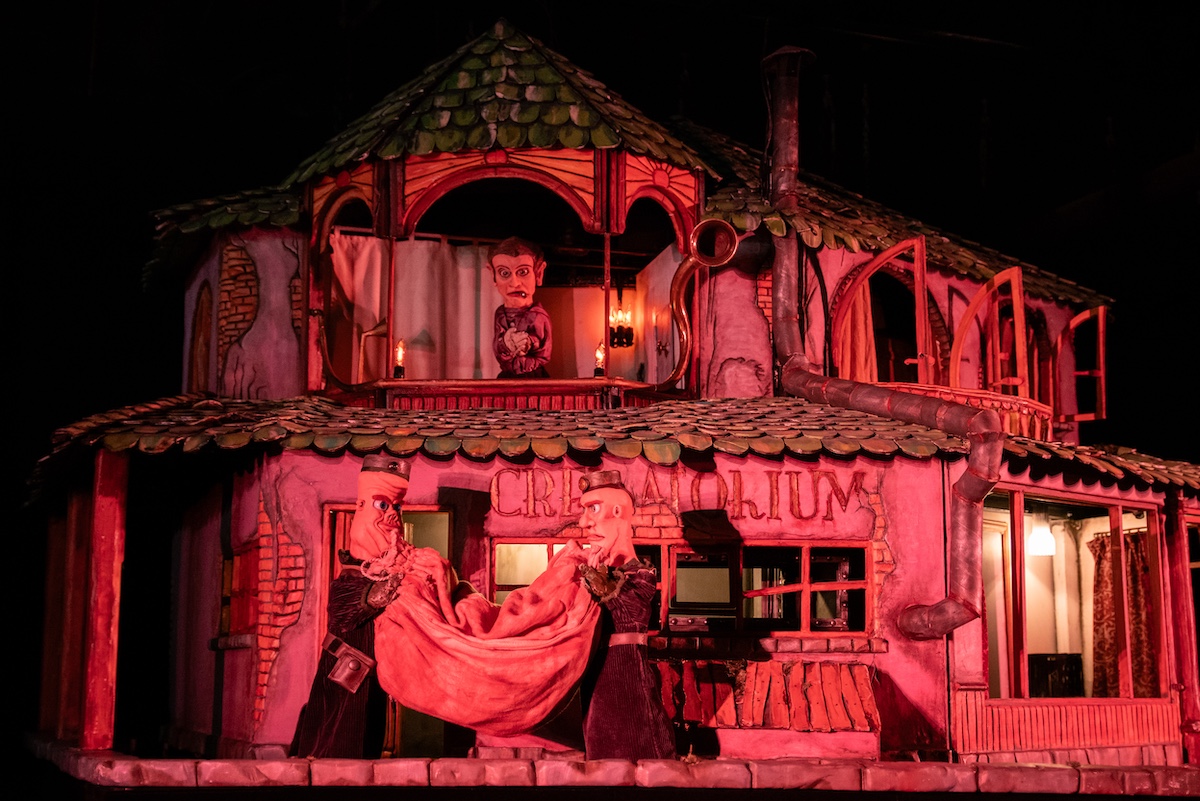
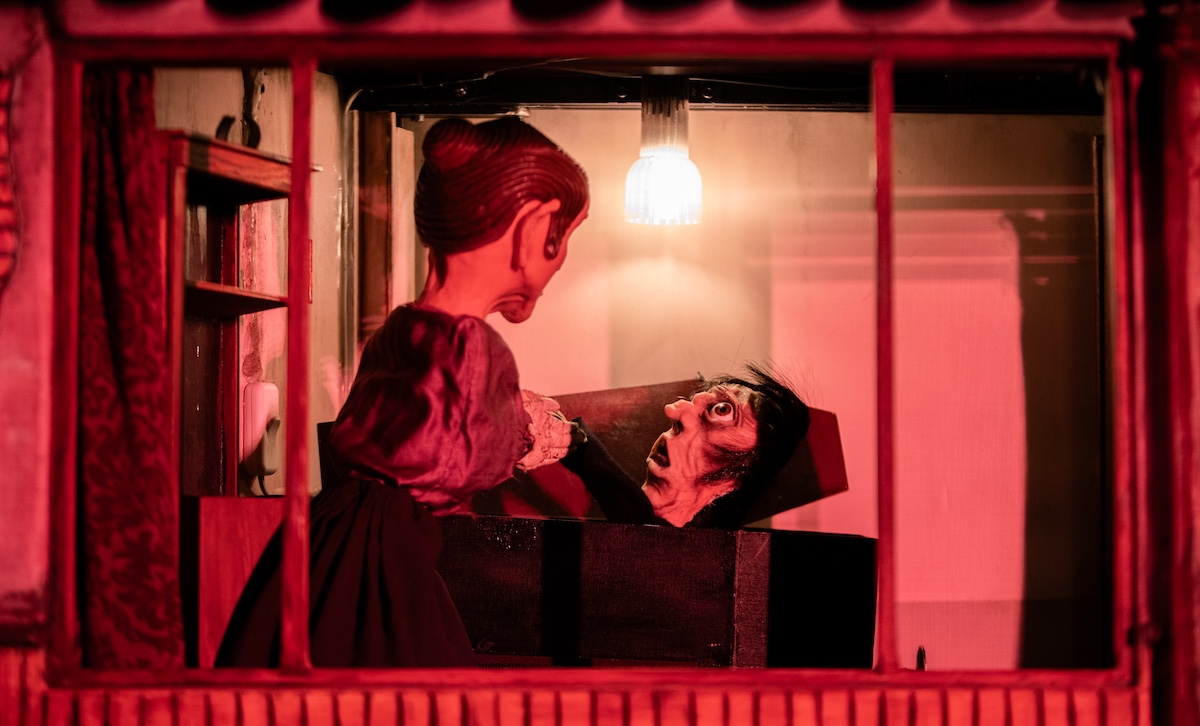
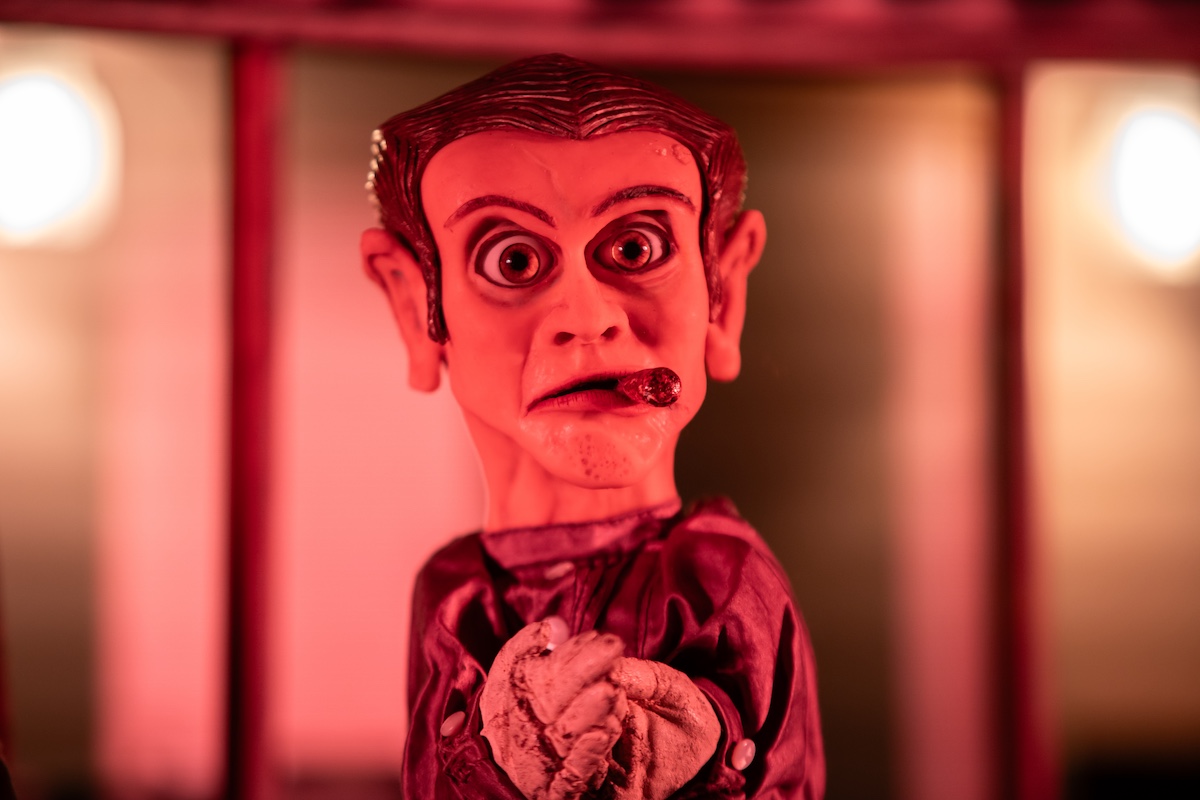
It is a dark night when cigar-smoking Flora and her cowardly husband, Henry, throw Esperanza’s body into the oven in the crematorium. Holding on to Esperanza’s dismembered arm and putting on a nightcap, Henry heads to Esperanza’s room to pretend to be his recently deceased aunt while Flora calls The Lawyer to the Warehouse Family Funeral Home. Their plan: to change Esperanza’s will in order to inherit the crematorium and her fortune. Stories of greed-driven murder are likely to be familiar to spectators of Sofie Krog Teater’s The House, but this standard setup opens the door for puppeteers Sofie Krog and David Faraco to introduce the comedy and artistic innovations that give this performance its unique twists. Underneath the story of the gruesome actions humans are willing to do for heaps of money are the clever actions artists take to advance their artistry and generate heaps of joy.
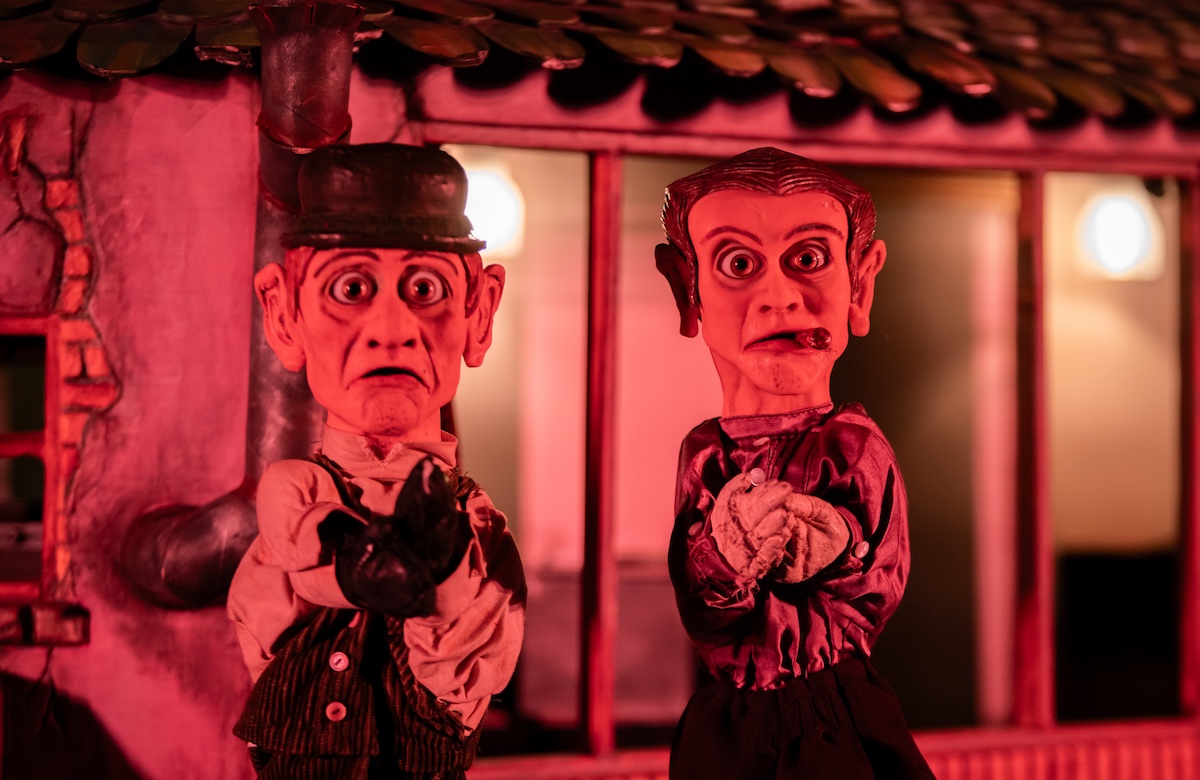
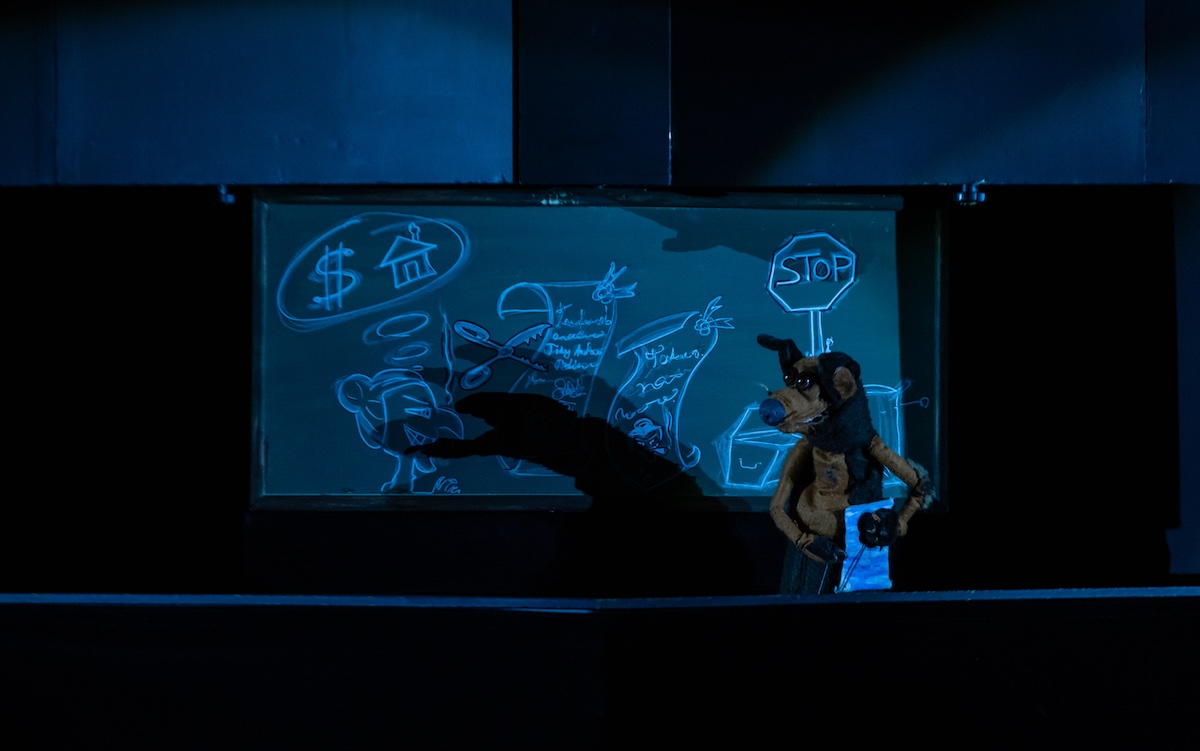
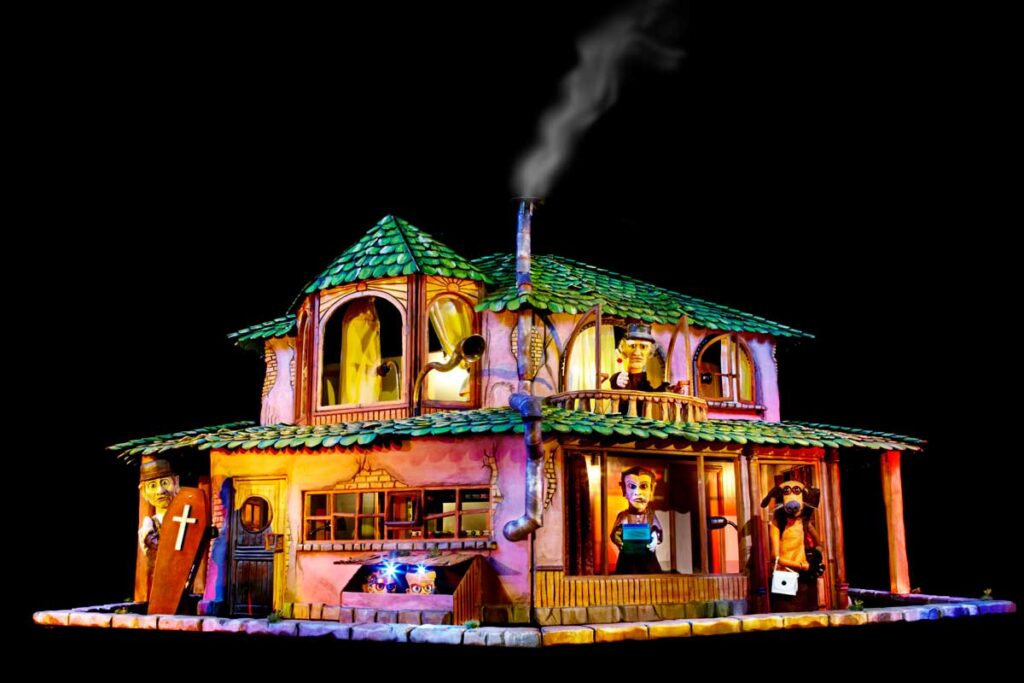
Created in 2010 by this Danish company and performed at Steppenwolf’s Merle-Reskin Space during the 2026 Chicago International Puppet Theater Festival, The House uses a revolving set and glove puppets—all operated by two puppeteers—to tell this thriller-comedy story. When The Lawyer answers Flora’s call and arrives at the funeral home, things have already begun to spiral. On the one hand, Flora is forced to murder The Lawyer after he signs the amended will because he discovers that Esperanza is now Henry in disguise. On the other, Esperanza’s dog witnessed the murder of his beloved mistress and is now possessed by her spirit. Figuring out what is afoot, the possessed dog steals the original will, attempting to foil Flora and Henry’s plan, but runs into Tony and Bruno, foolish twins who have been trying to break into the funeral home to rob gold teeth from the deceased. Tony and Bruno discover they are the true heirs to the funeral home, so they agree to join in with the dog to stop the evil murderers. A chaotic plan results in the death of Flora, whose spirit then possesses Henry and kills the dog. Esperanza’s dislodged ghost also enters Henry, and the two spirits battle it out, with good eventually triumphing over evil and the inheritance going to Tony and Bruno—long-lost sons of Esperanza.
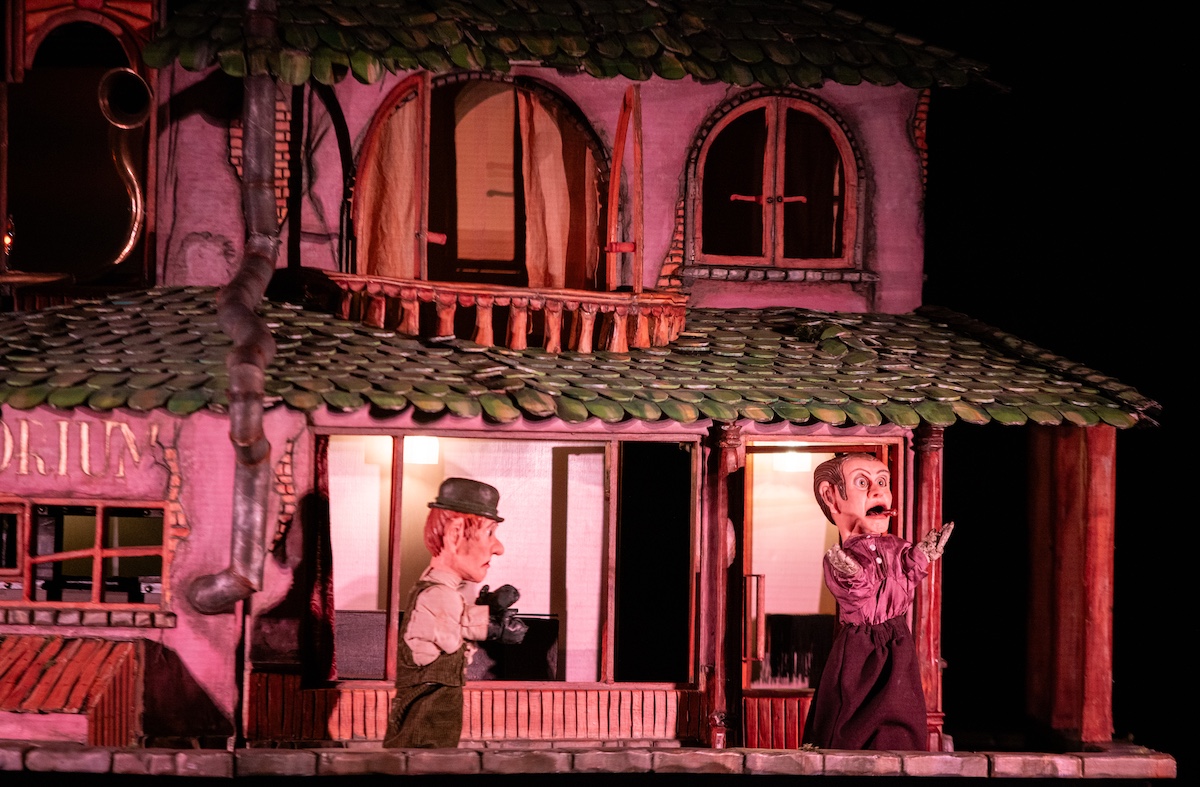
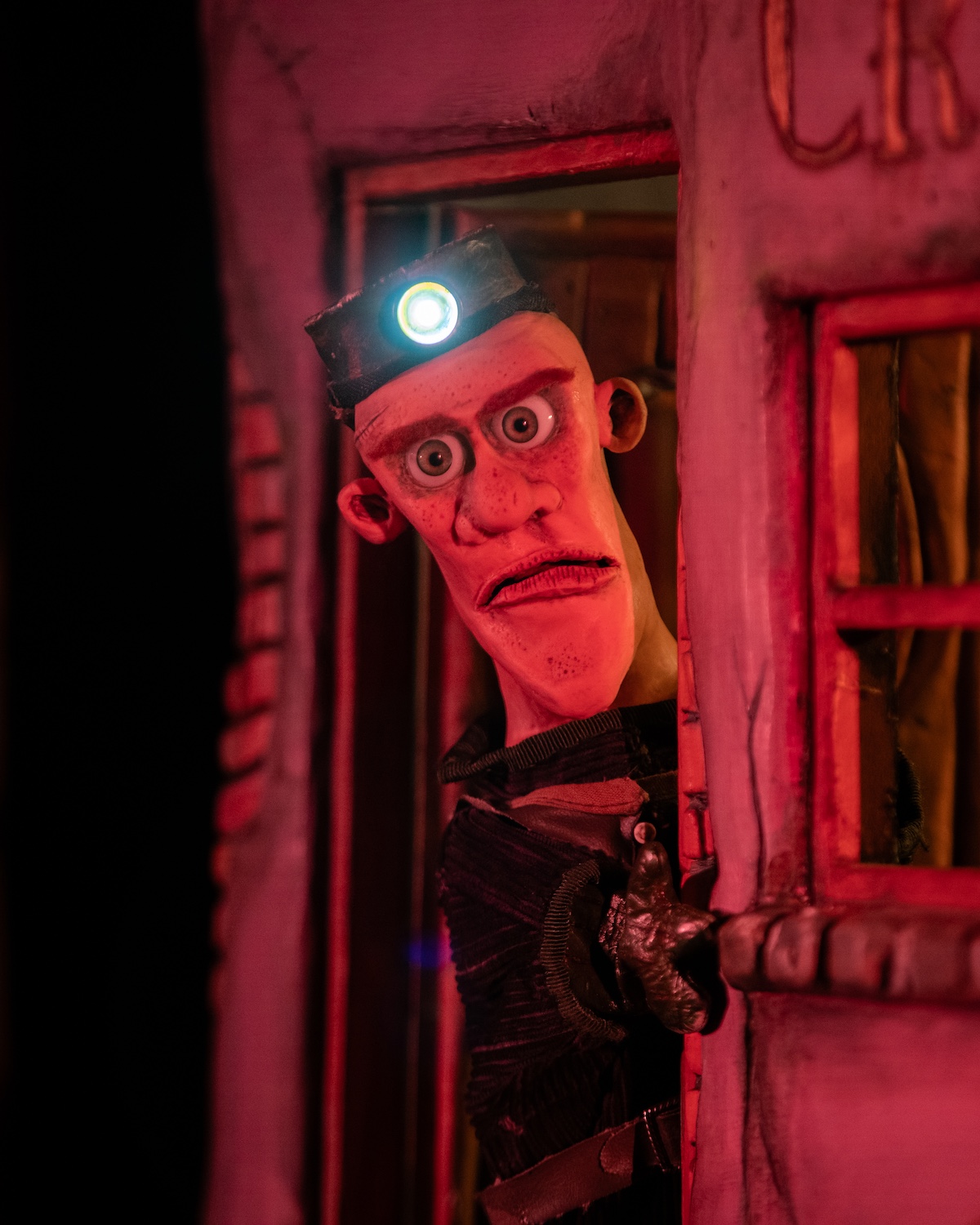
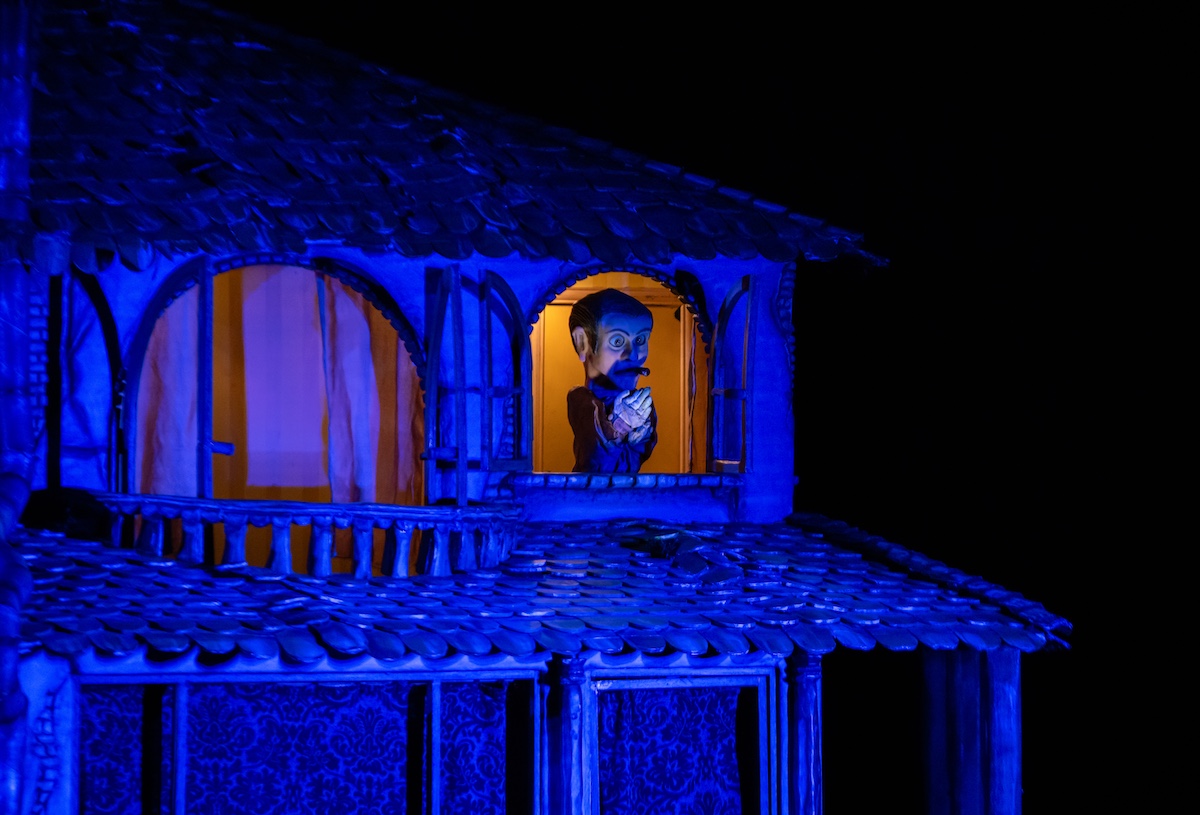
This complex comedy of spiritual possessions is only possible with the archetypal setup of the narration and its characters, which function jointly as “handles”—“bridges” that “assist the audience to understand” (Henson in Stevens, 2014: 34). The image of Flora smoking a cigar and the extremely rigid quality of her movements make her an archetypical villain; The Lawyer walks with a cane and is accompanied by a leitmotif that signals his ominous arrival through an archetypal representation of authority; Tony and Bruno function as an archetypal comedy duo in their slapstick routines as they attempt to break into the funeral home; and the plot of the story develops using archetypes of comedies of errors and stories of murders committed for greed and power. It is by employing these archetypes as a foundation that Krog and Faraco can add the chaos and complexity on top that heighten this performance’s comedy and display their mastery of puppeteering and design. Characters like Tony and Bruno are able to perform their expected physical routines with a precision and detail that is unexpected for glove puppets because of the puppeteers’ masterful manipulations. The dog is able to achieve human levels of expressivity because of Krog’s innovative design that adds sophisticated rod mechanisms to the movement of the dog’s ears, head, and mouth. The glove puppets’ emotions come through their silicone faces—a break with the material from which glove puppets are commonly made. And the story reaches what would be confusing levels of absurdity if it were not for the ingenious set design that lets spectators know what is happening in different parts of the house simultaneously or to zoom in to specific rooms when the action requires it through the set’s revolving mechanism.
While the characters are driven by their basest desires, there is something deeper driving this performance overall—the artistic gumption of the two puppeteers who control everything: the set, the lights, the music, and the cast of seven puppets. Writing about the success of Jim Henson, Elizabeth Hyde Stevens asks artists to question their funding strategies and think about how they “can make a work once and profit infinitely,” by considering “what are the options for mass production in [their] own art” so that they can “make a masterpiece once and sell it many times” (2014: 43). In their desire to keep developing their art, this is what Krog and Faraco have achieved. The ingenuity of the set and puppet design and the mastery of their puppetry manipulation makes The House a perfect touring show, ensuring it can be performed time and time again for new and different audiences. And even if the profit is not “infinite” per se, the sixteen-year touring history of the show attests to its appeal.
This repeated “selling” of their shows for tours is the main funding strategy for Sofie Krog Teater. In 2004, before Faraco joined the company, Krog had developed a one-woman puppet show with a revolving set: Diva. The income from this show (which also continues touring after 22 years), along with some small governmental support, gave Krog and Faraco the money they needed to experiment and create The House. Although it takes the company four or five years to make each show, their experimentation and playfulness in the process ensures creations that are tourable and durable. But in the process of creation, Krog is not prioritizing the potential longevity of the performances. Instead, she is following her intuition and curiosity, her desire to experiment with the form, and going where the puppets and initial images in her mind take her (Krog, pers. comm., February 23, 2026). Above all, she is making sure she can find what is funny and moving in what she is doing so that, unlike the characters in The House, money follows joy for her company and not the other way around.
Works Cited
Stevens, Elizabeth Hyde. Make Art, Make Money: Lessons from Jim Henson on Fueling Your Creative Career. Seattle: Lake Union Publishing, 2014.
Festival Performances
About the Performance
 January 29-February 1, 2026
Steppenwolf’s Merle Reskin Space, 1624 N. Halsted St.
The House is a puppet comedy thriller for teens and adults that tells the story of the Warehouse Family Funeral Home. On her deathbed, the undertaker changes her last will and testament, a secret begins to unravel and an evil plan is formed. Two puppeteers lead audiences behind closed doors and into rooms which hide unspeakably dark deeds. Their complex puppet performance takes place in a revolving set featuring intricate lighting, strange contraptions and scary sound effects—the perfect setting for a comic thriller filled with hilarious horror, twists and turns and jumping souls.
Reviews + Interviews
Dispatch: Puppet Theater Festival Ends with Shows Featuring Sexy Puppets, a Hungry Crocodile, a Cat and Two Dogs by Third Coast Review Staff for Third Coast Review (The House review by Kathy D. Hey)
Sex, sci-fi, Ibsen, and more by The Reader (The House review by Kimzyn Campbell)