2026 Festival Archive: Plexus Polaire
Plexus Polaire:
A Doll’s House
January 22-24, 2026
DePaul’s Merle Reskin Theatre
Presented by Chicago International Puppet Theater Festival
Special thanks to Norwegian Embassy in New York, Kulturrådet, Performing Arts Hub Norway, and Villa Albertine/French Institute
Scholarship and Resources
Bodies, Objects, and Freedom: Plexus Polaire’s A Doll’s House
An Essay by Rahul Koonathara
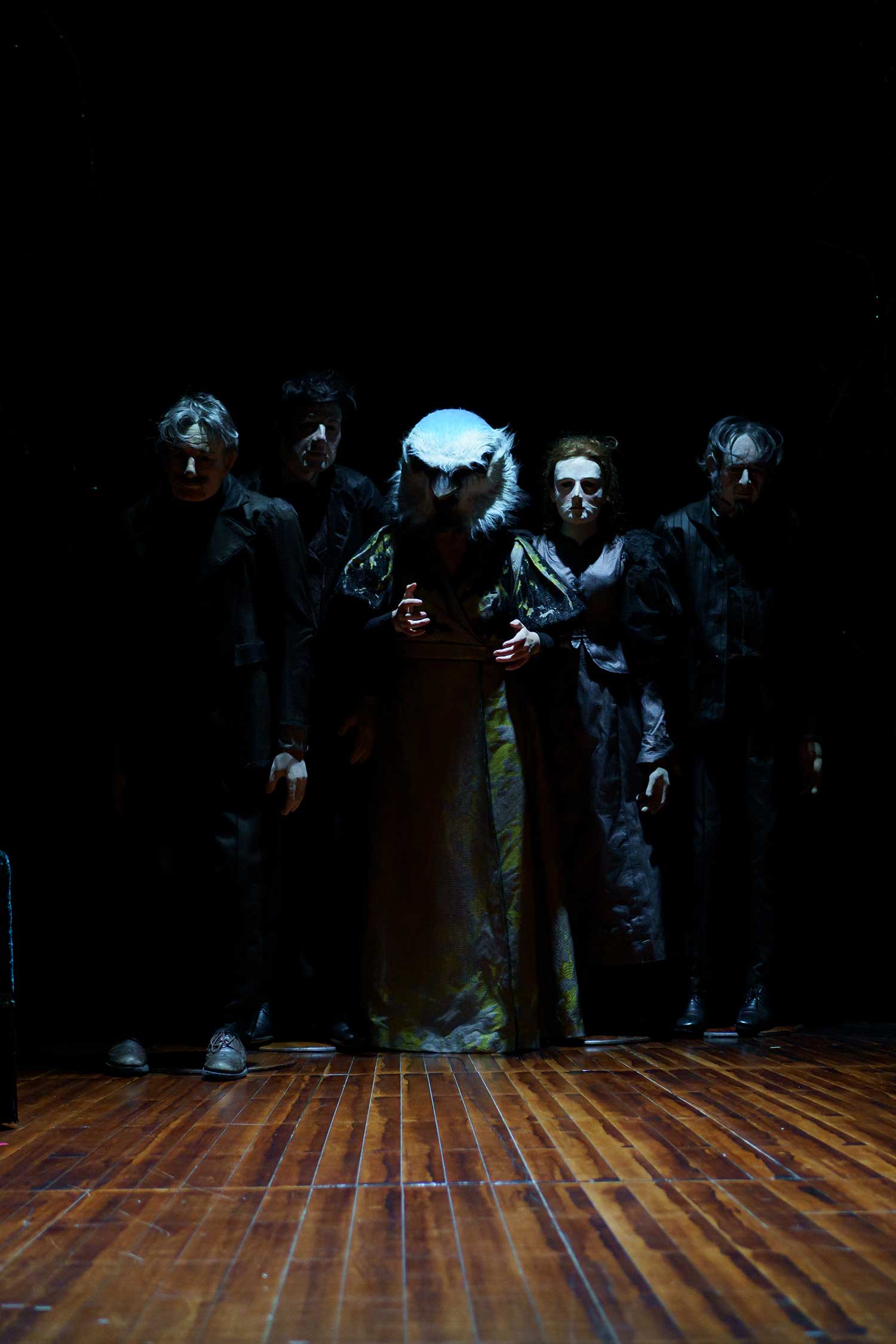
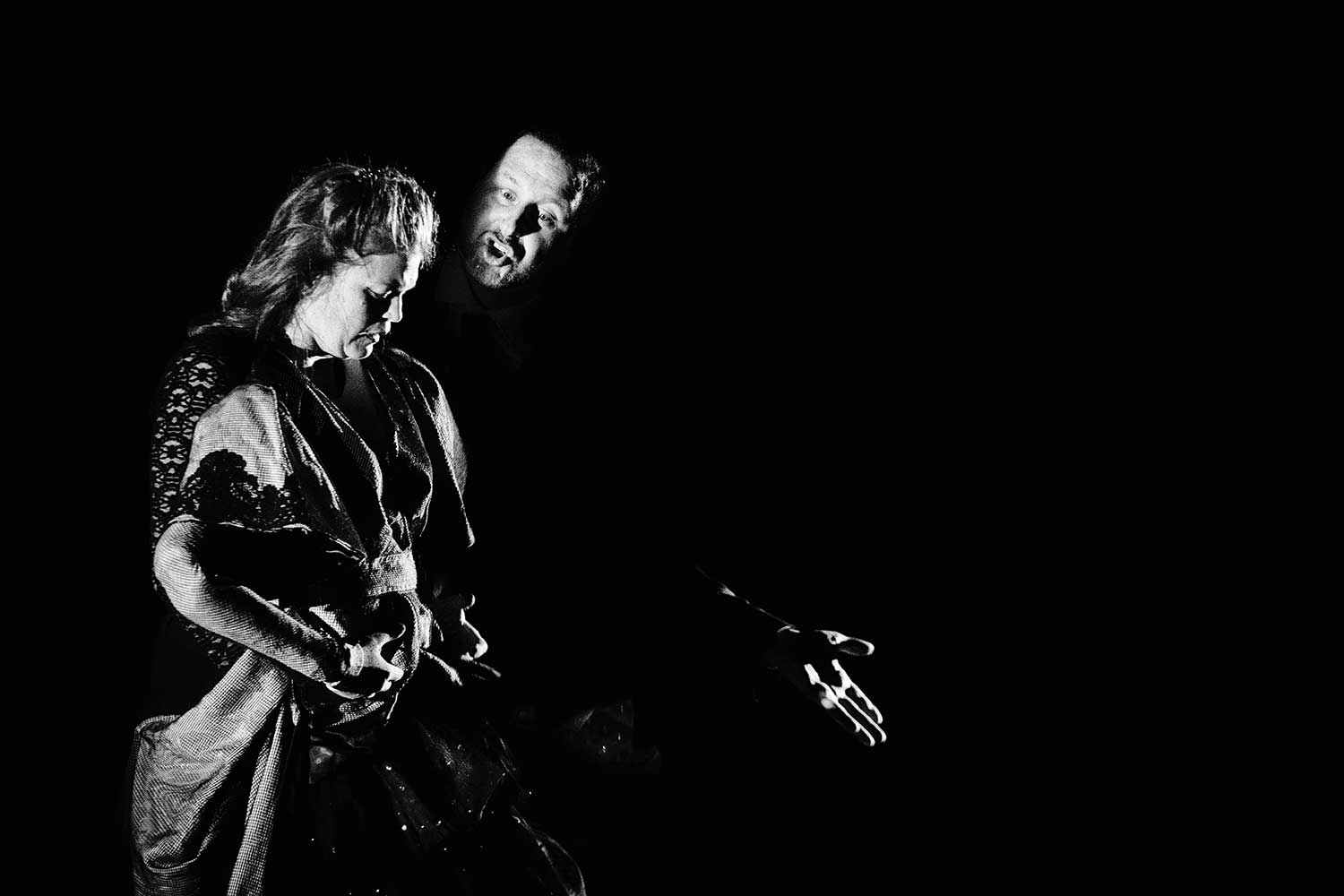
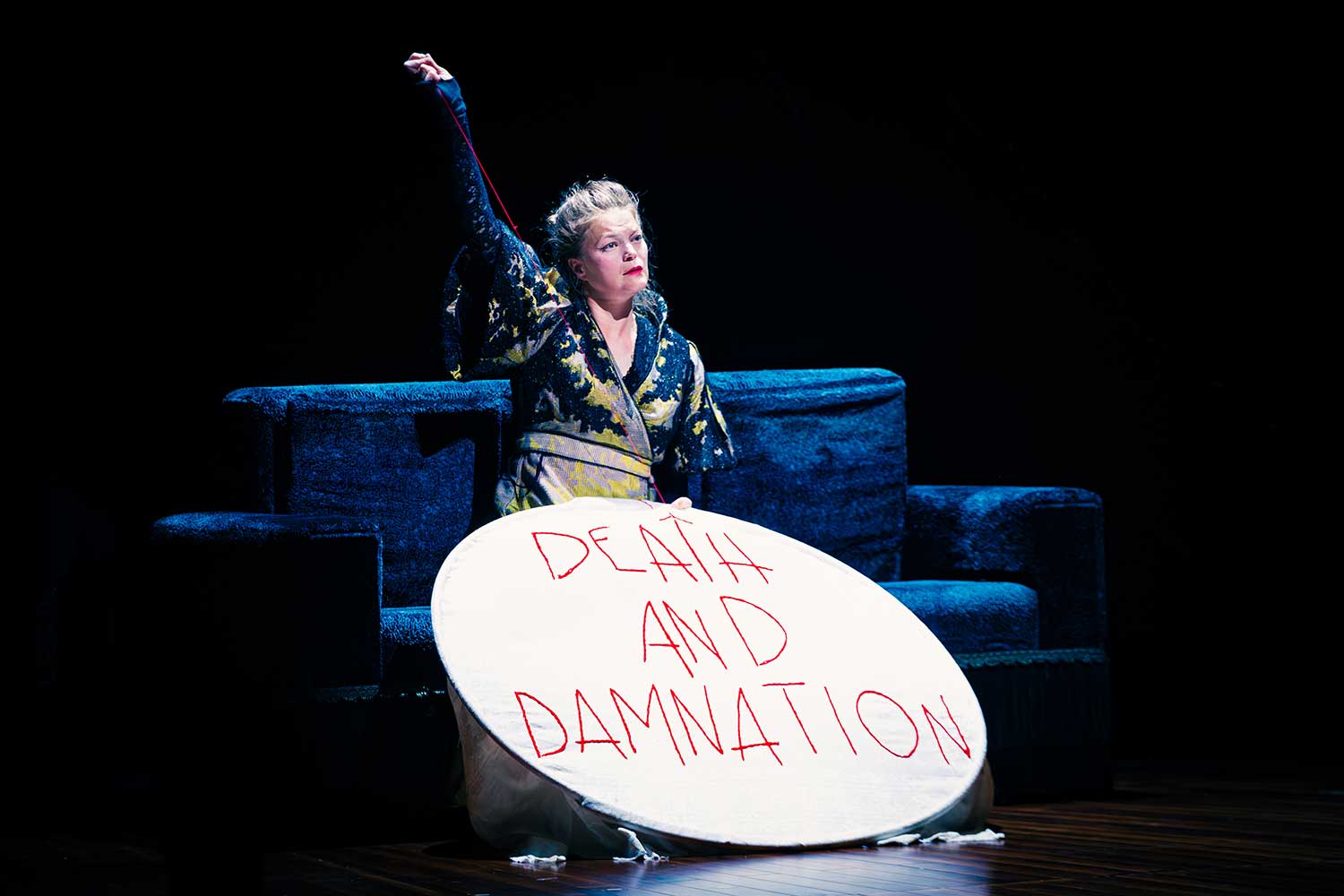
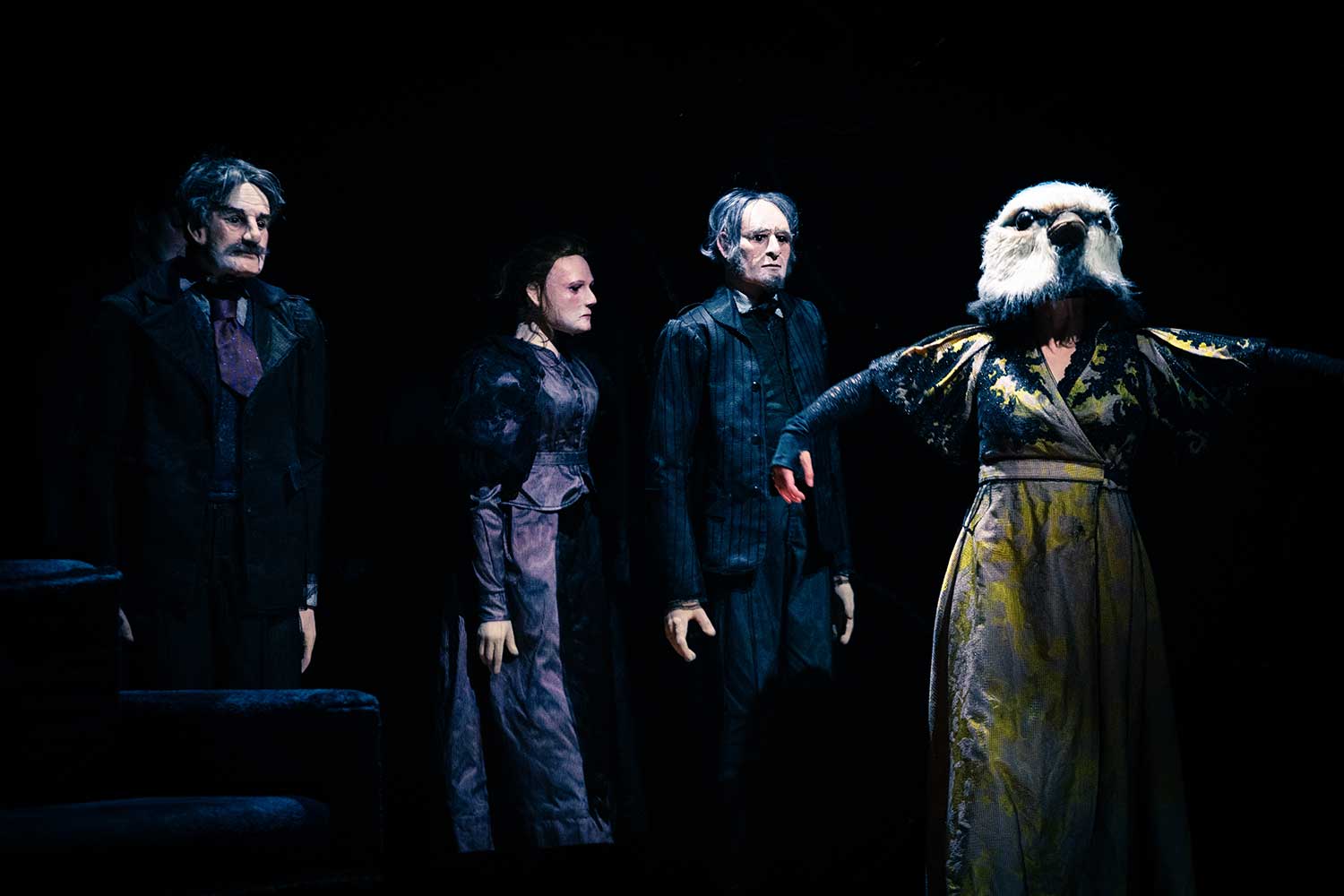
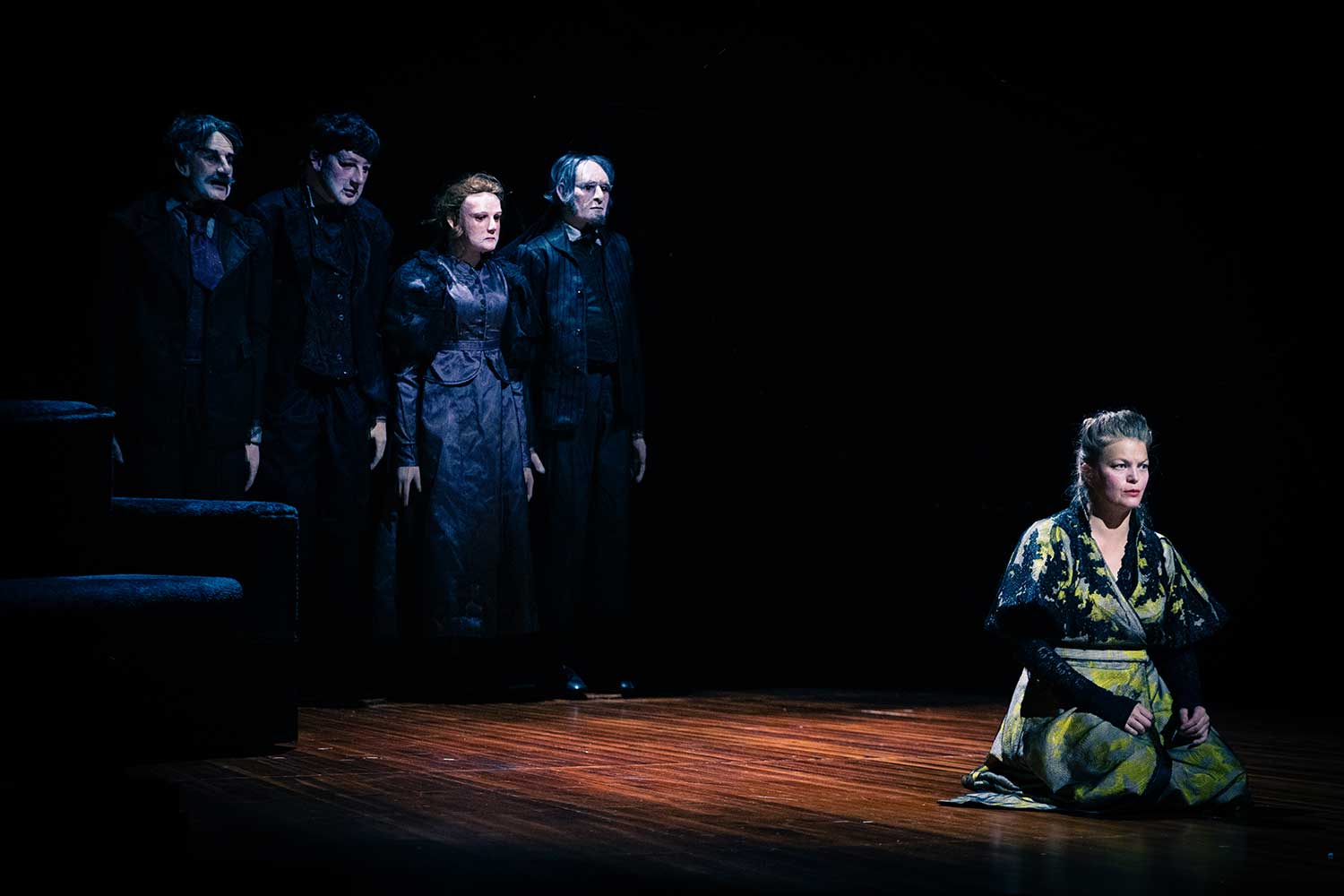
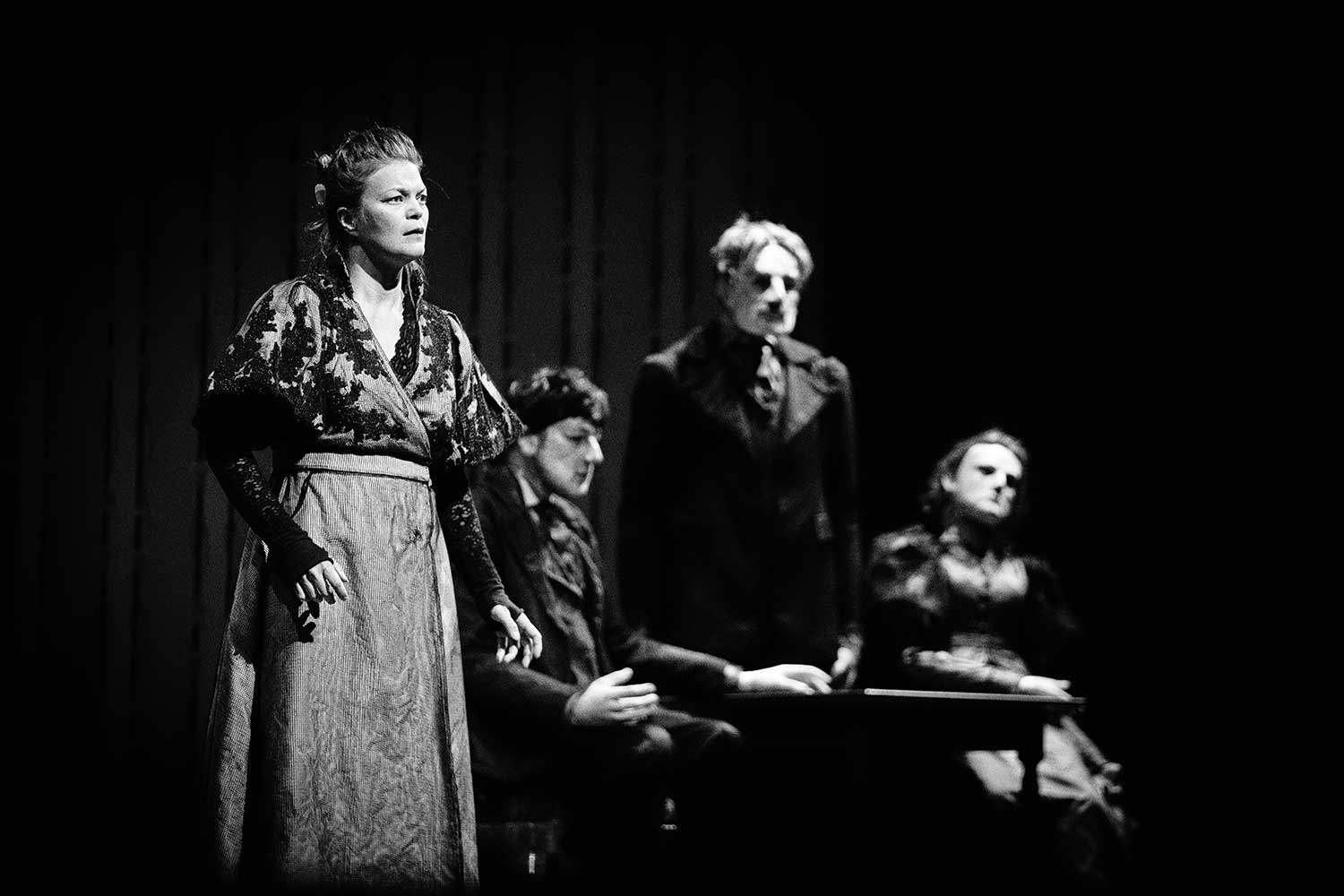
Plexus Polaire’s (2023) adaptation of A Doll’s House by Norwegian playwright Henrik Ibsen (1828–1906) reimagines the play through puppetry, exposing how freedom, identity, and power are manifested through performance, networks, and documents. Co-directed by Yngvild Aspeli and Paola Rizza, the production narrates the story of Nora and Torvald Helmer through life-sized, hyperrealistic puppets with visible manipulation, alongside human actors sharing the stage. I argue that this adaptation uses life-sized puppetry and visible manipulation to stage Nora’s identity and freedom as forms of labor, materially enacted through bodies, objects, and acts of animation and shaped by legal and funding structures. These dynamics also resonate with the institutional realities through which contemporary theater is produced, funded, and sustained. Aspeli’s approach demonstrates how puppetry can rewrite classical texts, not by updating their themes, but by reconfiguring embodiment, labor, and authority. I read this act as a meta-performance that renders Nora’s internal states as being in sustained tension with the legal conditions of the nineteenth century, when women were denied property rights, economic independence, and legal authority.
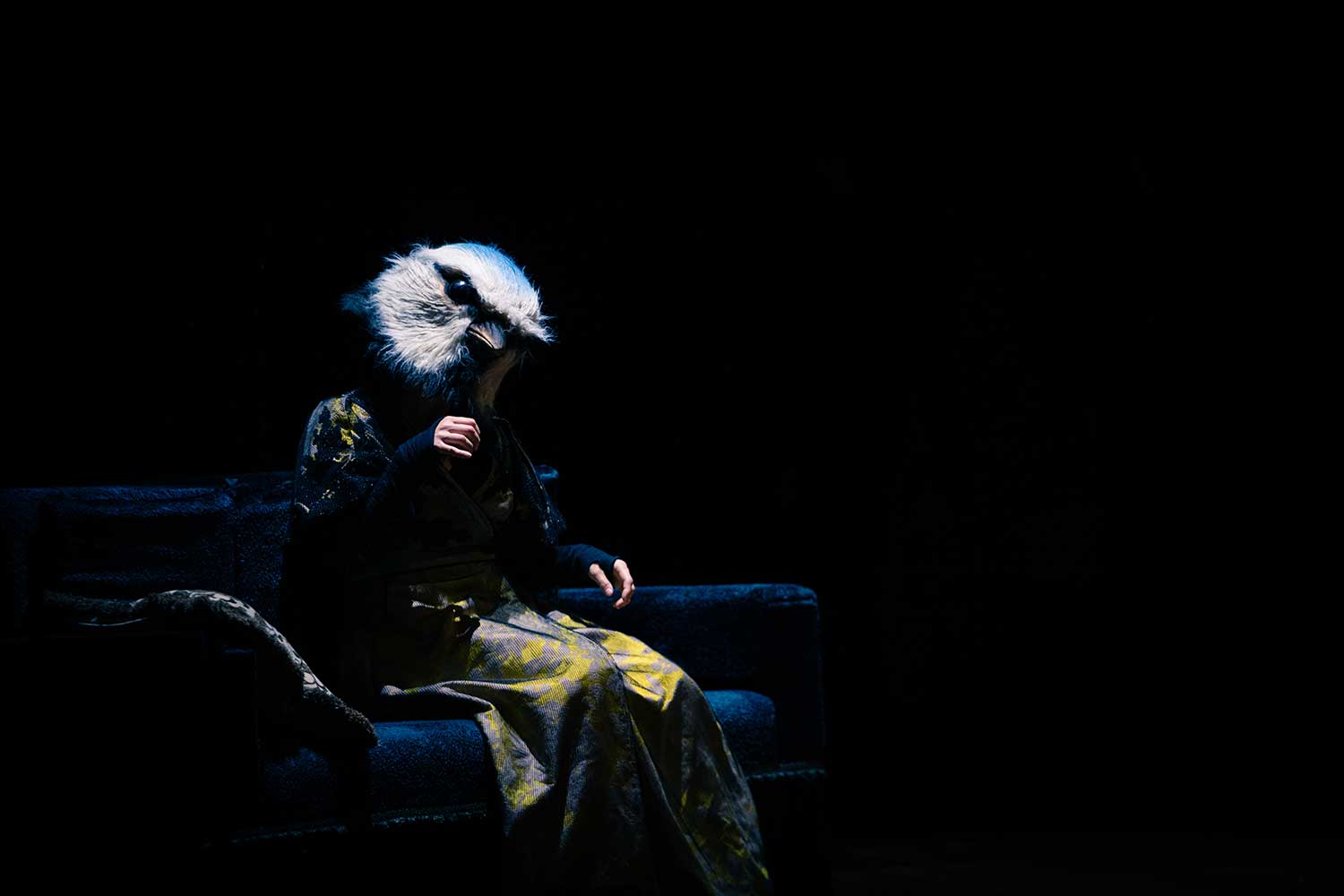
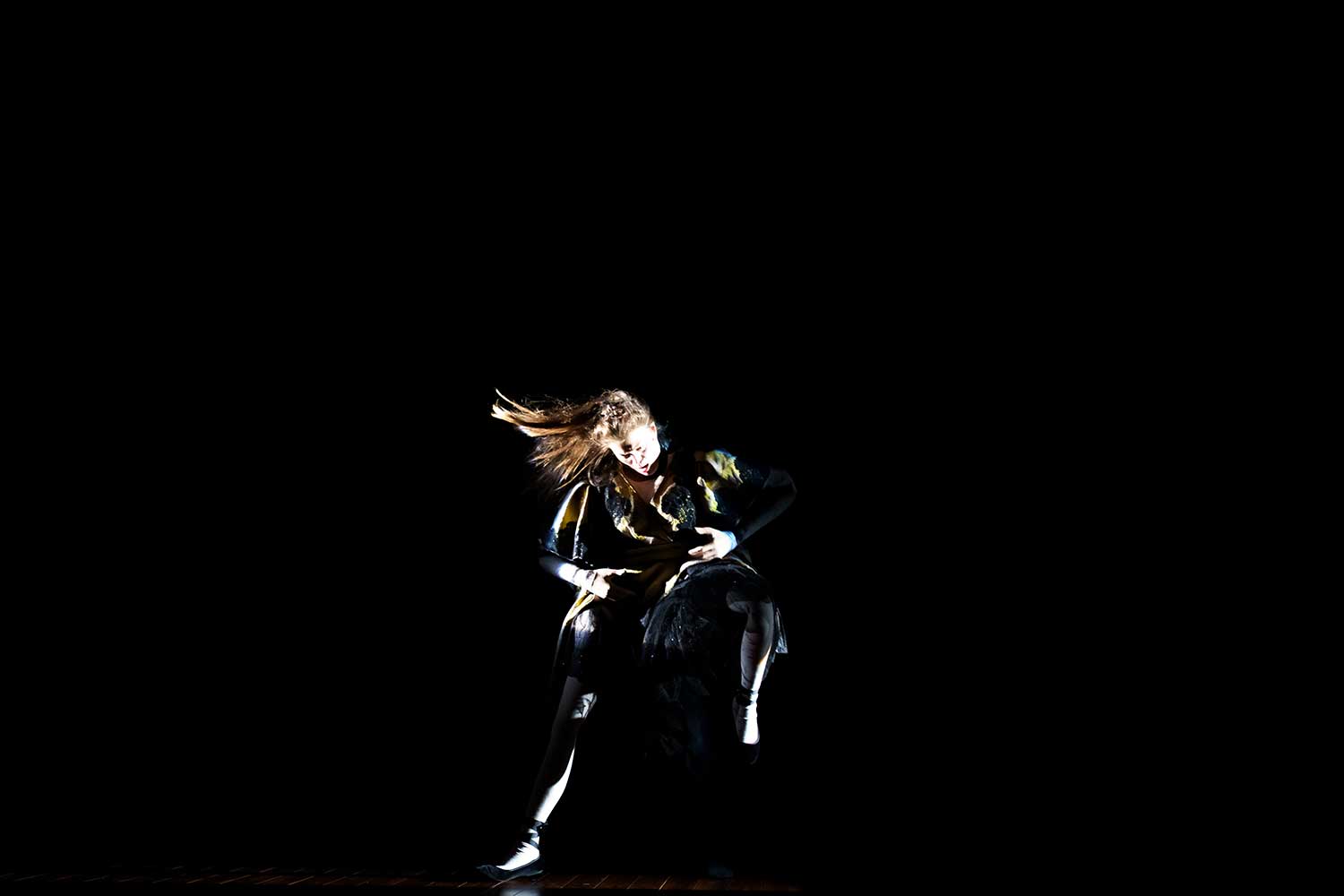
The play opens with an image of a bird lying lifeless downstage center on the ground, a scene identified on the company’s website (https://www.plexuspolaire.com/) as the conceptual origin of the production. The bird is lit in isolation while the rest of the stage remains in shadow, suspending the expected realism of Ibsen’s bourgeois living room. Aspeli describes in the letter of intent how the bird died after repeatedly crashing into the invisible glass of her window. The lifeless bird mirrors the fragility of art itself. Although the production can be read as feminist distress, it eventually explores broader systems of social control, surveillance, and authority. Aspeli noted that the production developed over an extended period rather than as a singular event, emphasizing process, risk, and accumulation over immediate completion (2026, pers. comm., January 23).
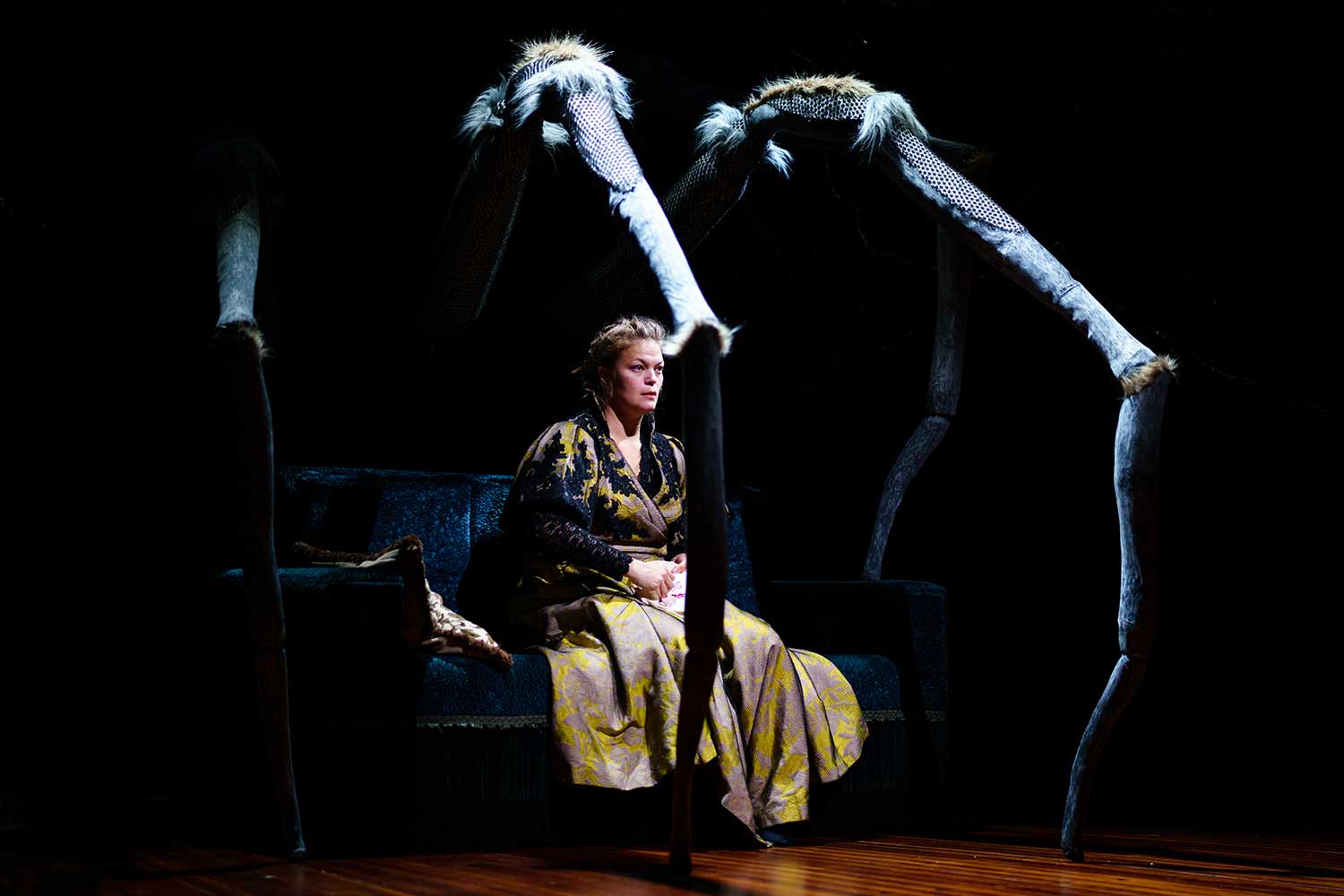
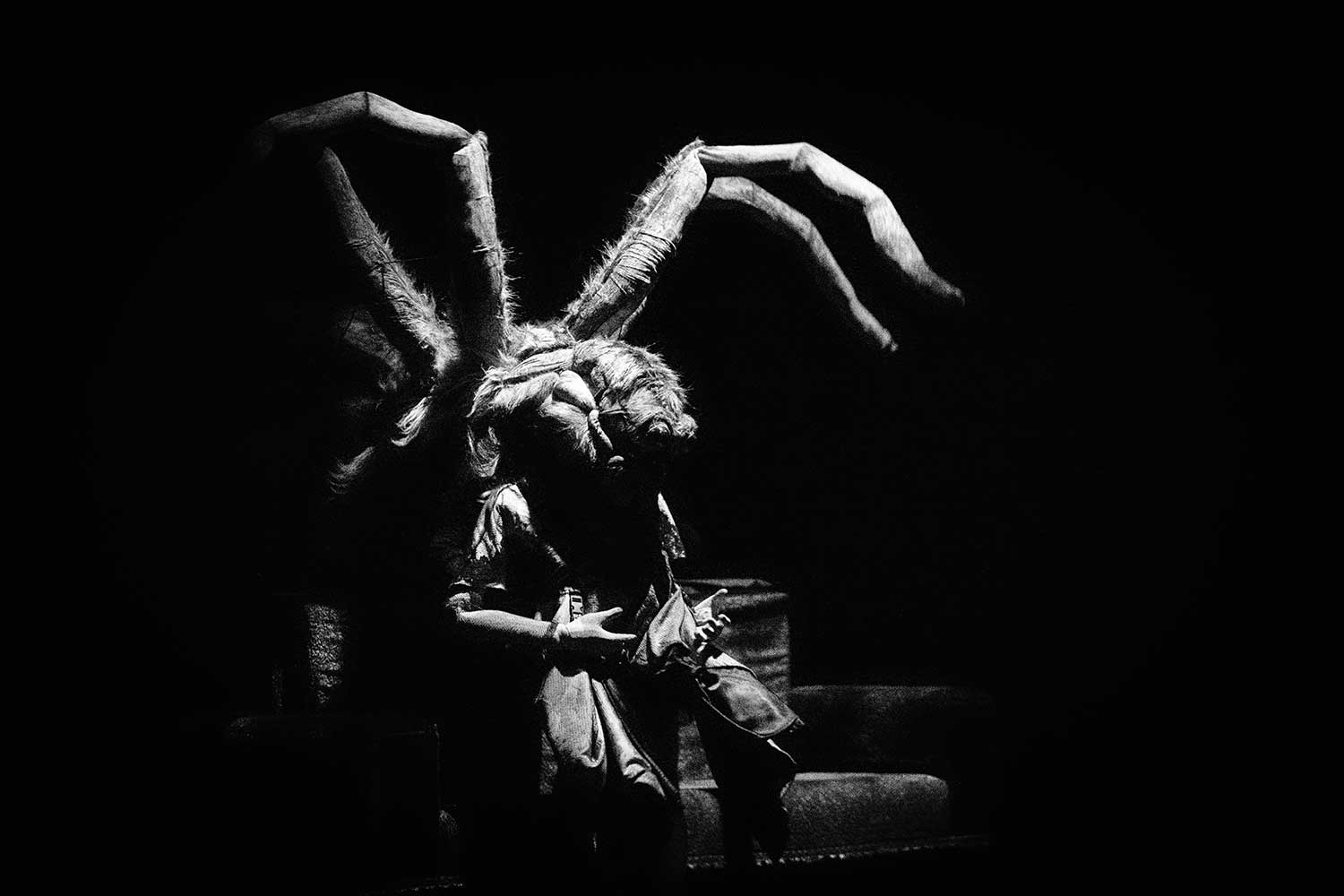
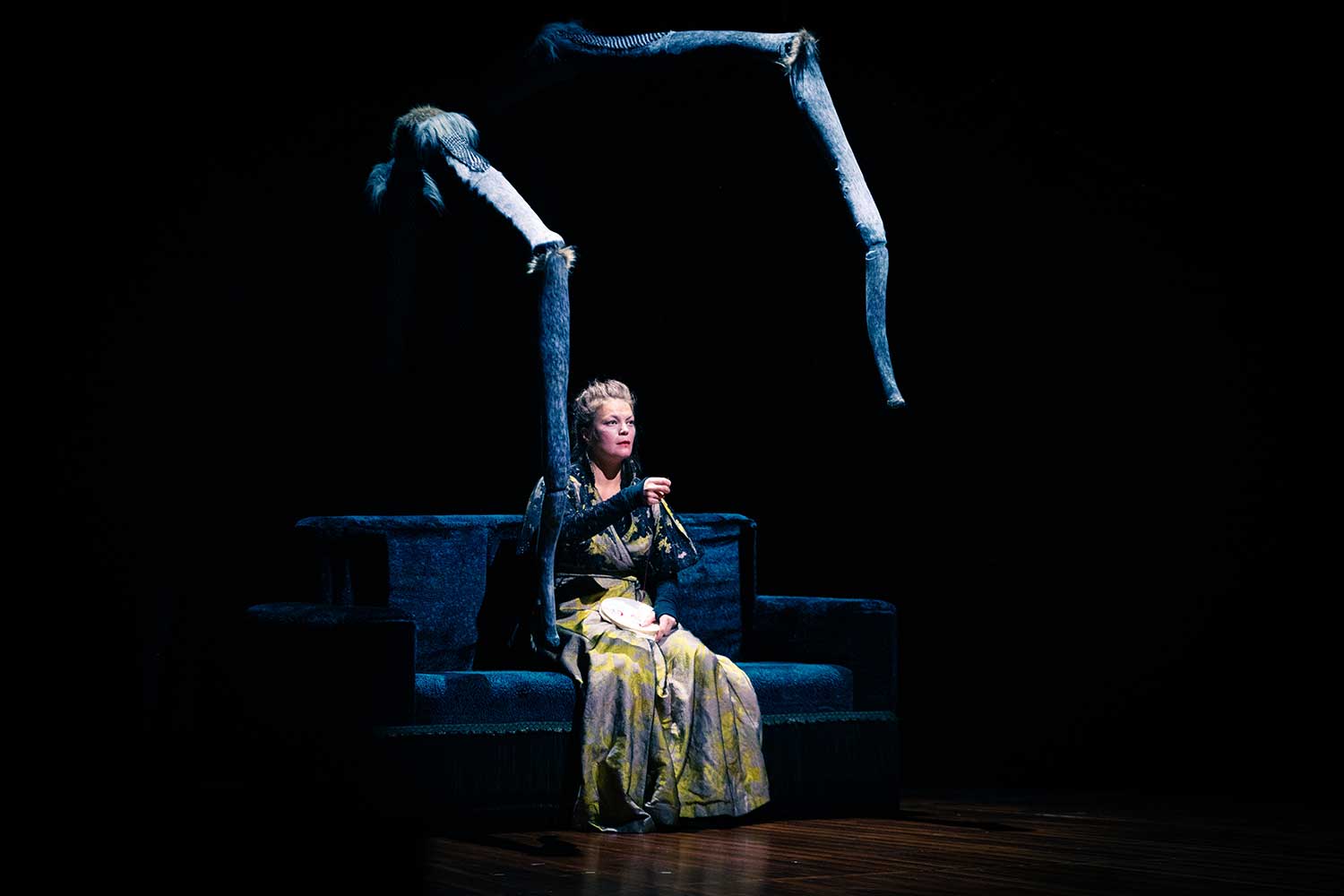
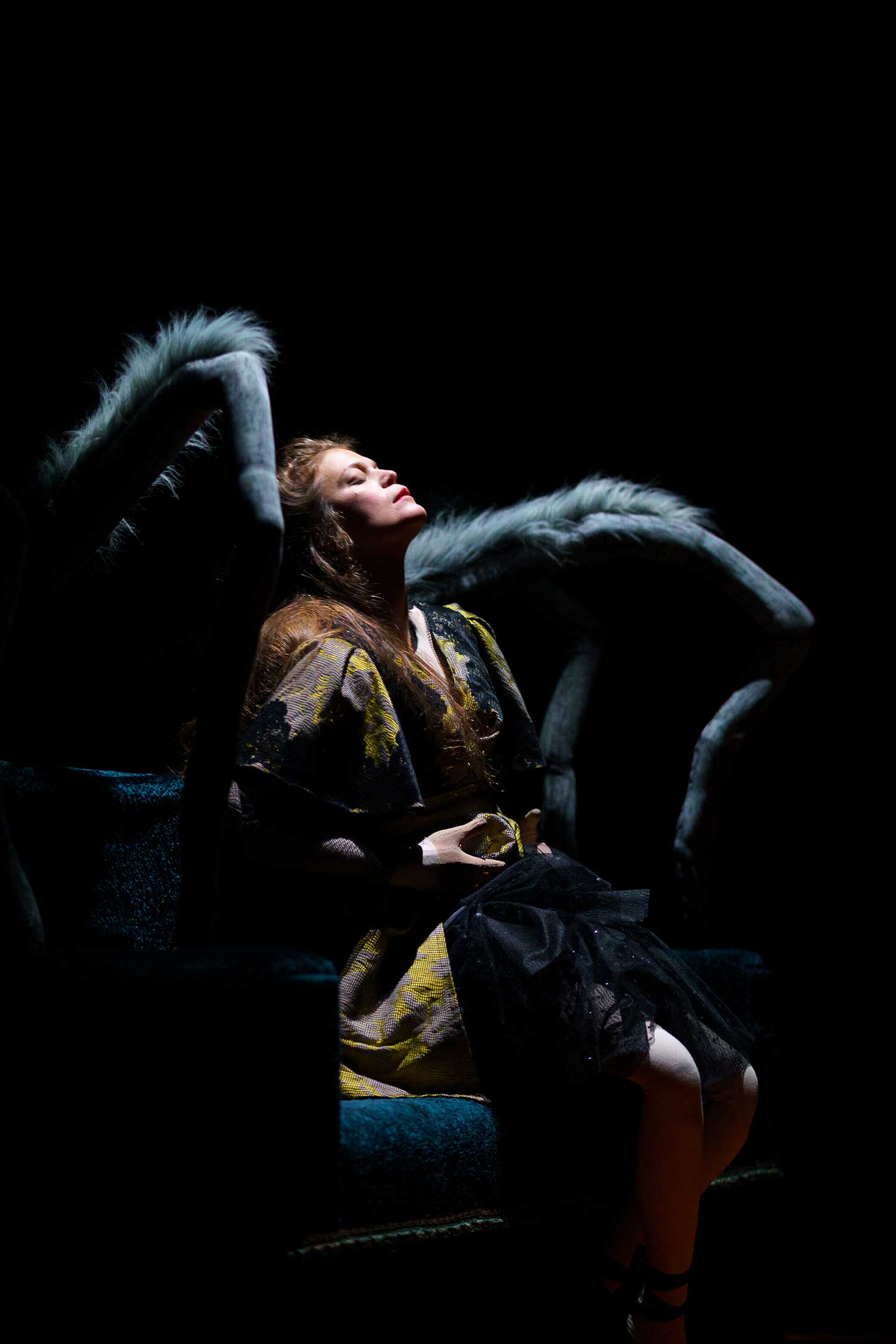
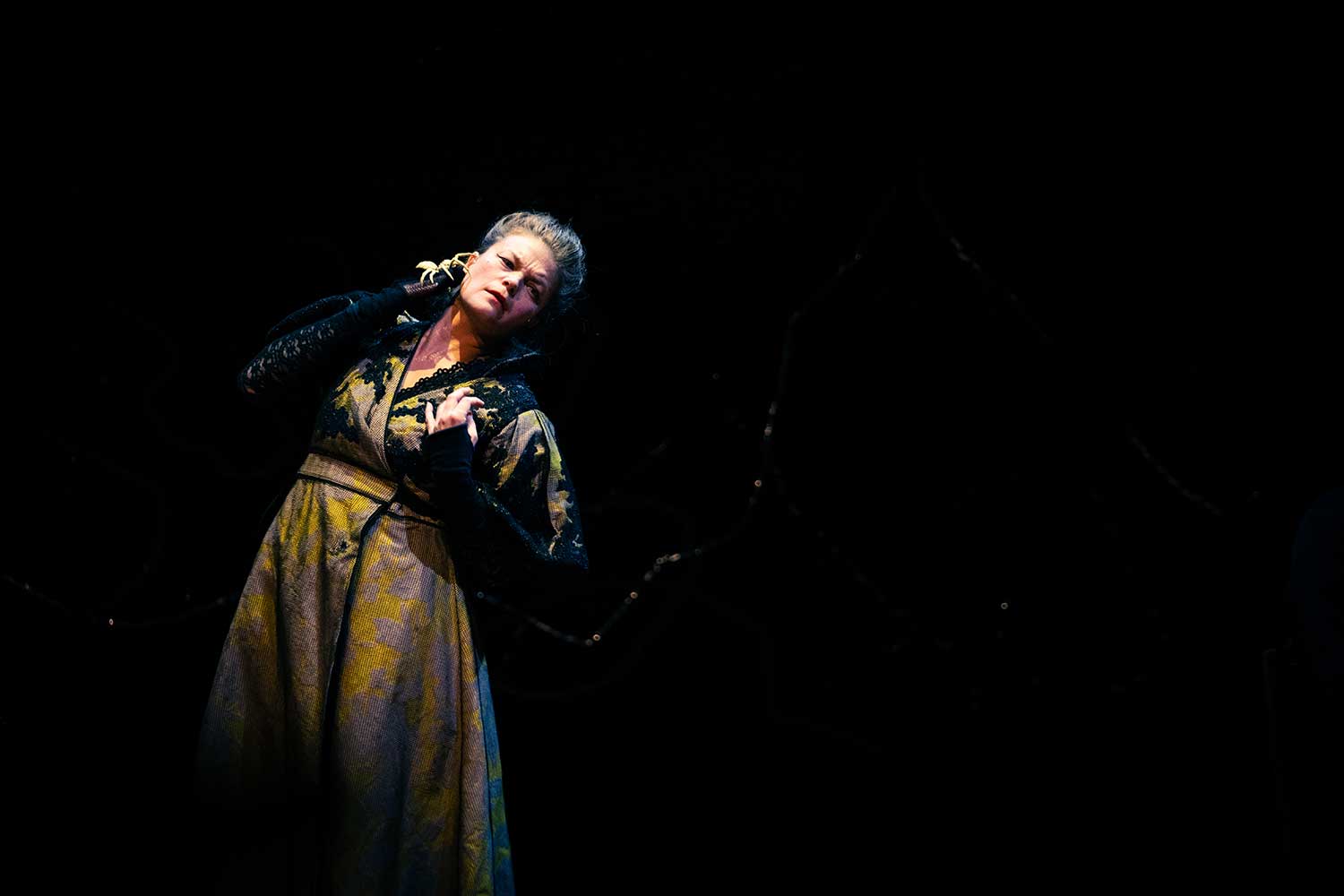
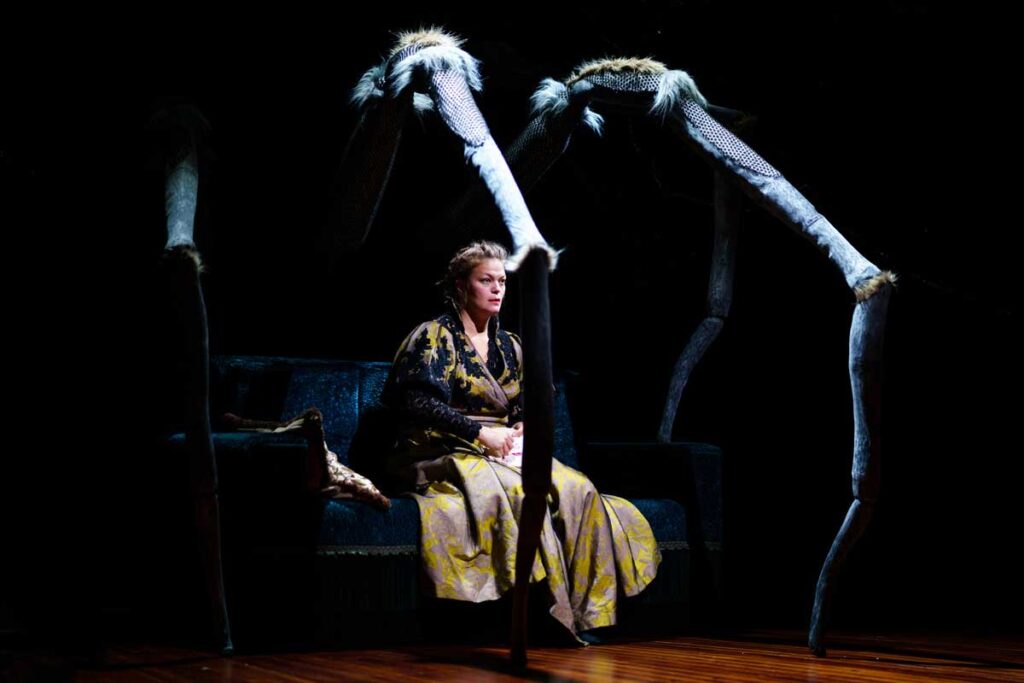
The stage setting reconfigures the domestic interior through a suspended weblike structure of taut lines with metal framing, transforming Nora’s living room into a spatialized network of control. The hyperrealistic structure of the spider web remains exposed and vertical with its looping and intersecting lines of connectivity, functioning as a social construct that binds individuals through systems of authority. Small arachnid movements expand through dancing the tarantella, traditionally believed to protect dancers from the deadly bite of a tarantula spider, until they culminate in a giant spider structure, transforming this festive dance into a spatially visible demonstration of control and an embodied diagram of entrapment.
Nora dresses herself in the costume of domestic happiness and engages in her daily routine. Through repetition, happiness is revealed not as a lived state but as a performed image, reflecting affective labor in which that emotion is produced. In several sequences, the children’s dependent gestures, with tilted heads, reaching arms, and compliant stillness, are generated through visible manipulation foregrounding maternal care and divided labor. The logic extends beyond the narrative to the conditions of performance labor, where artistic work must sustain visibility, mobility, and institutional legibility over extended touring cycles.
Torvald, an agent of the system, exerts power derived from legality, economic control, and moral discourse. Signed documents possess a force capable of reorganizing lived reality: A single piece of paper is ample to dismantle a life. A significant shift strikes when Torvald transitions from puppet to human performer, while Aspeli herself begins to affect the virtues of a doll. This reversal reconfigures the distribution of agency onstage: Authority becomes embodied and autonomous, while Nora’s subjectivity is increasingly objectified.
The choice of materials, scale, and projection aligns the work with funding frameworks in which visual clarity, durability, and tourability support institutional backing and long-term circulation. Such design decisions reflect an awareness of how aesthetic ambition must coexist with the practical demands of touring infrastructures and funding systems. Manipulation remains present and fully exposed.
Puppetry becomes the primary dramaturgical structure: Bodies can be taken apart and reconfigured in front of the audience, making Nora’s identity literally negotiable. Aspeli describes how the company has multiple productions touring simultaneously, a system that allows sustained audience encounters, while binding theaters, festivals, and institutions into a mutually dependent ecology of exchange (2026, pers. comm., January 23). This structure mirrors the production’s own reliance on networks of coproducers, presenters, and funding bodies, through which large-scale work must circulate in order to remain viable. The production itself emerges from an extensive transnational network of coproducing institutions, including Théâtre Dijon Bourgogne Centre Dramatique National (CDN); Figurteatret i Nordland; Les Gémeaux, Scène nationale de Sceaux; le Bateau Feu, Scène nationale de Dunkerque; Le Trident, Scène nationale de Cherbourg-en-Cotentin; le Manège, Scène nationale de Reims; Bærum Kulturhus; Nordland Teater; the towns of Mo I Rana and Hamar in Norway; Teater Innlandet; and the Festival Mondial des Théâtres de Marionnette de Charleville-Mézières, among others. Supported by Kulturrådet/Arts Council Norway and the French Ministry of Culture (DGCA), the work is embedded within state-funded cultural infrastructures. The company identifies as both Norwegian and French, which reflects the transnational working structure and facilitates access to funding and coproduction networks.
Art is produced under pressure, not only to be meaningful but to be mobile, legible to funders, and sustainable over years rather than weeks. Contemporary theater is rarely conceived as a singular event: It is structured for circulation across networks. In this sense, artistic form is inseparable from the institutional infrastructures that enable and constrain its existence. The final choreography between human actors and puppets attains particular force; their collisions, separations, and misalignments make visible the violence embedded in relationality under domination. The production refuses consolation and illusion. Nora’s departure is not framed as triumph or transcendence but as withdrawal. She does not dismantle the system; she ceases to sustain it. Freedom appears not as fulfillment but as loss: the loss of belief, of role, of performance. In this refusal, the work locates its ethical stance. Art becomes an act of resistance, not by offering solutions but by exposing mechanisms.
Festival Performances
About the Performance
 January 22-24, 2026
DePaul’s Merle Reskin Theatre, 60 E Balbo Dr
Plunge into a world on the edge of the fantastic, where the heroine is a prisoner of her own web of lies, woven over many years. A Doll’s House brings together puppets, actors, music and video projections in this eerie retelling of Henrik Ibsen’s 1879 play, one of the great Nordic classics. Created by and starring Plexus Polaire’s visionary artistic director Yngvild Aspeli, the production features her signature puppetry innovation in a house haunted by hyper-realistic, life-sized puppets, dead birds and a possessed female choir. A fascinating re-envisioning of the world-renowned classic. A must-see.
Reviews + Interviews
8th Annual Puppetfest Warms the City by Angela Allyn for Chicago Stage and Screen
A Beacon of Warmth and Light: Puppets Take Chicago by Laura Collins-Hughes for The New York Times
Sex, sci-fi, Ibsen, and more by The Reader (A Doll’s House review by Kimzyn Campbell)