2026 Festival Archive: Plexus Polaire
Plexus Polaire:
Trust Me for a While
January 28-31, 2026
Reva & David Logan Center for the Arts, Performance Hall
Presented by Chicago International Puppet Theater Festival
Special thanks to Norwegian Embassy in New York, Kulturrådet, Performing Arts Hub Norway, and Villa Albertine/French Institute
Scholarship and Resources
WHO IS IN CONTROL?!?! Thoughts on Trust Me for a While
An Essay by Tom Tuke
If you look up “#puppets” on social media, you are fed an array of puppetry and object performances from around the world. In a surprising twist, you also get served up an array of grainy memes with caps-lock-on comments like “WHO IS PULLING THE STRINGS? WHO IS IN CONTROL?” As a puppeteer, this marionette-as-metaphor-for-control feels a bit overwrought and misguided. However, in capable hands, it can be fuel for philosophical, humorous, and self-aware puppetry. There are plenty of puppet shows that riff off this idea and create metatheater about control and the nature of puppetry itself. Some do it well, some not so much. Plexus Polaire’s Trust Me for a While has a particularly good take on this trope and brings the audience on a journey, as it pares back the skin of the puppet and delves into who controls whom.
In Norwegian/French puppet company Plexus Polaire’s Trust Me for a While, creator Yngvild Aspeli uses the art of ventriloquism as a way of exploring the relationship between performer and puppet. While ventriloquism might be associated with light entertainment, illusion, and trickery, there is also an intimacy between performer and puppet that other puppetry forms rarely achieve. It is this dichotomy of crudeness and intimacy through which Aspeli weaves.
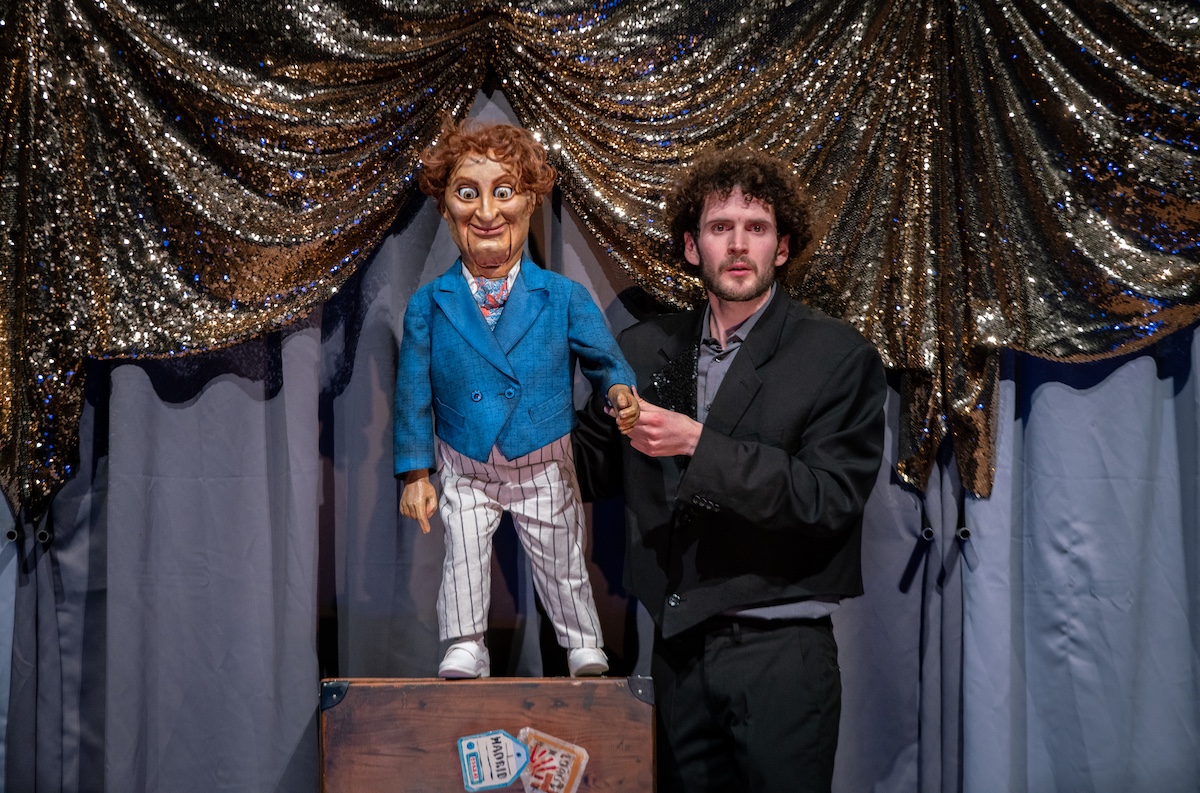
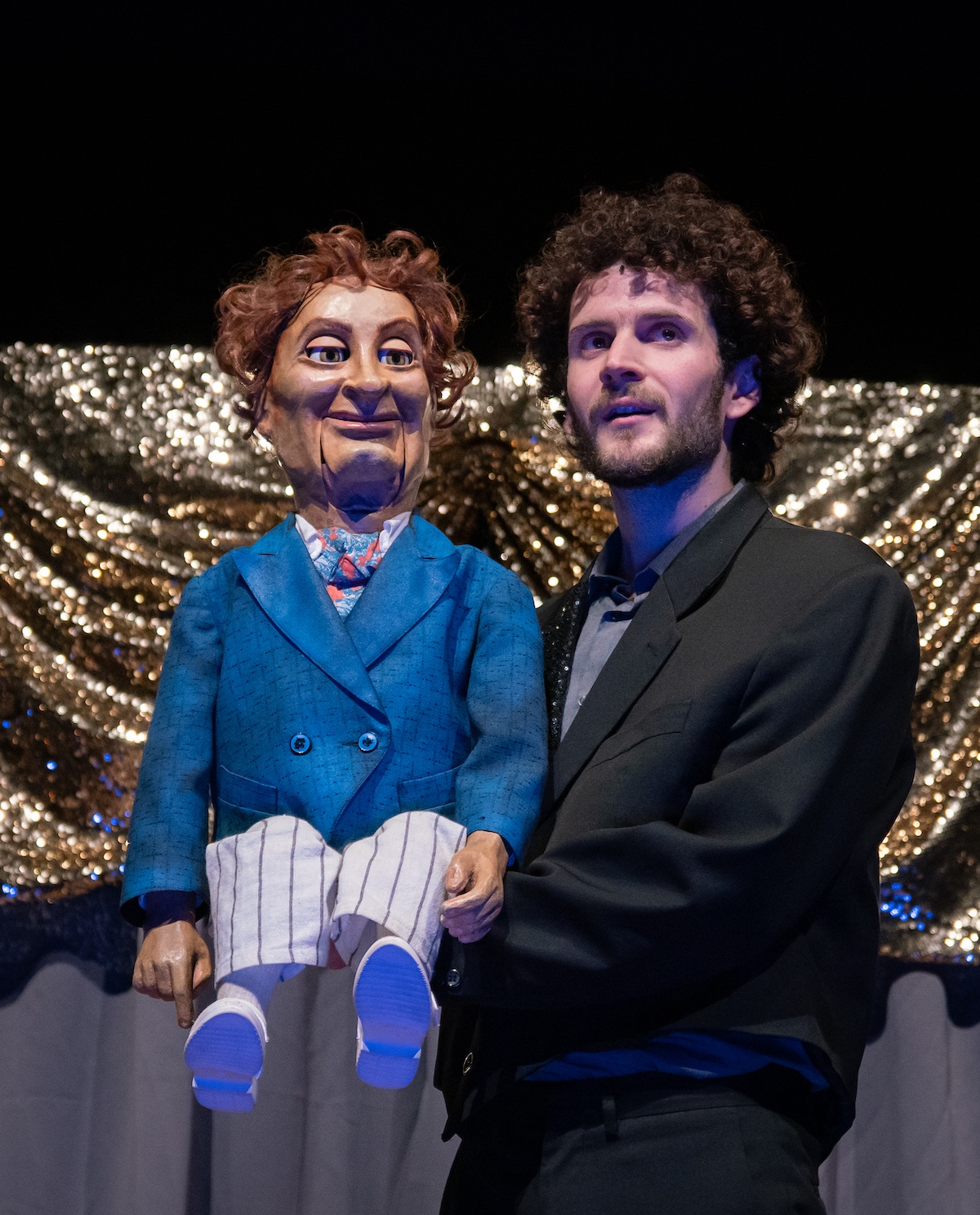
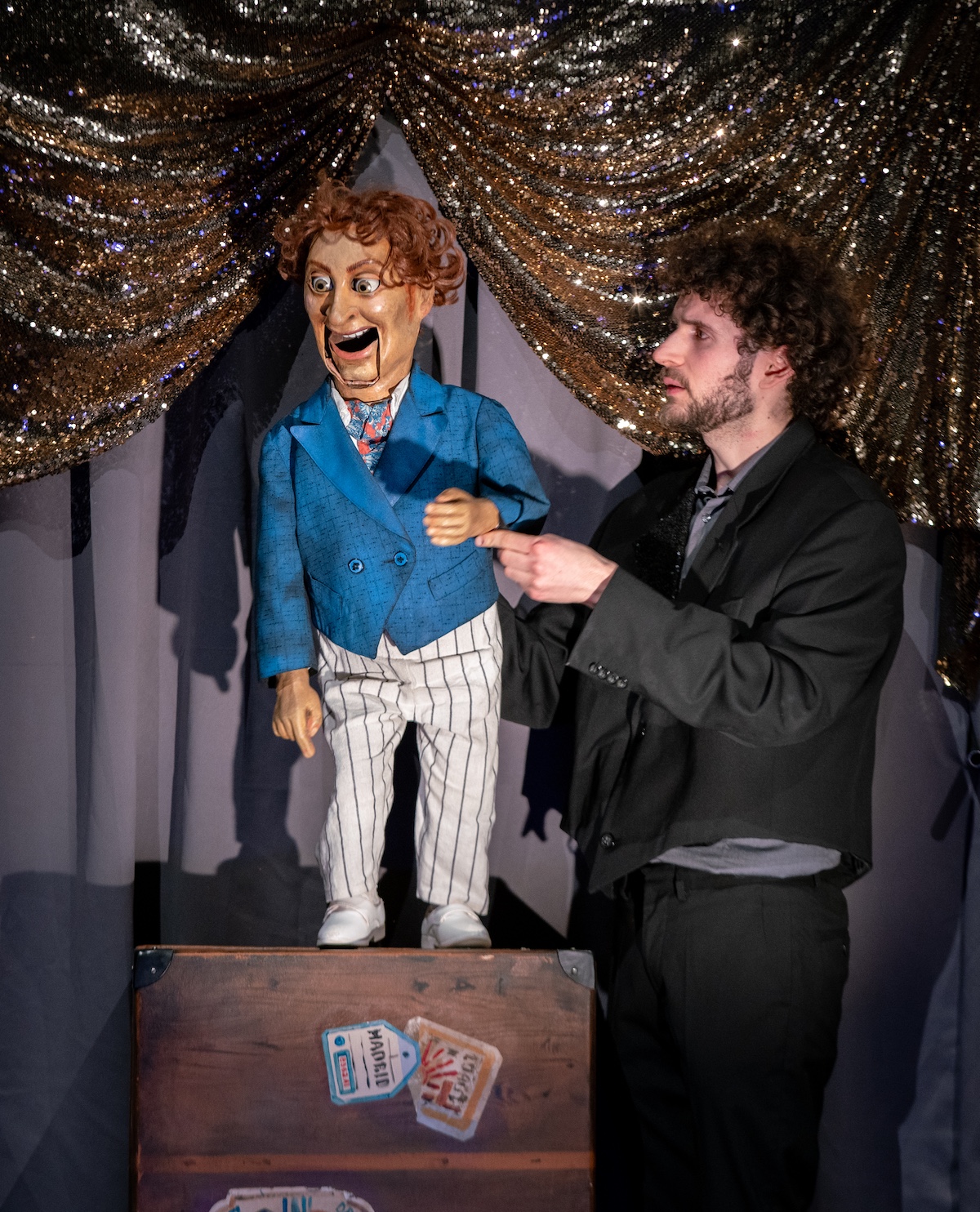
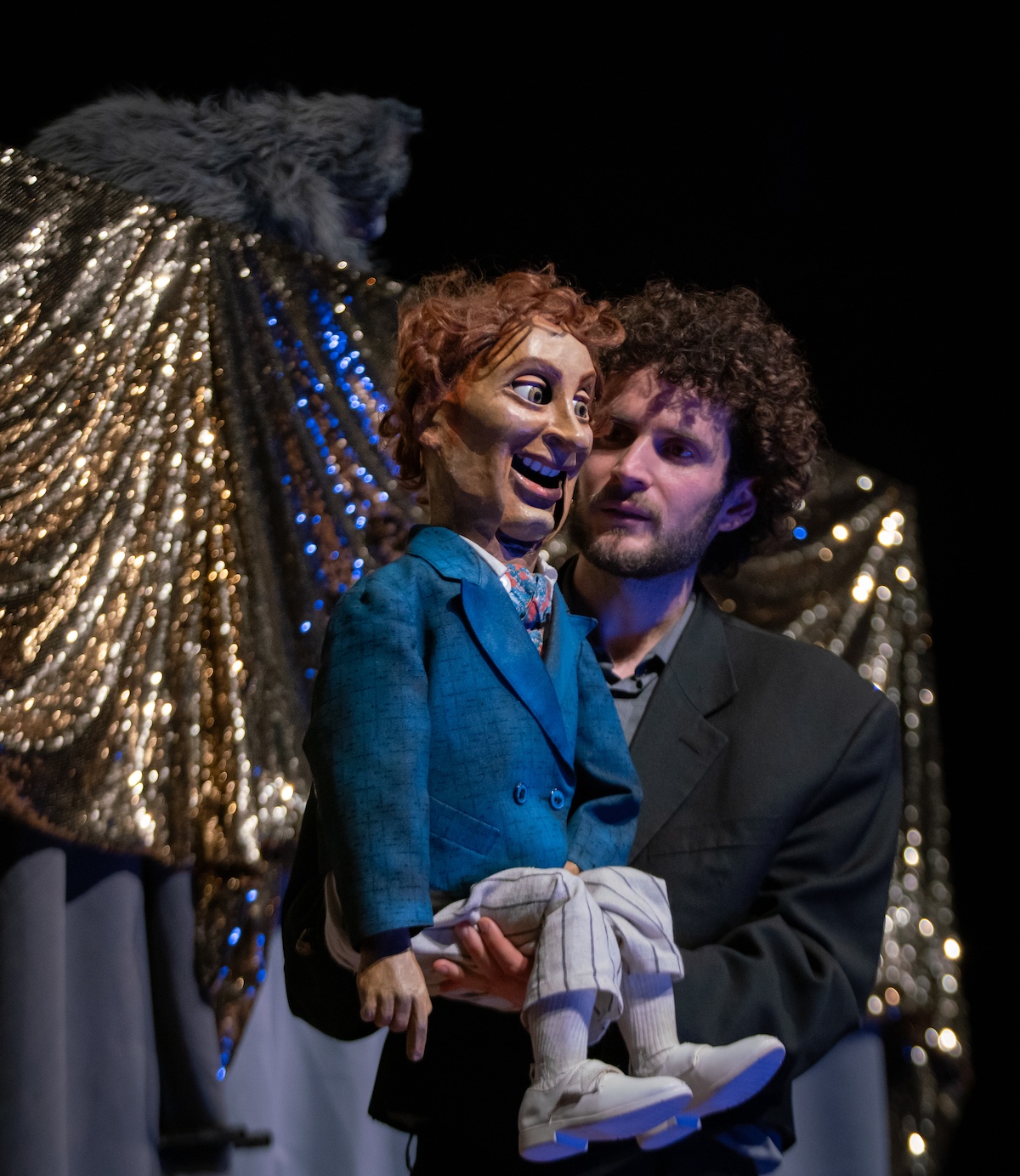
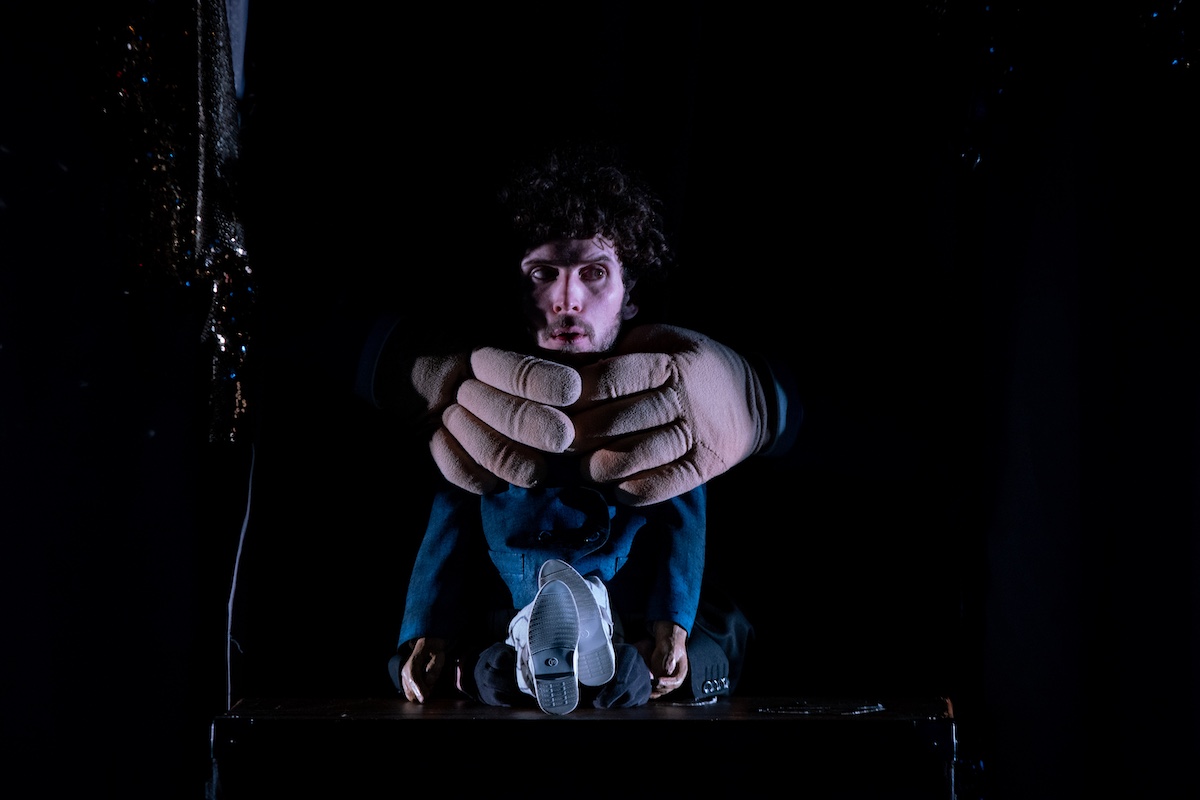
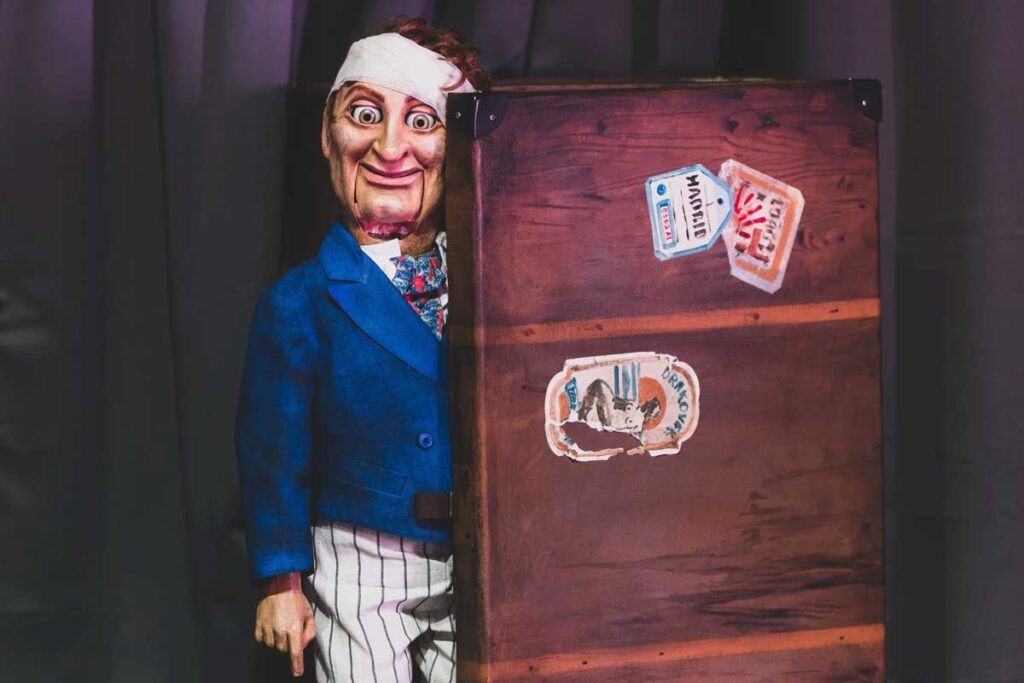
The play begins with a timid performer, Pedro Hermelin Vélez, sitting down with his companion, the ventriloquist’s dummy Terri. Everything begins innocuously enough—Pedro demonstrates how he controls Terri, showing the various mechanisms to the audience. Their conversation follows the classic back-and-forth of the art form, with Vélez asserting his mastery of the craft, only to be hindered by Terri. The dummy fights back, joking with Pedro, sometimes with the attitude of a vindictive teenager. At one stage the puppet crosses the line, joking about the puppeteer’s grandmother dying. When the puppeteer politely tells off Terri, he sulks like a toddler banished to their bedroom. The dynamic slowly develops as Vélez, the shy-but-determined showman, starts to be overwhelmed by the calculated petulance of his companion.
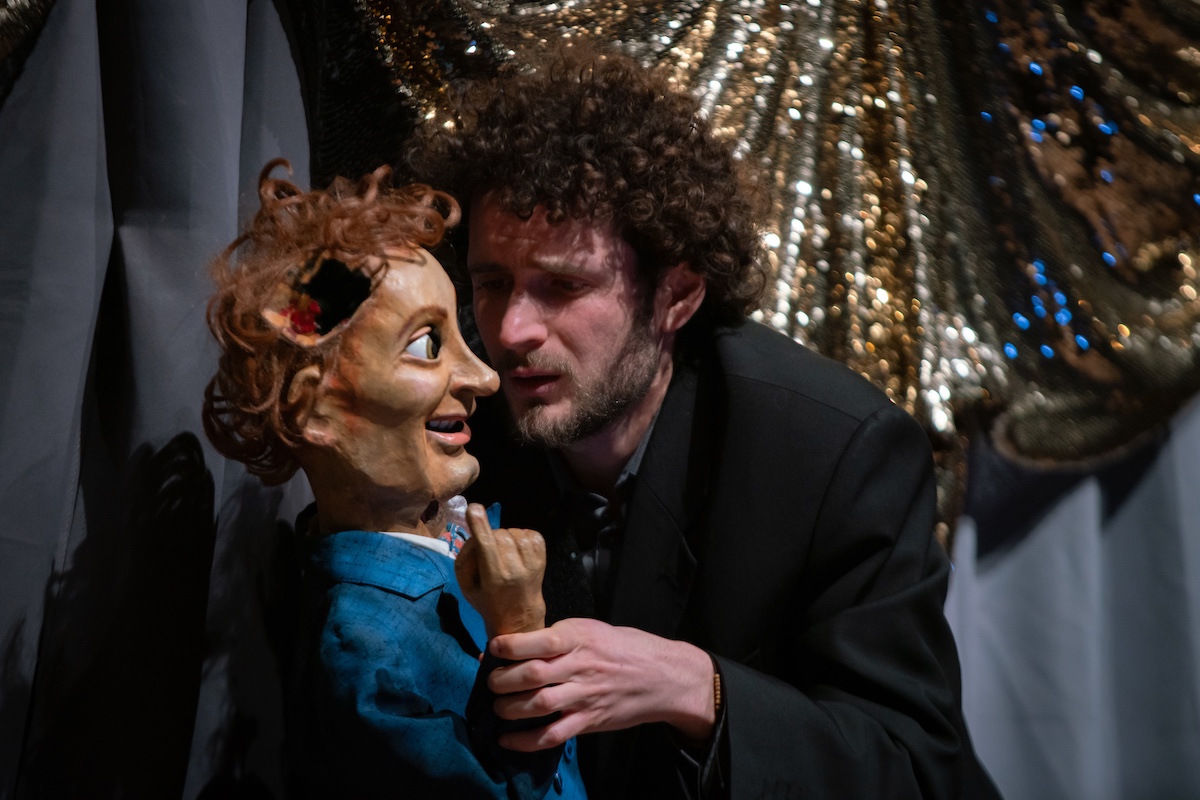
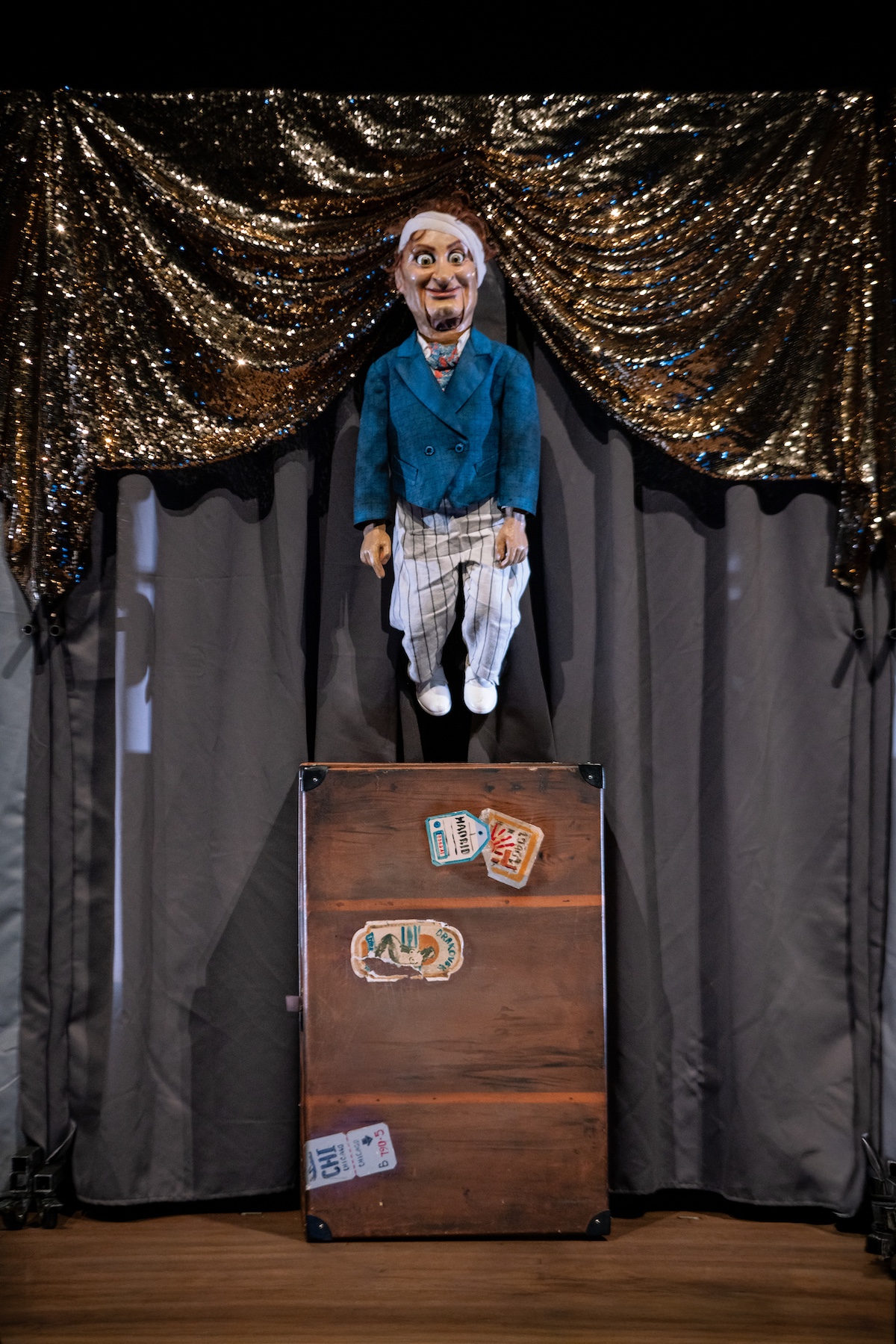
As the ventriloquist’s dummy begins to move, seemingly against the will of the puppeteer, Aspeli leans into the creepy nature of such a puppet. Terri’s eyes squint as he begins to create havoc, focusing on breaking the willpower of his overlord. Polina Borisova’s puppet design is on full display here, as Terri shifts from being a chippy, young sidekick to a grinning, damaged tormentor in a swirl of bandages and the mechanical blink of an eye. If the play started as a gentle wander into the uncanny valley, this is where it starts clambering towards a hellscape.
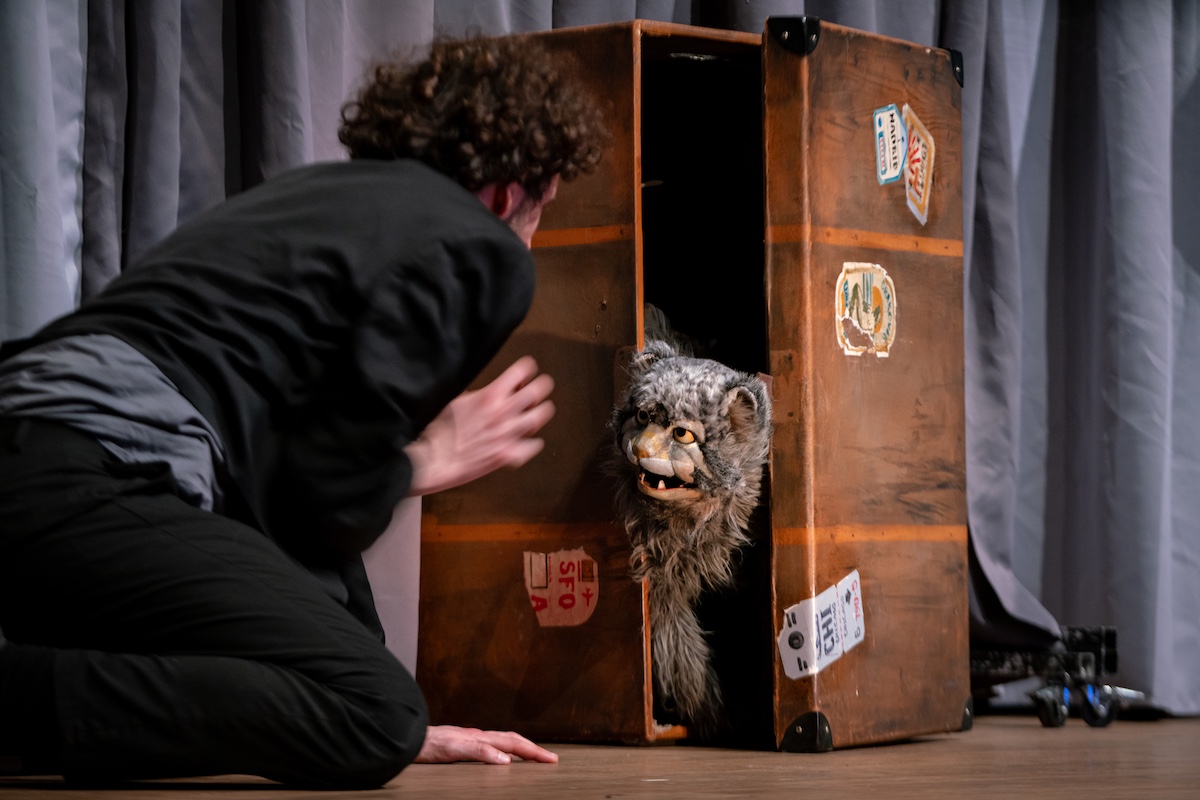
Vélez quickly begins to lose control. Soon, it is the dummy Terri who is seemingly autonomous, while the performer is rendered a “lifeless puppet.” While the show often feels like a rapid descent into the unfathomable, it is paired with a running philosophical commentary on the nature of puppetry. At one stage, when Vélez’s pet cat Roger appears lifeless in a wooden crate, the ventriloquist observes that Schroedinger’s quantum cat experiment is especially true when the cat is a puppet. Vélez remarks with horror that Roger is “both dead…and alive!”
These witty interjections are generally welcome, but occasionally they take the audience out of the unfolding drama. At times I could not put my finger on whether Trust Me for a While was satirizing metatheater or existing as metatheater. Like the cat in the crate, perhaps both truths can exist at once. What becomes clear is that it is a show about the nature of puppetry itself, and that while it is macabre, it is also deeply fun. The three puppeteers were enjoying performing, even when observing possibly dead pet cats.
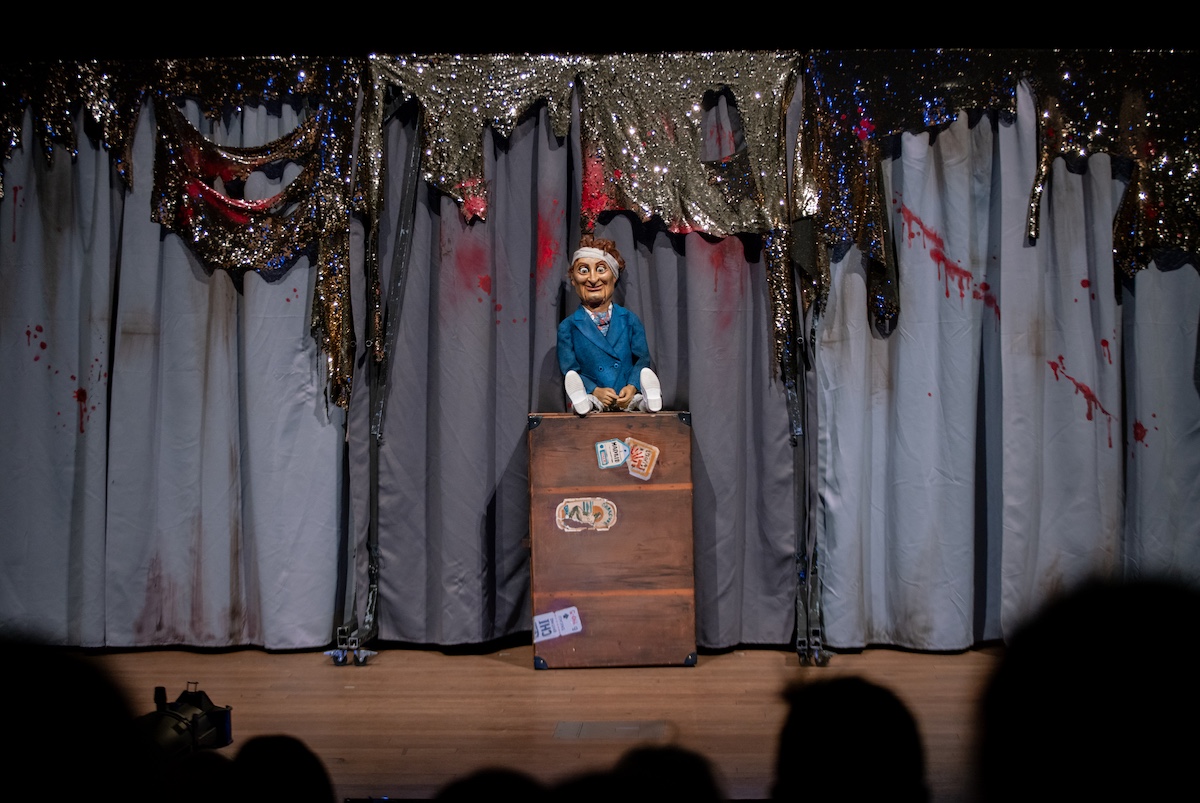
The set design seems simple: three bedazzled fabric screens on wheels, with a wooden crate center stage. The minimalism strikes me as pragmatic for travelling, especially for a company performing two shows at the same festival. The design is reminiscent of a low-budget magic/ventriloquist act, and it feels like Plexus Polaire has used the aesthetics for both thematic and practical reasons.
The set comes alive as the action ramps up. The screens start circulating around Vélez, and Terri begins moving, seemingly on his own accord. In reality, the show’s other puppeteers, Melody Shanty Mahe and Laëtitia Labre, are beginning to make their mark, often hidden from sight. Unlike a traditional magic show, here we get hints at how the illusions are being done, the performers are in on the joke, and wry smiles abound. As the ventriloquist falls under the control of the dummy, all three puppeteers work together to make Vélez’s body appear stretched behind the screen, perhaps an ode to a magician’s sawing-an-assistant-in-half trick? As Terri becomes “autonomous,” it is Mahe and Labre who are breathing life into the puppet from behind the screen.
These puppeteers are all graduates from the renowned École Nationale Supérieure des Arts de la Marionnette, based in the town of Charleville-Mézières, France—a global mecca for puppetry. It is interesting to see a prolific and relatively large-scale puppet theater, such as Plexus Polaire, stem from a puppetry school. I have recently graduated from the US equivalent, the University of Connecticut’s Puppetry Arts Program. There have not been any equivalent theaters to stem from my alma mater. One reason this might not have happened is the lack of funding for the puppetry arts on this side of the Atlantic. When funding does come through for puppet-specific projects, it seems to be targeted towards smaller groups who operate in black box or children’s theater spaces.
Plexus Polaire is an example of a group that has utilized the strong, publicly funded platform afforded to puppetry in Europe and has become a launching pad for many puppeteers from around the world. They take on apprentices from the École Nationale Supérieure des Arts de la Marionnette and have scaffolded the careers of many emerging puppeteers.
Aspeli is the artistic director of Figurteatret i Nordland, Norway. This is an institution that acts as an incubator for traditional puppet theater, as well as crossover productions—merging elements from the visual arts, theater, mime, dance, and multimedia. The theater, which sits nestled in the Arctic fishing village of Stamsund on the island of Vestvågøya, began during a period of Norwegian investment in industrial areas that were struggling economically in the 1980s. As fish processing moved offshore, Stamsund was intentionally transitioned into an arts destination, hosting an international theater festival of global repute.
This year, the Chicago International Puppet Theater Festival’s Ellen Van Volkenberg Symposium examined arts funding in the United States and Europe, both in a historical sense and in relation to the rapidly changing state of federal funding for the arts. In this sense, it has been interesting to consider Stamsund’s transition into an arts hub. The process has been supported by the Norwegian state, whose vast wealth stems, in large part, from its partial ownership of oil and gas production. Stamsund’s development as an arts center is an interesting comparison to Chicago. The former steel-belt city, which experienced deindustrialization in the same era, has transitioned to being a finance- and service-based economy. Much of Chicago’s significant arts funding, including for the festival, comes from philanthropy, privately supported arts foundations, and public-private partnerships. The “who is pulling the strings?” questions that bubble up throughout Trust Me for a While, as well as the questions posed during the symposium about the state of funding for puppetry, had me considering the structures that support these institutions.
As Plexus Polaire’s Trust Me for a While descended into a battle for psychological and bodily autonomy between puppeteer and puppet, I could not help but think of the rapidly escalating situation with ICE agents in Minnesota. (Alex Pretti was killed the weekend before this show took place). The theme of mechanistic control—of guns, of the human body, of federal agencies, of puppets—seemed to assert itself in each new scene. While this was probably not the context that Aspeli was addressing, the show scratched at issues that were swirling in the zeitgeist, and perhaps there will be some tweets out there saying #PUPPETS #PLEXUSPOLAIRE WHO IS IN CONTROL??!?! WHO IS CONTROLLING THE VENTRILOQUIST DUMMY?
Festival Performances
About the Performance
 January 28-31, 2026
Reva & David Logan Center for the Arts, Performance Hall, 915 E. 60th St.
Trust Me for a While brings us into the curious and rather fraught relationship between a failed magician and his professional puppet collaborator. In this wild, suspenseful and entertaining horror-comedy, director Yngvild Aspeli explores her fascination with the ventriloquist dummy. A show replete with off-the-rails mischief, it plays on the traditionally tense and intimate relationship between ventriloquists and their dummies while startling the audience with contemporary questions like What is real? What is fake? And, what happens when reality flails between the two? Trust Me for a While brings Aspeli “back to the bone, stripping off the skin, flesh and technical magic I normally rely on to build a raw story about the relationship between actor/puppeteer and puppet.”
Reviews + Interviews
Dispatch: Puppet Theater Festival Ends with Shows Featuring Sexy Puppets, a Hungry Crocodile, a Cat and Two Dogs by Third Coast Review Staff for Third Coast Review (Trust Me for a While review by Kathy D. Hey)
Sex, sci-fi, Ibsen, and more by The Reader (Trust Me for a While review by Rob Silverman Ascher)