2026 Festival Archive: Blair Thomas
Blair Thomas: Does a Dog Have Buddha Nature?
January 25-26, 2026
Chopin Theatre
Presented by Chicago International Puppet Theater Festival
With special Support From: The Marshall Frankel Foundation
Scholarship and Resources
Metamorphosis of Life in Does a Dog Have Buddha Nature?
An Essay by Yiwen Wu
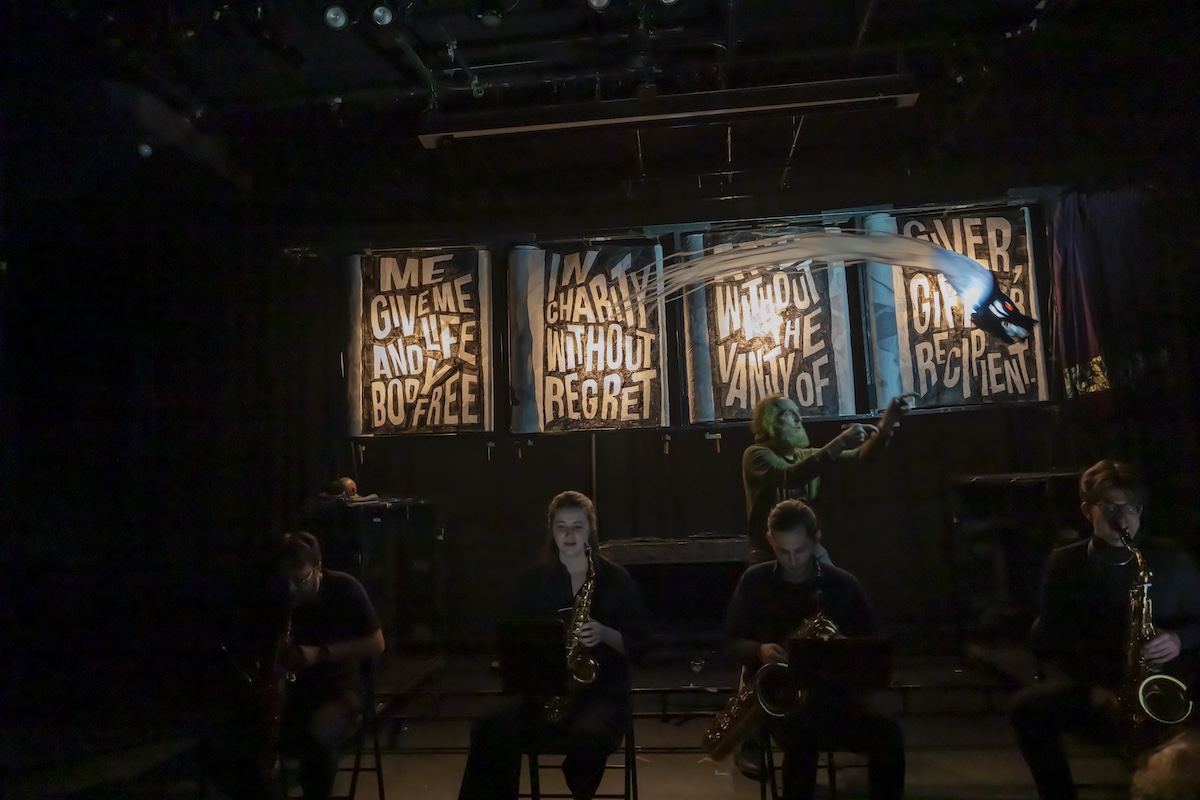
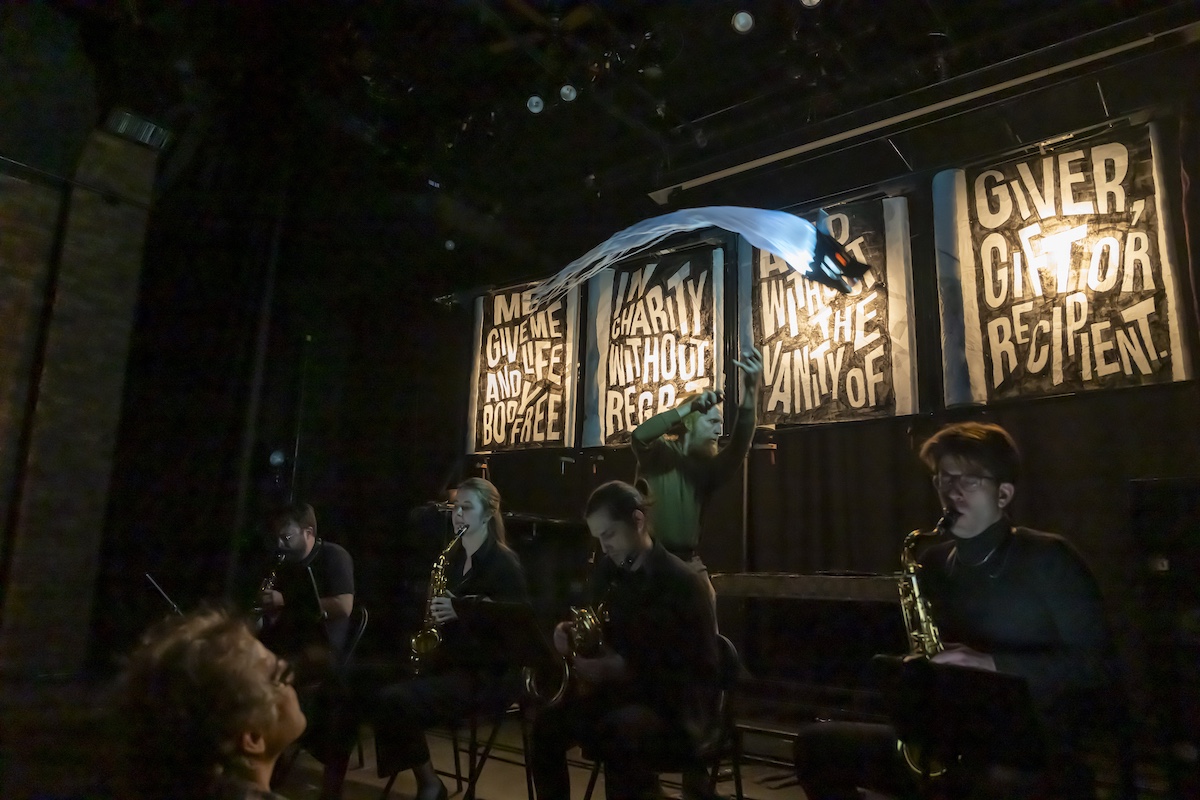
One puppeteer. One saxophone quartet. Accompanied by the captivating music written and performed by ~Nois (a local Chicago musician group), Blair Thomas’s beautifully imaginative Does a Dog Have Buddha Nature? encapsulates in a compact and concentrated play the innumerable possibilities that lie in the metamorphosis of life. A continuous game of concealing and revealing, the performance explores transformation on dual levels: transformation as the fundamental essence of performance and also the concept of metamorphosis as the inherent transformative nature of existence, one of the most essential principles in Buddhist philosophy.
This dynamic play of concealment and disclosure begins even prior to the beginning of the show. Before the house lights go down, we witness the whole process of scenery setting: A six-foot-tall black metal frame is brought onto center stage. Its upper half is draped in a red curtain trimmed with a line of gold, while the lower half remains open, enticing us to imagine what lies hidden behind it. When the light goes down, the metal frame then reveals itself to be a large-scale, four-panel crankie machine––an old form of art that originates in nineteenth-century Europe, at first mostly referred to as moving panoramas and now mostly called “crankies” among puppeteers.
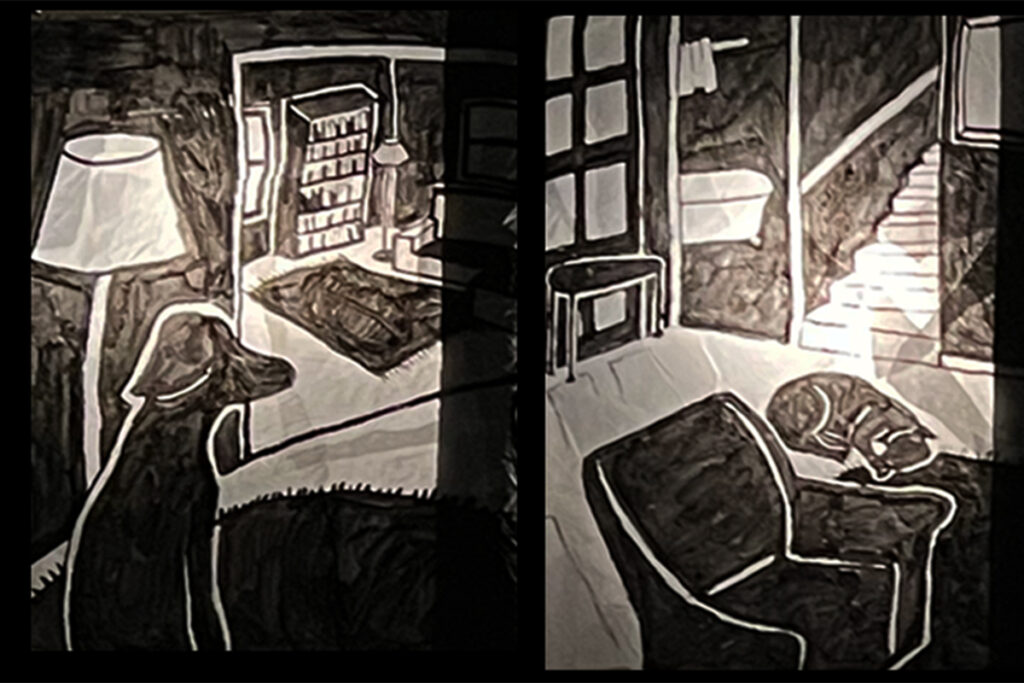
The most basic design of a crankie machine is essentially a box with a viewing window carved open in the middle. Inside the box, a long illustrated scroll is wound onto two spools. When the spools are hand-cranked, the scroll also unfolds right in front of the viewers’ eyes. Crankie machines, in the nineteenth century as well as now, often range in size from as tiny as a matchbox to as enormous as eight feet tall.¹ Thomas’s large-scale crankie machine, however, is an innovation that I had never seen before: His four-panel contraption, rather than showing a single scroll, accommodates four scrolls that are installed side by side. Each scroll is wound on its own spools and can be cranked independently.
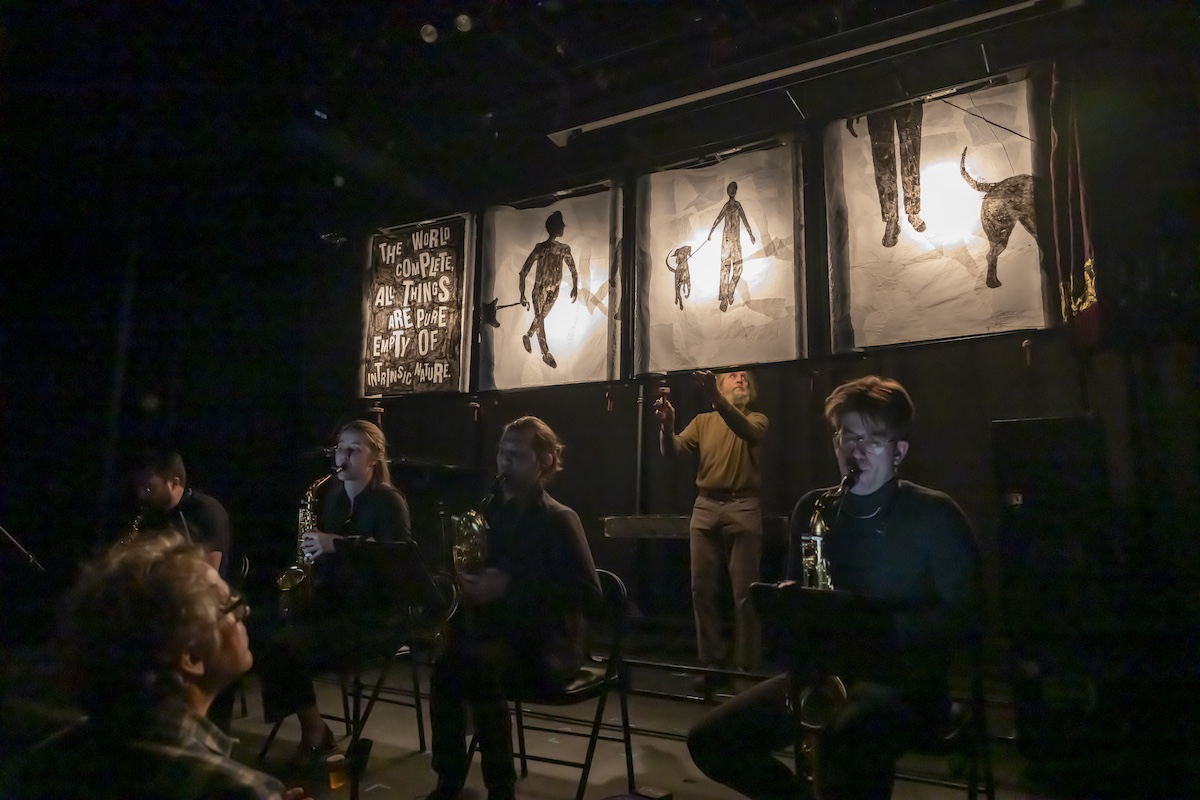
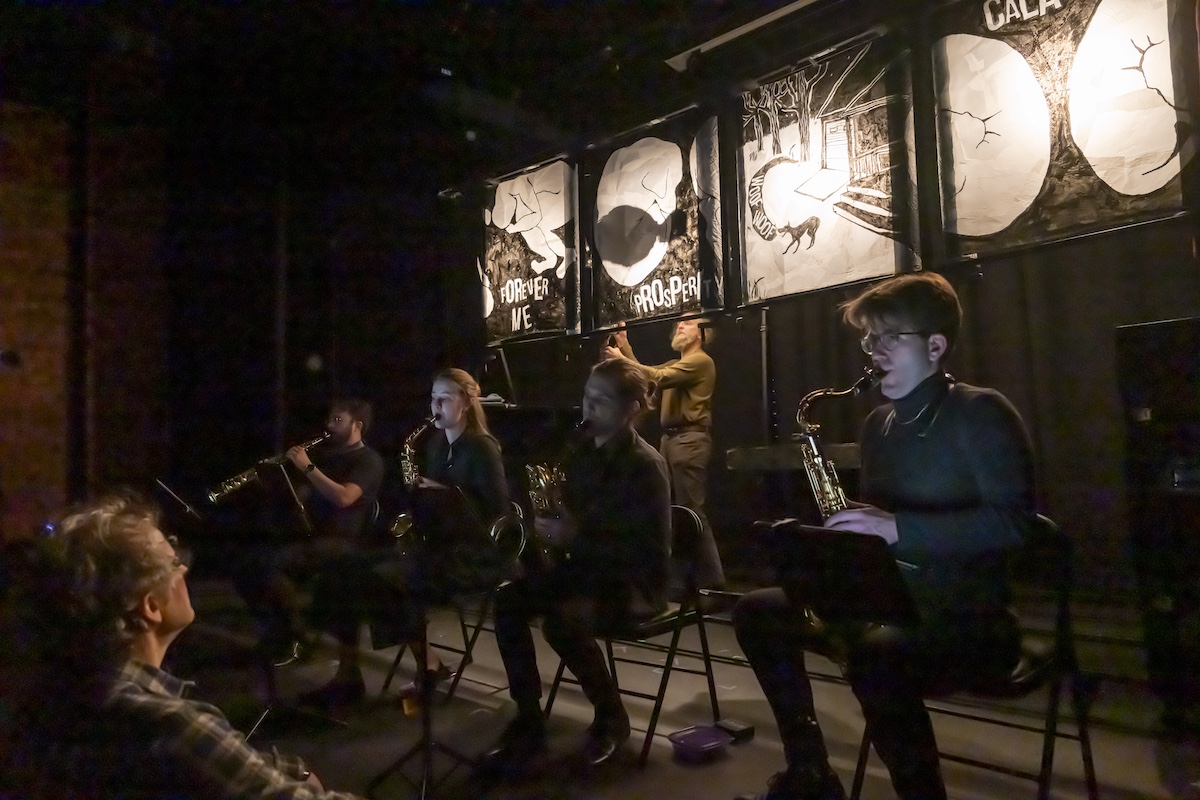
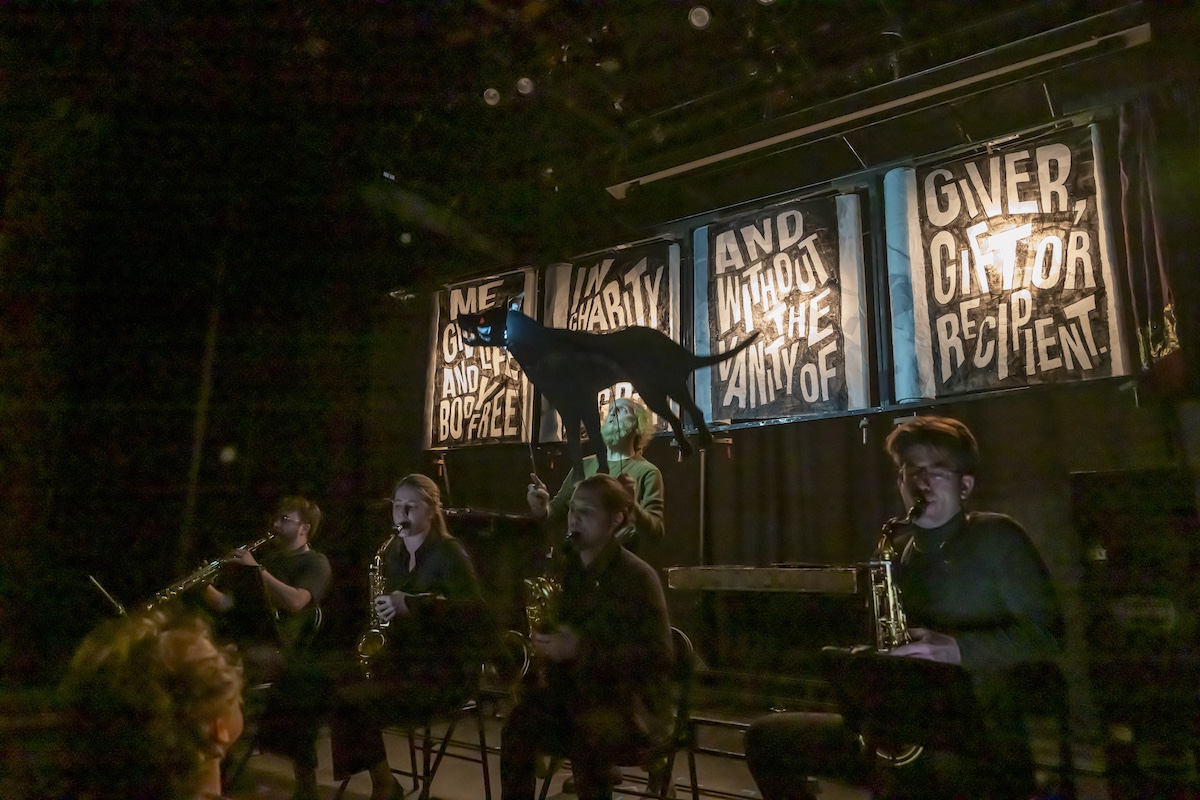
The play demonstrates an astonishing variety of possibilities afforded by this newly developed mechanism: revealing, reassembling, and reshaping images in kaleidoscopic ways. At times, Thomas quickly cranks the four scrolls one after another, forming a panoramic image with all four panels. Sometimes, like an open book, the four panels are separated into two sides: the three panels on the left slowly turning to complete one image while the panel on the very right stays still. Occasionally, the four panels become independent frames that display four distinctive vignettes that are not connected to each other at all. The rolling picture on each panel can either be viewed as an independent image on its own or a composite image that extends on other panels. Throughout the performance––which is made possible by four rolls of hundred-foot-long, hand-painted scrolls—Thomas deliberately resists repetition in his usage of the panels to the extent that every movement of his comes as a surprise, turning the performance into an act of constant evolution and transformation.
Most brilliantly, the continuously evolving and changing images become the perfect medium to reflect on the transformative nature of all lives. Does a Dog Have Buddha Nature? explores the blurry boundaries between the existence of humans and animals, emphasizing commonality and harmony even among seemingly different forms of lives. As the scrolls slowly unfold on all four panels, the depicted images also smoothly transition between close-ups and full shots, inviting us to participate in this visual game of hide-and-seek: the lines that delineate the contours of a human body revealing themselves to be actually painting the shape of the dog; the sight of a dog chewing shoes wittily paired as a parallel to a meditating human; each turn of the scroll a cycle of life, evolving and echoing back between the perspectives of humans and animals. The performance’s intentional play between scales and viewpoints further facilitates us experiencing the magic of transformation and contemplating our perception of being.
The performance’s play on transformation and perception is further enhanced by its use of semitranslucent materials. Even the scrolls themselves have gone through transformation: They are not ready-made paper but a pastiche of different materials, collaged together by small pieces of tracing paper that are glued together by wheat paste. With this unique technique, as well as Thomas’s choice of painting certain images only with contours and others completely filled in with dark ink, the paper appears to be translucent at some places yet only vaguely so at other places. With a light source behind the paper, the depicted images appear to be floating in between visibility and invisibility.
At the end of the play, a gorgeous dog rod puppet on a rod flies out from behind the scrolls (designed by Zac Sun). Made with just a thin layer of translucent plastic materials, this puppet shimmers as it moves through the light, floats lightly in the sky as it flies. The emptiness not only displays an extraordinarily ethereal beauty that transcends and transforms but also reminds us of the Buddhist concept of śūnyatā, further pushing us to reflect on the empty nature of all existences. The performance ends on a rather humorous yet thought-provoking moment: As the puppet dog soars high in the sky, as if in a state of enlightenment, the music performance also culminates in a sustained solo passage that is quite physically demanding. In order to perform the continuous cascade of notes, the soprano saxophone player Julian Velasco visibly and audibly pushes to his own limit by loudly gasping for breath between phrases, again and again. The soaring puppet, however, is made to be so light and translucent that it appears to be flying free without the burden of a body, floating on the very air that the musician struggles for and thus rising beyond the bounds of human existence.
¹ Read more about the history of crankie machines and how to make them here on this incredibly resourceful website by the Crankie Factory: https://www.thecrankiefactory.com.
Festival Performances
About the Performance
 January 25-26, 2026
Chopin Theatre Mainstage
1543 W. Division St.
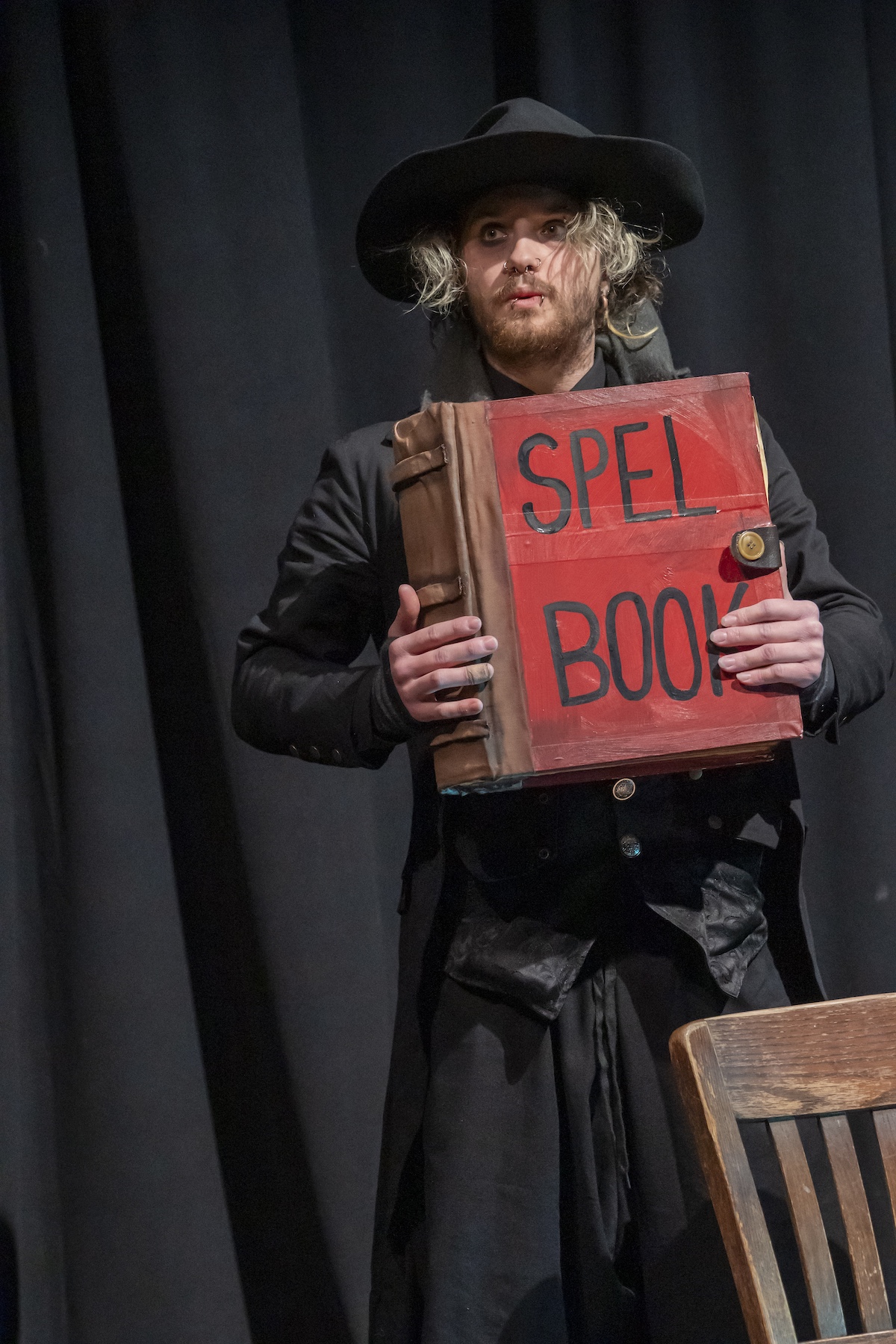
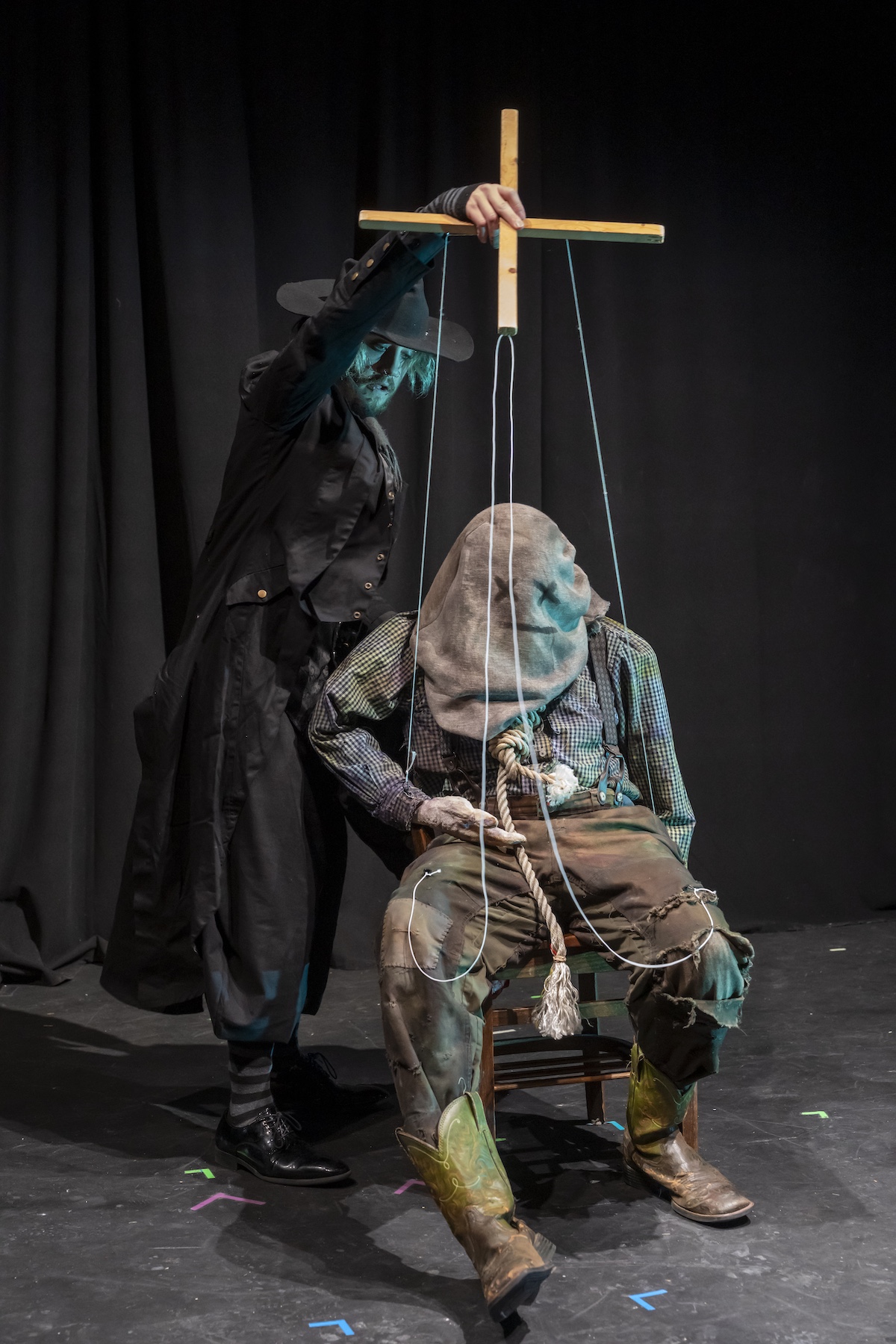
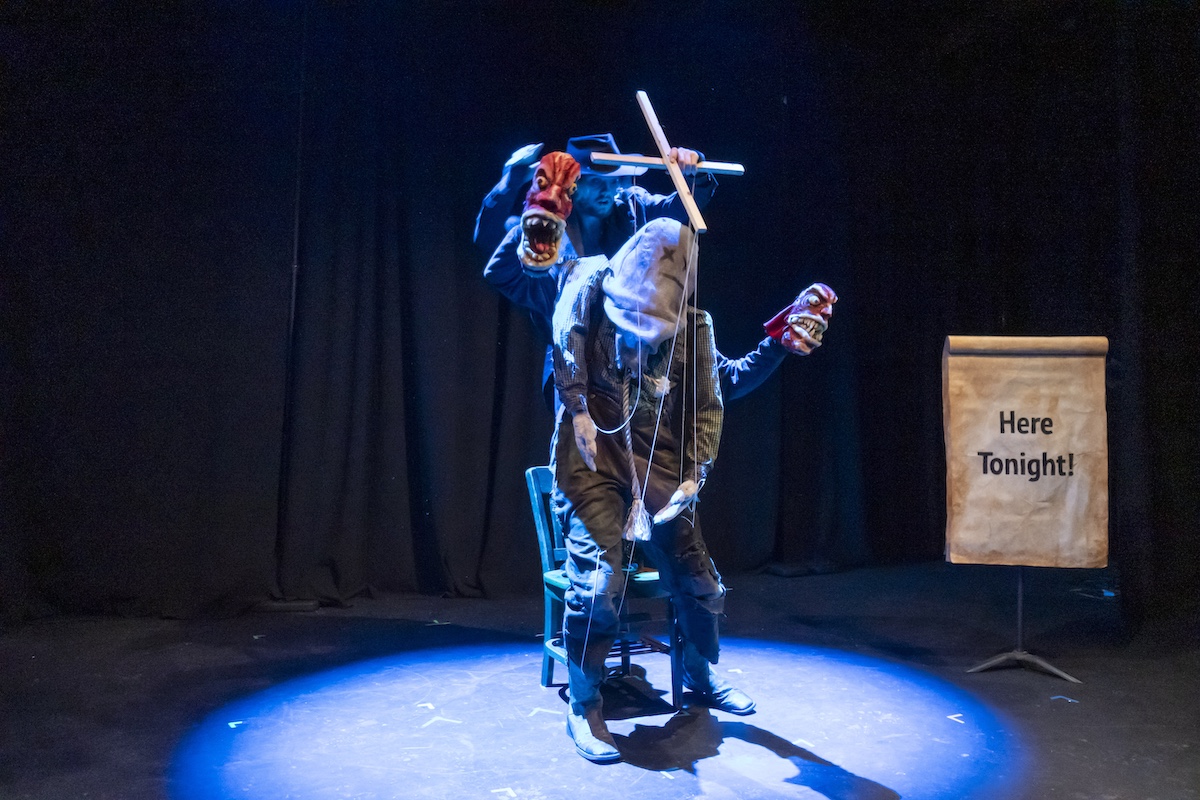
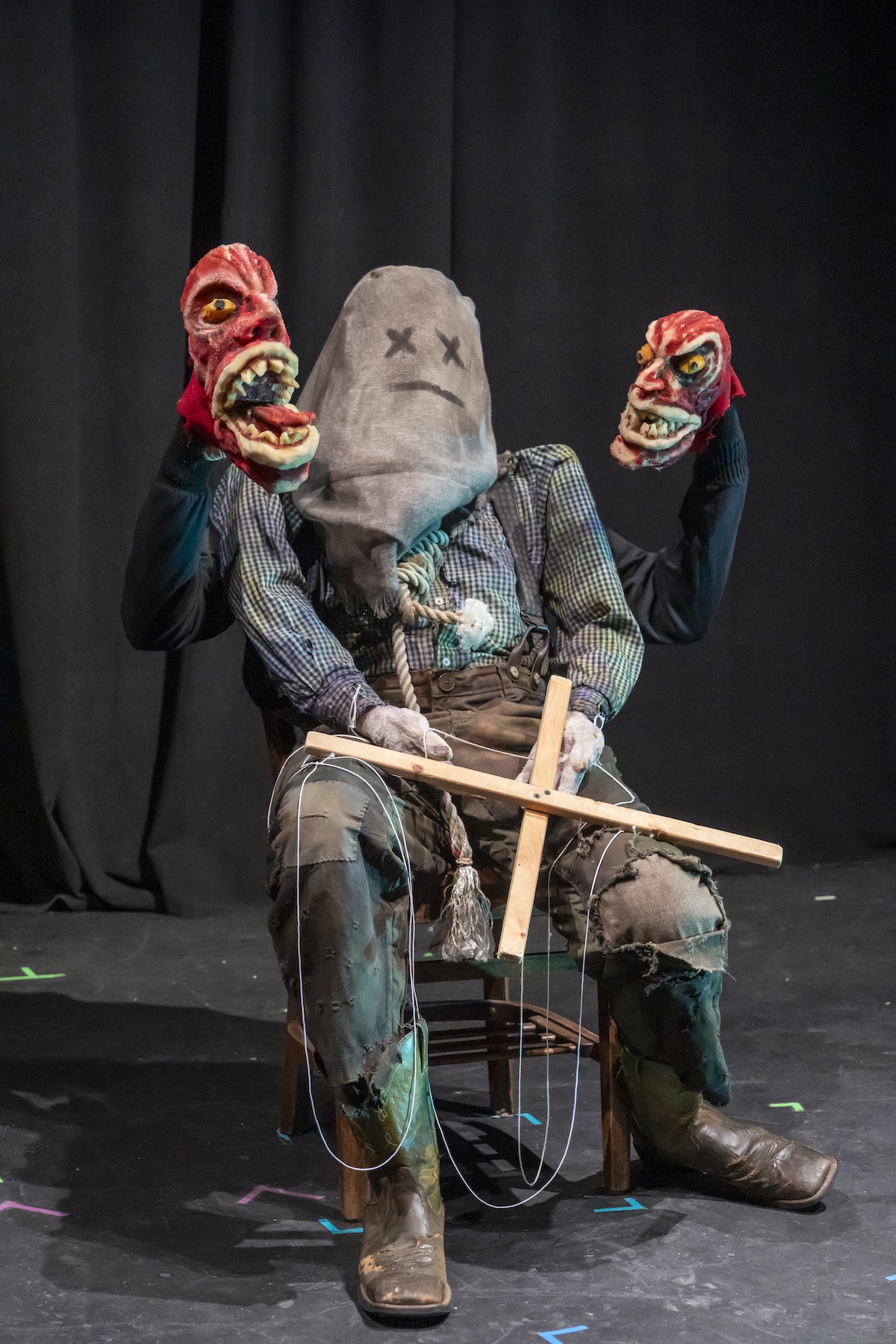
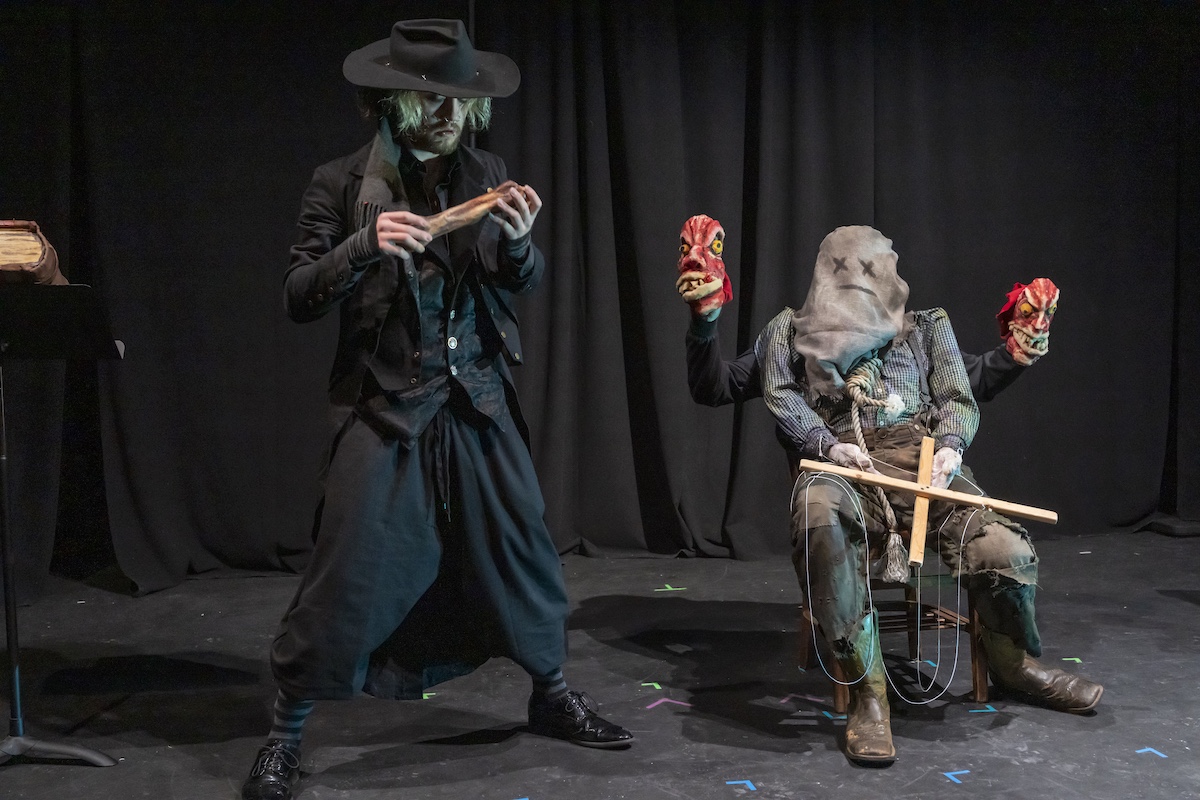
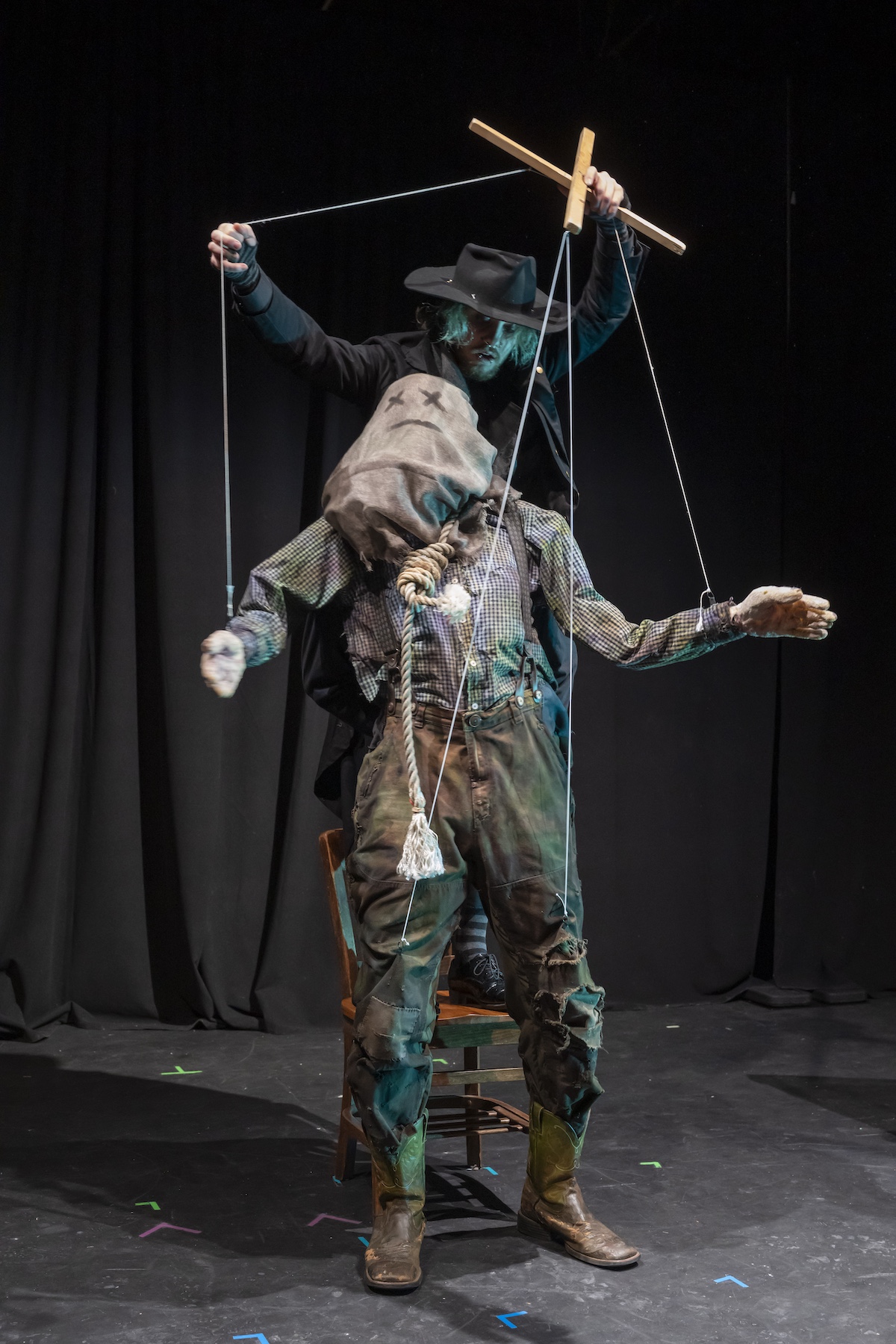
As charming as it is beautiful, Blair Thomas’ most recent puppetry creation takes the form of a large-scale, four-panel crankie in this koan, offering insight into the rascally nature of a dog and his owner. Performed with “technically superb and musically brilliant” Chicago saxophone quartet ~Nois and featuring hand painted, 100-foot long scrolls. With special opening act, Cowboy Outlaw performed with Silas Thomas, and based on the true story of an outlaw who’s fame and travels outlived him.
Reviews + Interviews
A Beacon of Warmth and Light: Puppets Take Chicago by Laura Collins-Hughes for The New York Times
Dispatch: Puppet Theater Festival Ends with Shows Featuring Sexy Puppets, a Hungry Crocodile, a Cat and Two Dogs by by Third Coast Review Staff for Third Coast Review (Does a Dog Have Buddha Nature? review by Susan Lieberman)
8th Annual Puppetfest Warms the City by Angela Allyn for Chicago Stage and Screen