2026 Festival Archive: Alva Puppet Theater
Alva Puppet Theater: The Harlem Doll Palace
January 22-24, 2026
Reva and David Logan Center for the Arts, Theater East, UChicago
Presented by Chicago International Puppet Theater Festival and Reva & David Logan Center for the Arts at the University of Chicago
With special support from Cheryl Henson
Scholarship and Resources
Joined at the Hip: The Harlem Doll Palace
An Essay by Paulette Richards
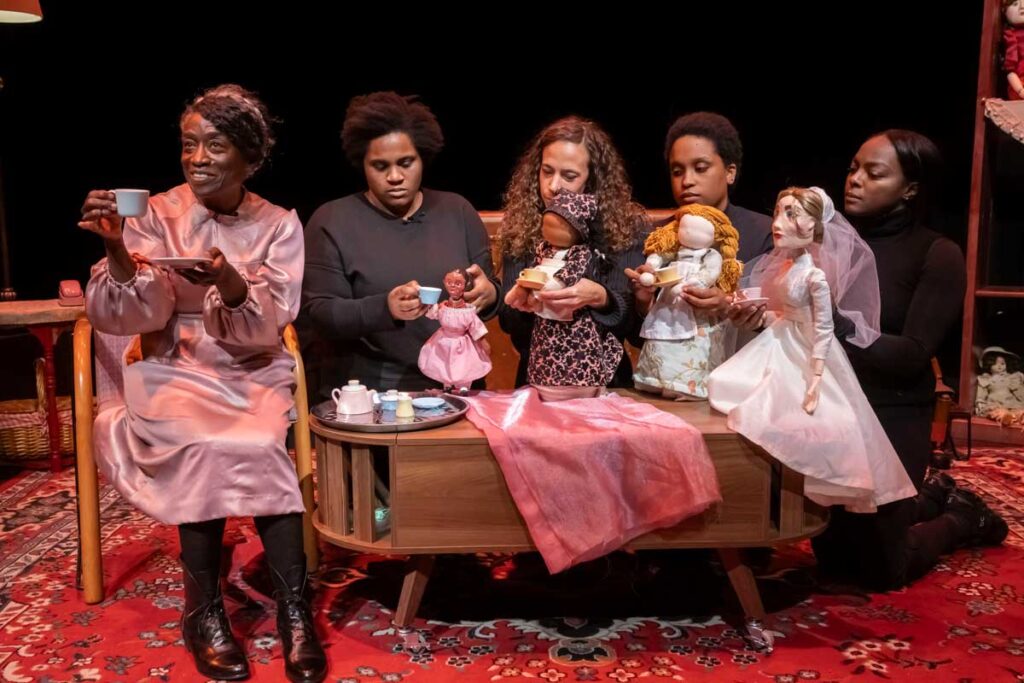
As we filed into the Reva and David Logan Center for the Arts at the University of Chicago on Friday, January 23, a soft doll that a fellow participant in the festival’s Artist Catapult was holding caught my eye. I asked her about it and learned she had made it in the topsy-turvy doll workshop that Alva Rogers had taught that morning. For plangonologists like me who always wanted their dolls to come to life, The Harlem Doll Palace sounds like a dream come true. Based on the story of Lenon (Aunt Len) Holder Hoyte, a retired African-American art teacher who operated a doll-and-toy museum in her Harlem brownstone from the 1970s to the 1990s, the show uses puppets to animate a variety of doll characters from Aunt Len’s collection. At the same time, the show demonstrates the potential for psychosocial reparation through puppetry that Andrea Markovits has pioneered in her Puppets and Memory workshops.
Markovits originally developed her puppet therapy methods while working with victims of the Pinochet regime’s political violence in Chile and with Holocaust survivors and their descendants in Israel. She found an ethical imperative to educate, reeducate, sensitize, and mobilize people towards states of heightened moral conscience and empathy in a context of increasing denialism, where impunity, scant justice, and absence of truth exacerbate intergenerational trauma (Markovits, 2020; 2022). Markovits sees the puppet as “one of the most powerful artistic tools for supporting the processing of complex trauma” (Markovits, 2022: 226). While Rogers did not consciously conceive of The Harlem Doll Palace as a work of dramatherapy, her use of doll puppets as memory-mobilizing agents serves as the kind of reparatory action Markovits seeks to create through her workshops and performances.
The topsy-turvy dolls in The Harlem Doll Palace reflect the ways that Americans are joined at the hip through the legacy of slavery. Like conjoined twins, double-ended topsy-turvy dolls consist of two heads that share a single body. Just as “mirror twins” exhibit physical traits that mirror each other (perhaps a mole appears on one twin’s right cheek, while an identical mole appears on the other twin’s left cheek), topsy-turvy dolls are often mirror twins with inverse racial identities. One presents as white, the other as Black. They, therefore, function as a mise en abyme recursively reflecting the impact of the racial and gender hegemony on the descendants of both enslavers and the enslaved.
A climactic scene in the show reveals that the topsy-turvy doll is a metaphor for the fact that the enslaved girl, Early, and the white girl, Sarah, she is assigned to serve are sisters. Their lineage is conjoined, yet Early suffers a hundred lashes for speaking this truth. While Early, the great grandmother Rogers invents for Hoyte is fictional, Hoyte’s fair skin was evidence of her mixed racial heritage. Indeed, the routine rape of enslaved women by white men is a shameful secret lurking in the collective American unconscious. Thus, as in Lucien Dallenbach’s definition, the topsy-turvy doll is an “internal mirror that reflects the whole of the narrative by simple, repeated or ‘specious’ (or paradoxical duplication)” (1989: 36).
Topsy-turvy dolls in and of themselves are performing objects because they contain two characters in one. Just as puppetry scholar Claudia Orenstein frequently observes that the dramaturgy is in the object (2024), the topsy-turvy doll invites performative dialogue between different characters. While Rogers uses puppets to represent and animate the doll characters, topsy-turvies blur the line between dolls and puppets, just as they blur the lines between racial categories. By inverting the body and flipping the long skirt down over the second head, the topsy-turvy doll creates a limbic space where a girl like Early can imagine alternatives to her enslavement. She can invert the doll and imagine herself as “a girl like you but brown.” Markovits observes that puppets enabled the participants in her workshops to “take power/control of how they wished to understand themselves from now on, with that pain” (Markovits, 2022: 216). The topsy-turvy doll enables Early and the Harlem Doll Palace audience to confront and redefine their relationship to the historical pain of slavery in the same way.
Hoyte’s life was relatively privileged. Her parents held stable jobs and purchased their own home in Harlem in the early twentieth century. She married a pharmacist and had funds to collect antique porcelain pitchers before turning her interest to dolls. Yet limited generational wealth is another legacy of slavery. Hoyte lacked the means (inherited wealth, social ties to wealthy patrons, or political leverage for accessing public funds) necessary to turn her collection into a permanent museum. Similarly, Rogers has trod a long, stony road in the effort to realize her vision for a show honoring Hoyte. Initially, she received two hundred dollars from Brown University to stage the thesis she presented for her MFA in Playwriting in 1998: the doll plays. Rogers was able to extend this fund with social capital. She was friends with another new mother who agreed to create shadow puppets for the show—Kara Walker. She was also able to recruit an undergraduate from the Rhode Island School of Design who knew a thing or two about puppets—Heather Henson—along with her roommate, Holly Laws. The members of this design team would go on to make their marks in the visual and performing arts, but Rogers had difficulty finding a backer willing to produce a full theatrical run in New York City.
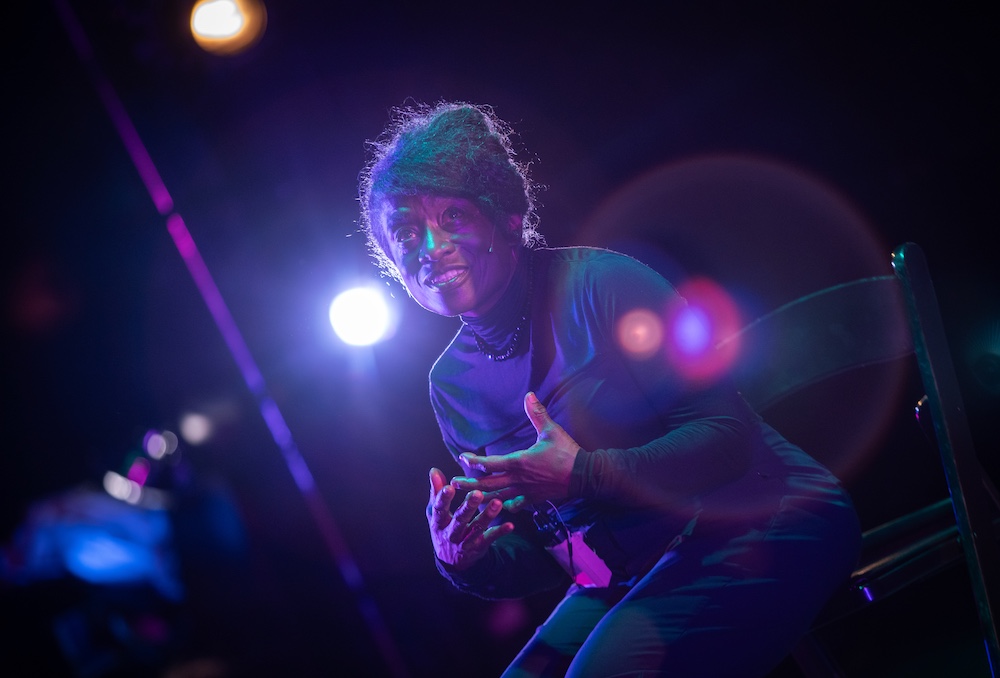
Fortunately, Topsy-Turvy, a 2023 Museum of Modern Art installation and performance event excerpted from the doll plays, revived the show’s momentum. Rogers reconceived the work as a puppet show titled The Harlem Doll Palace and received NYSCA (New York State Council on the Arts) and Henson Foundation grants to workshop and produce the show. Though Rogers had never intended to play Aunt Len herself, by this time she had matured into the role. The original songs Bruce Monroe composed for the show allow her vocal talents to shine brightly.
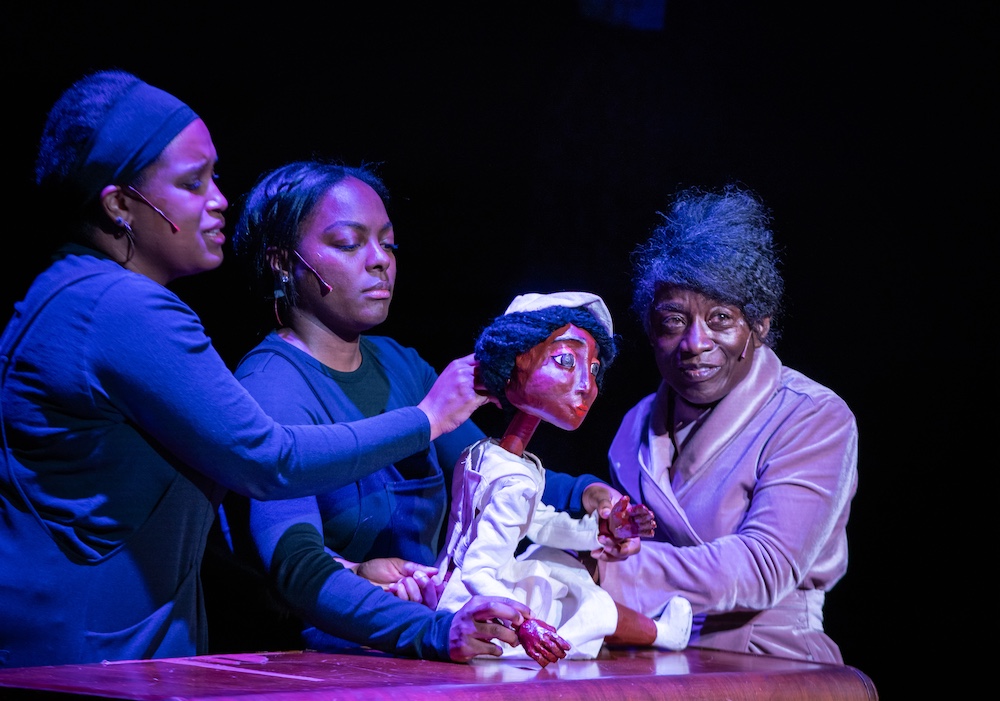
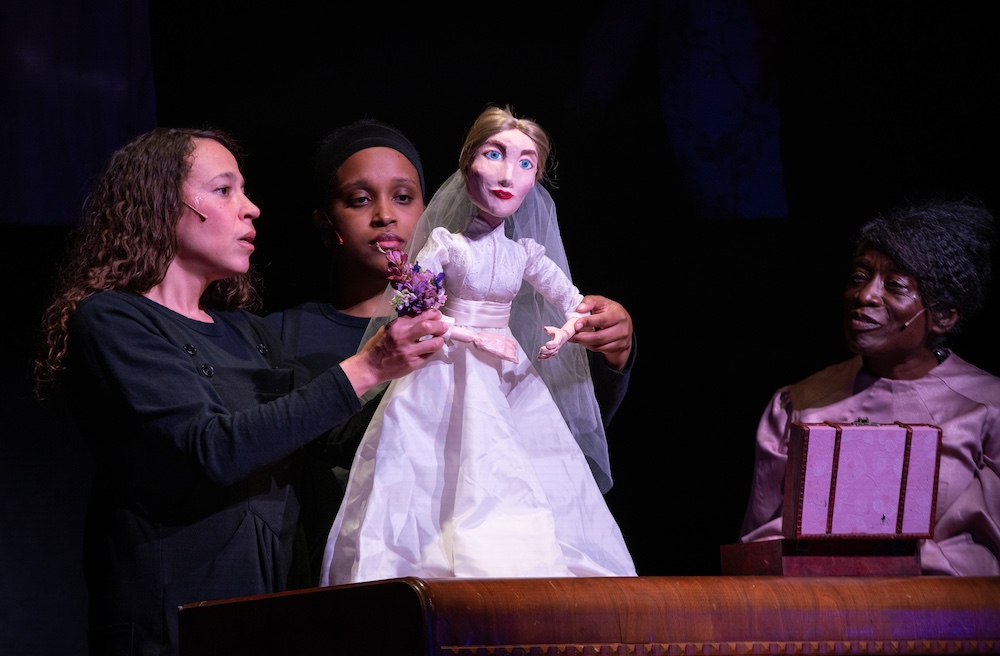
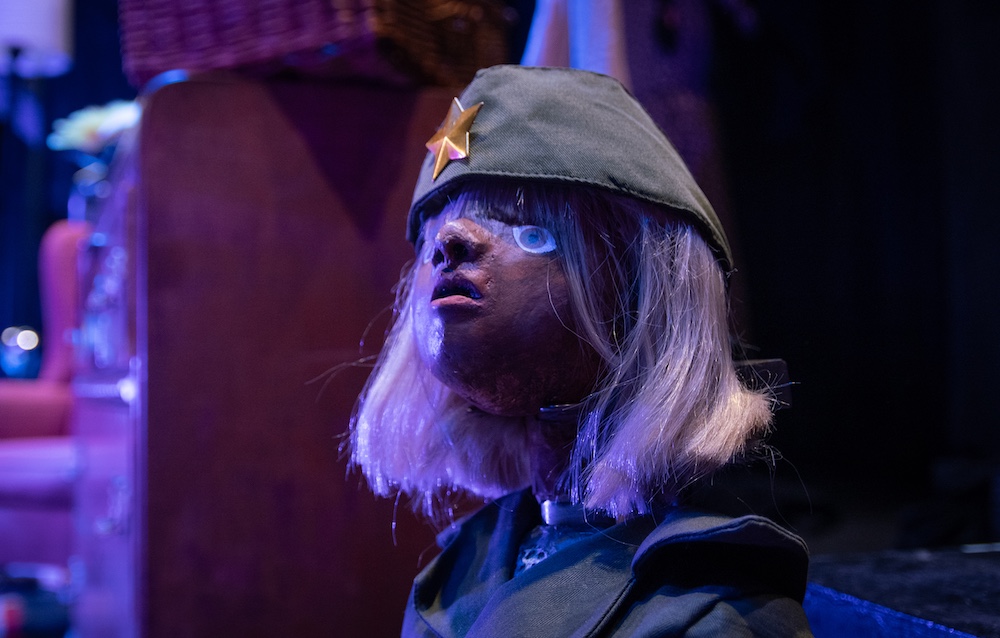
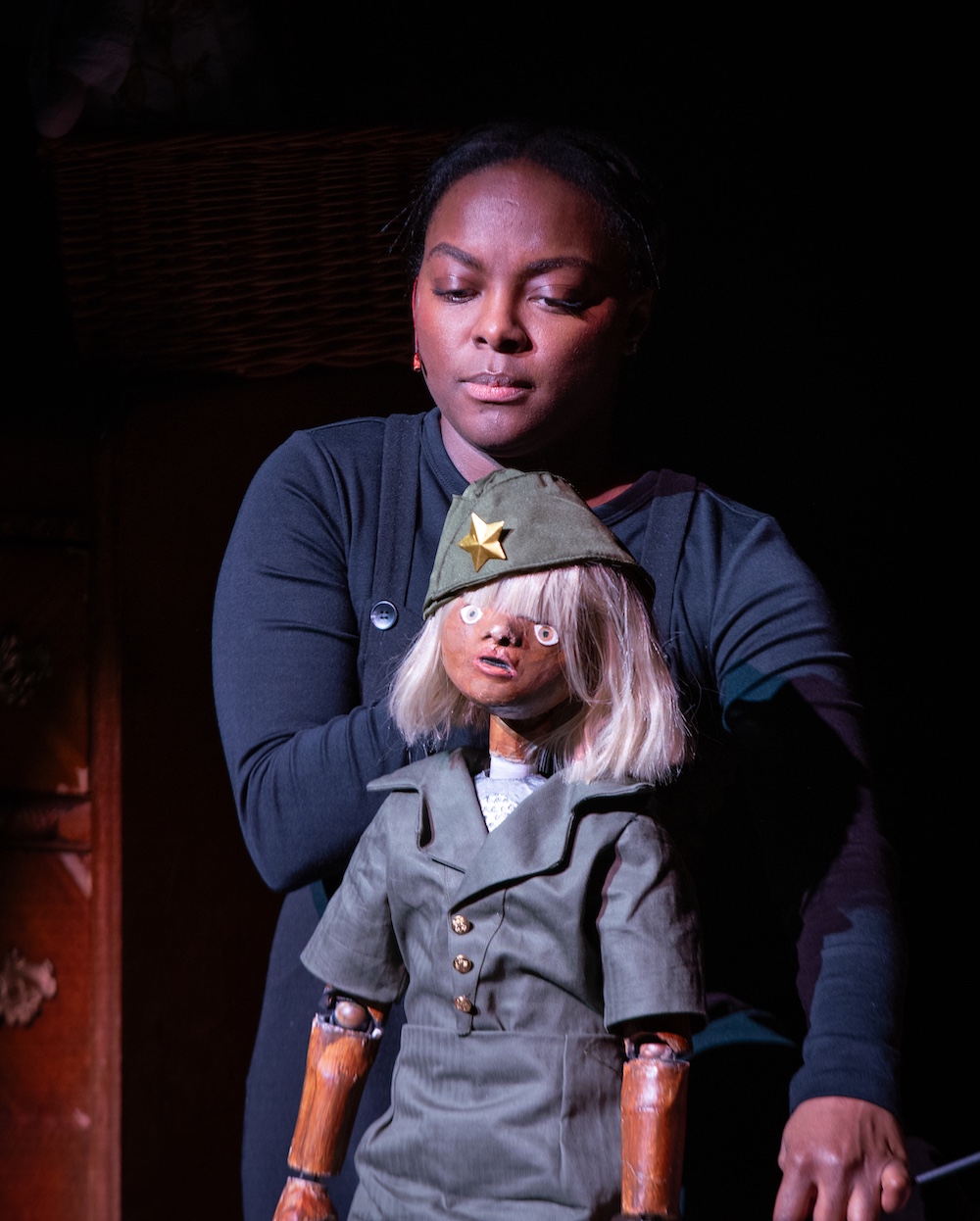
While this production keeps the puppeteers in full view onstage and includes some characters portrayed by live actors, it invites the audience more directly into Aunt Len’s world by using puppetry to animate the doll characters she interacts with. The dolls originally manipulated in the doll plays had to be modified or rebuilt to function as puppets in The Harlem Doll Palace. Grace Kelly Doll, Army Talking Doll, Ninon the French Fashion Doll, and Brown Nurse Doll were constructed over wooden armatures with mechanisms inside the body that allow the puppeteer to swivel and tilt the head. Although the dolls the historical Izannah Walker manufactured in the nineteenth century had cloth bodies with painted faces, the Izannah Walker Doll puppet is another jointed wooden figure.
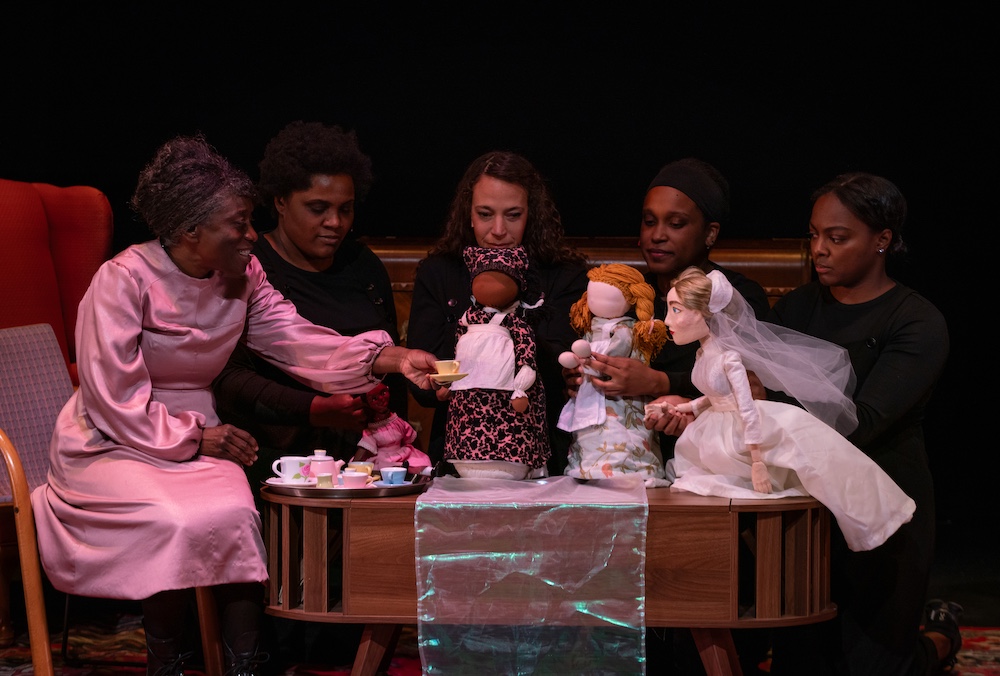
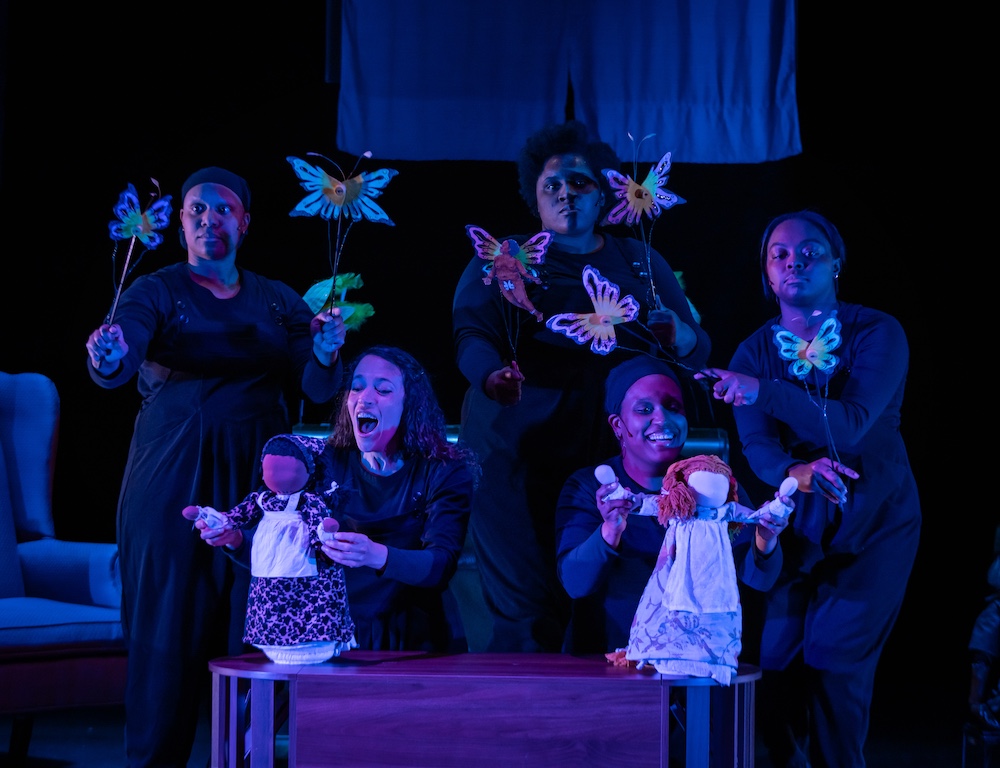
WPA interviews with formerly enslaved African Americans indicate that girls like Early not only played with their white playmates’ dolls, some also owned dolls that they received from slaveholders. Others were even fortunate enough to have dolls that their parents lovingly crafted for them, just as Hannah, Early’s mother, makes the topsy-turvy doll in the show. Yet, there are no oral or written narratives that describe enslaved African Americans manipulating puppets. Even today, Thalya I. David, Mecca Akbar, Ash Winkfield, Marcella Murray, and Charlotte Lily Gaspard, are a rare ensemble of unicorns—professional Black women puppeteers. They skillfully manipulate the puppets’ limbs directly with their hands, sometimes employing two or three puppeteers to operate one figure in the style of the Japanese Bunraku theater. Though they smoothly interchange control of the figures’ movements depending on the demands of the scene blocking, each character is consistently voiced by the same puppeteer. Ash Winkfield not only directs the show, they also display a delightful singing voice while animating Ninon the French fashion doll.
The “antebellum trio”—Sarah, Early, and Hannah—represent cloth dolls with neutral faces modeled after Waldorf dolls. Waldorf schools developed these dolls to support imaginative, unscripted play. Though Rogers’s script assigns them defined roles, she wanted the audience to be free to project their own emotional states onto these characters. These puppets, therefore, serve as intermediary objects, allowing audiences to connect their own emotional experiences of race with the action on stage. Grace Kelly, Ninon, and Sarah are white. The rest of the animated doll characters are Black. I observed the psychological impact of the memory embodied in these puppets after the performance when another Catapult member emerged from the theater, sat next to me on a bench in the foyer, and began to sob. I passed her tissues as she told me about her slaveholding ancestor who fathered a son with an enslaved woman. She wondered if she could ever attend a reunion with this branch of her family. Under a political regime that is aggressively erasing the history of slavery from school curricula, public libraries, and sites of public memory, The Harlem Doll Palace offers American audiences of all backgrounds the opportunity to confront the traumatic history that makes us one people.
Works Cited
Dallenbach, Lucien. The Mirror in the Text. Trans. Jeremy Whiteley and Emma Hughes. Chicago: The University of Chicago Press, 1989.
Markovits, Andrea. “Puppet Therapy and Traumatic Memory in Post-Dictatorship Chile,” in
Applied Puppetry in Education, Development, and Therapy: Theory and Practice, edited by Livija Kroflin and Meg Amsden, 207-228. Charleville-Mézières, France: The UNIMA Education, Development and Therapy Commission and Osijek, Croatia: Academy of Arts and Culture, 2022.
Markovits, Andrea. “Puppet Theatre: A Way to Tell What Cannot Be Told and to Face Pain,” Journal of Applied Arts & Health 11, nos. 1 & 2 (2020): 149-155.
Orenstein, Claudia. Reading the Puppet Stage: Reflections on the Dramaturgy of Performing Objects. Abingdon, UK and New York: Routledge, 2024.
Festival Performances
About the Performance
 January 22-24, 2026
Reva & David Logan Center for the Arts, Theater East, UChicago, 915 E. 60th St.
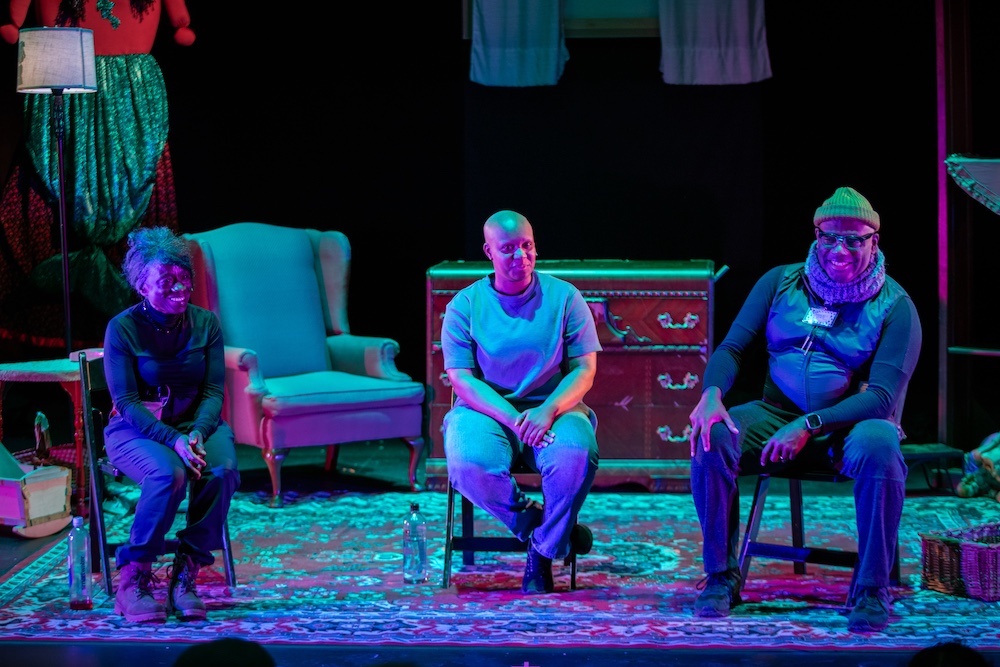
Welcome to The Harlem Doll Palace, based on the true story of Lenon Holder Hoyt, better known as Aunt Len, a public school art teacher for 40 years who created a doll museum in her Harlem brownstone. Join the dolls from the “dollection” inside Aunt Len’s Doll and Toy Museum as they recreate their journeys to the museum and seek to keep its beloved founder alive while Harlem deteriorates around her.
Reviews + Interviews
Dispatch: International Puppet Theater Festival Launches With Innovative Shows Performed by Puppeteer Teams and Solos by Third Coast Review Staff for Third Coast Review (The Harlem Doll Palace review by Kathy D. Hey)
Review: The Harlem Doll Palace at The 8th Chicago International Puppet Theater Festival by Bonnie Kenaz-Mara for ChilL Live Shows
Sex, sci-fi, Ibsen, and more by The Reader (The Harlem Doll Palace review by Kimzyn Campbell)